Thai road signs and their meanings
Thai road signs follow a shape-and-colour system that is easy to learn once you know it. Below are 134 official signs and 15 road markings, each with its code, picture and meaning, and the Thai words you will actually meet on the road.
How to read a Thai sign in two seconds
Thailand uses a system close to the one used across much of the world. The shape tells you what kind of message it is, and the colour tells you how strict it is.
| Look | Meaning | Example |
|---|---|---|
| White circle with a red border | Prohibition or restriction: you must not | No entry, no overtaking, speed limit |
| Blue circle | Mandatory: you must do this | Turn left only, roundabout, buses only |
| Yellow diamond | Warning: something ahead | Curve, slippery road, railway crossing |
| Red octagon | Stop | หยุด (stop) |
| Inverted triangle, red border | Give way | ให้ทาง (give way) |
| Blue or green rectangle | Information and direction | Parking, hospital, motorway exits |
Information and direction signs are not in the library below. They are about places, not rules.
Thai words you will see on signs
You do not need to read Thai to drive, but a few words come up all the time.
| Thai | English | Thai | English |
|---|---|---|---|
| หยุด | Stop | ถนน | Road |
| ให้ทาง | Give way | ทางพิเศษ | Expressway |
| ระวัง | Caution | ด่าน | Toll plaza or checkpoint |
| ลดความเร็ว | Reduce speed | ทางออก | Exit |
| ขับช้าๆ | Go slowly | จุดพักรถ | Rest area |
| เขตโรงเรียน | School area | อุโมงค์ | Tunnel |
| ก่อสร้างข้างหน้า | Construction ahead | สะพาน | Bridge |
| เขตชุมชน | Community area | เติมน้ำมัน | Petrol station |
| อันตราย | Danger | จุดชั่งน้ำหนัก | Weighing station |
| จำกัดความเร็ว | Speed limit | สถานีรถไฟ | Railway station |
Priority signs
These decide who goes first. The stop sign is the only octagon in the system.
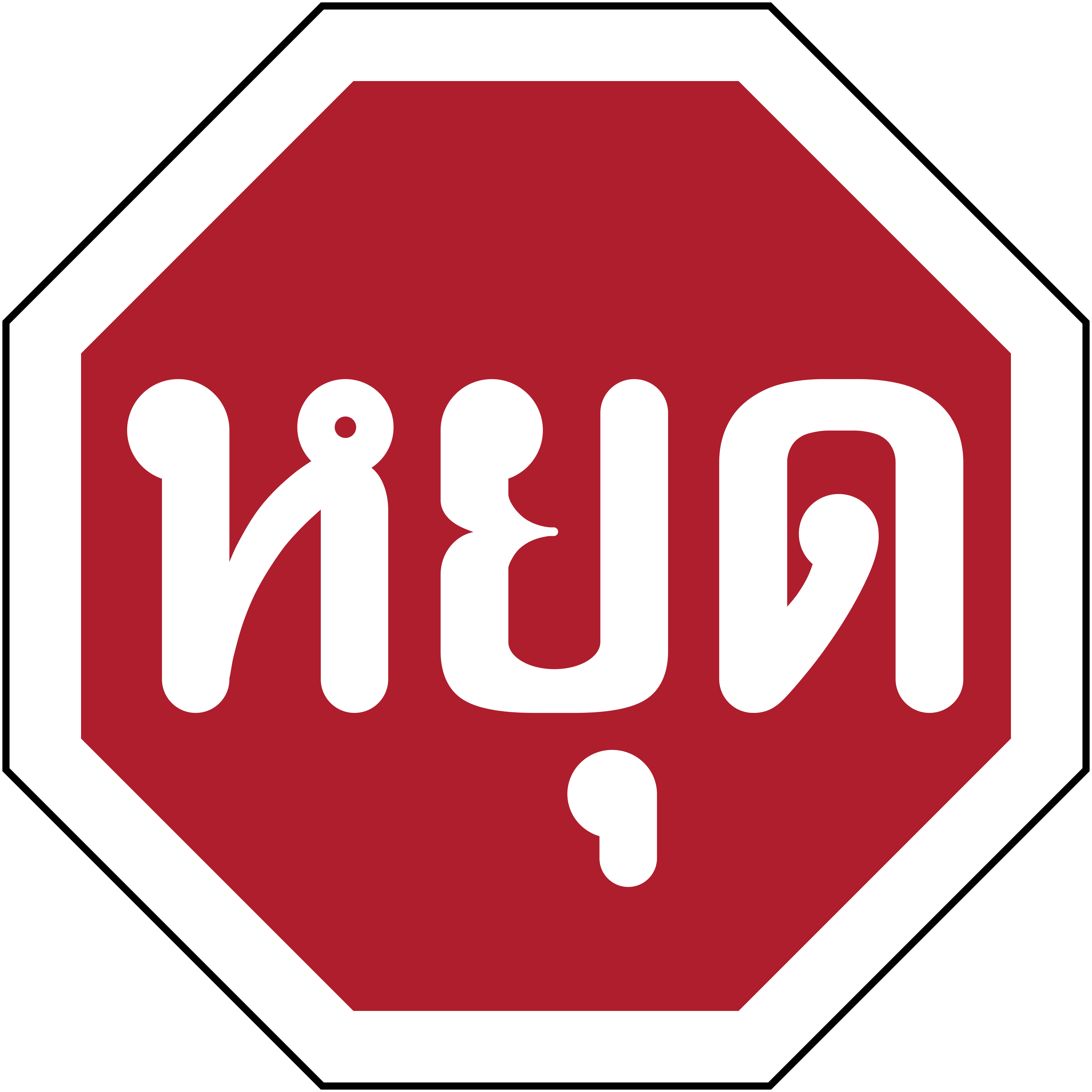
Stop completely at the stop line, then go only when it is safe.
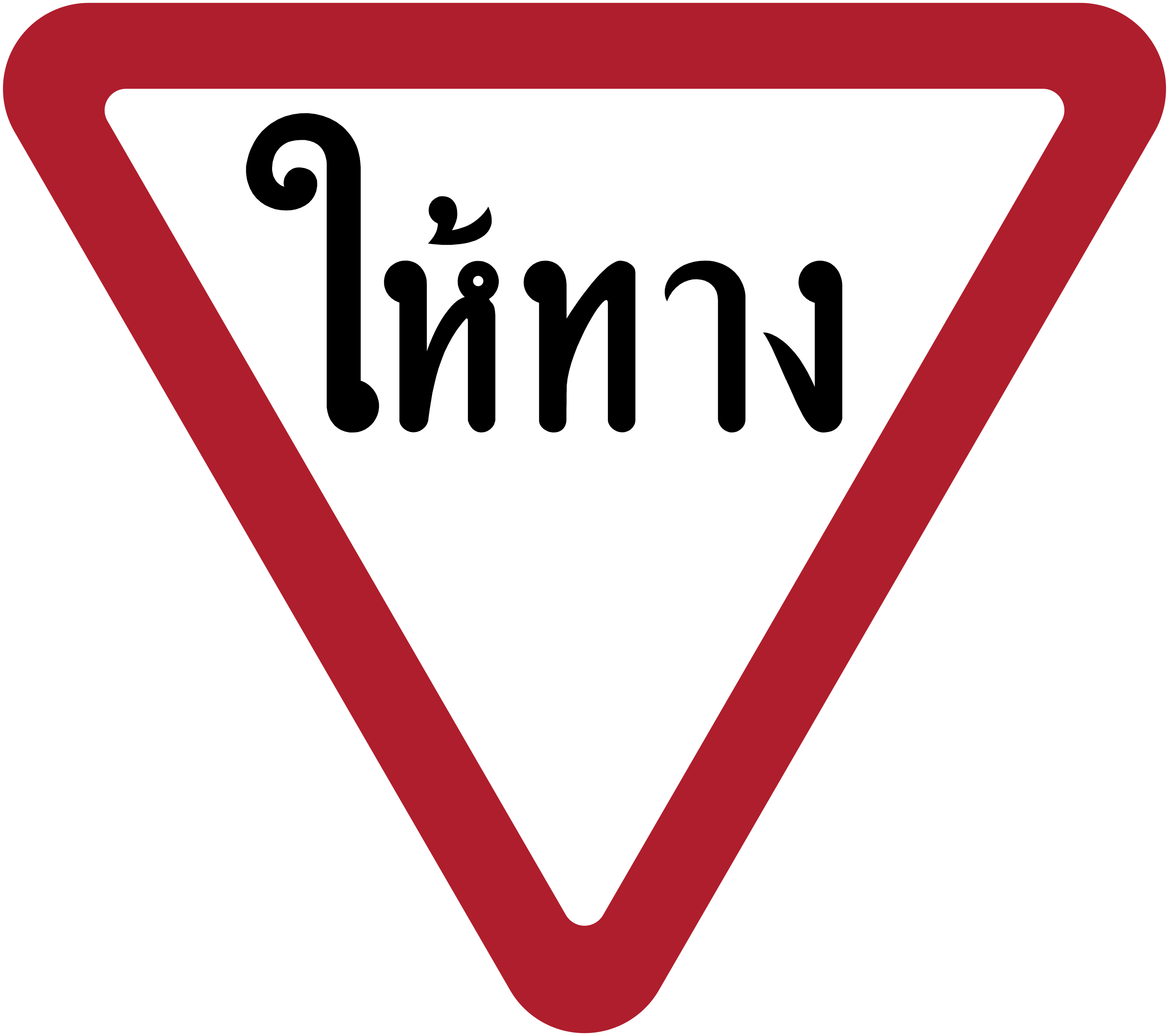
Slow down and give way to traffic on the main road; stop if necessary.
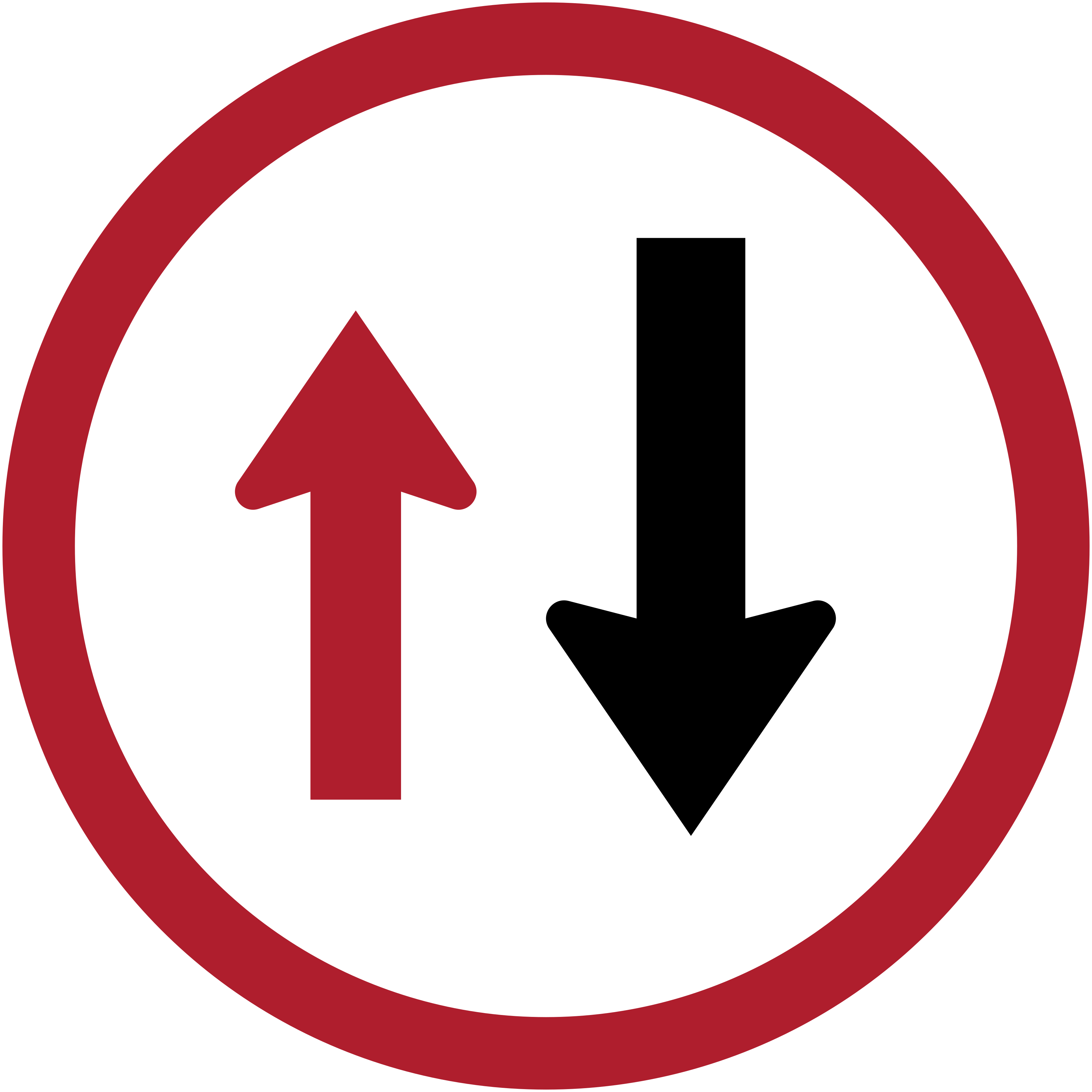
At a narrow section, oncoming traffic (black arrow) has priority over you (red arrow).
Prohibitory signs
White circle, red border, often a red diagonal bar. They tell you what is not allowed: turns, overtaking, certain vehicles, parking, noise. Numbers inside are maximum speeds or limits.
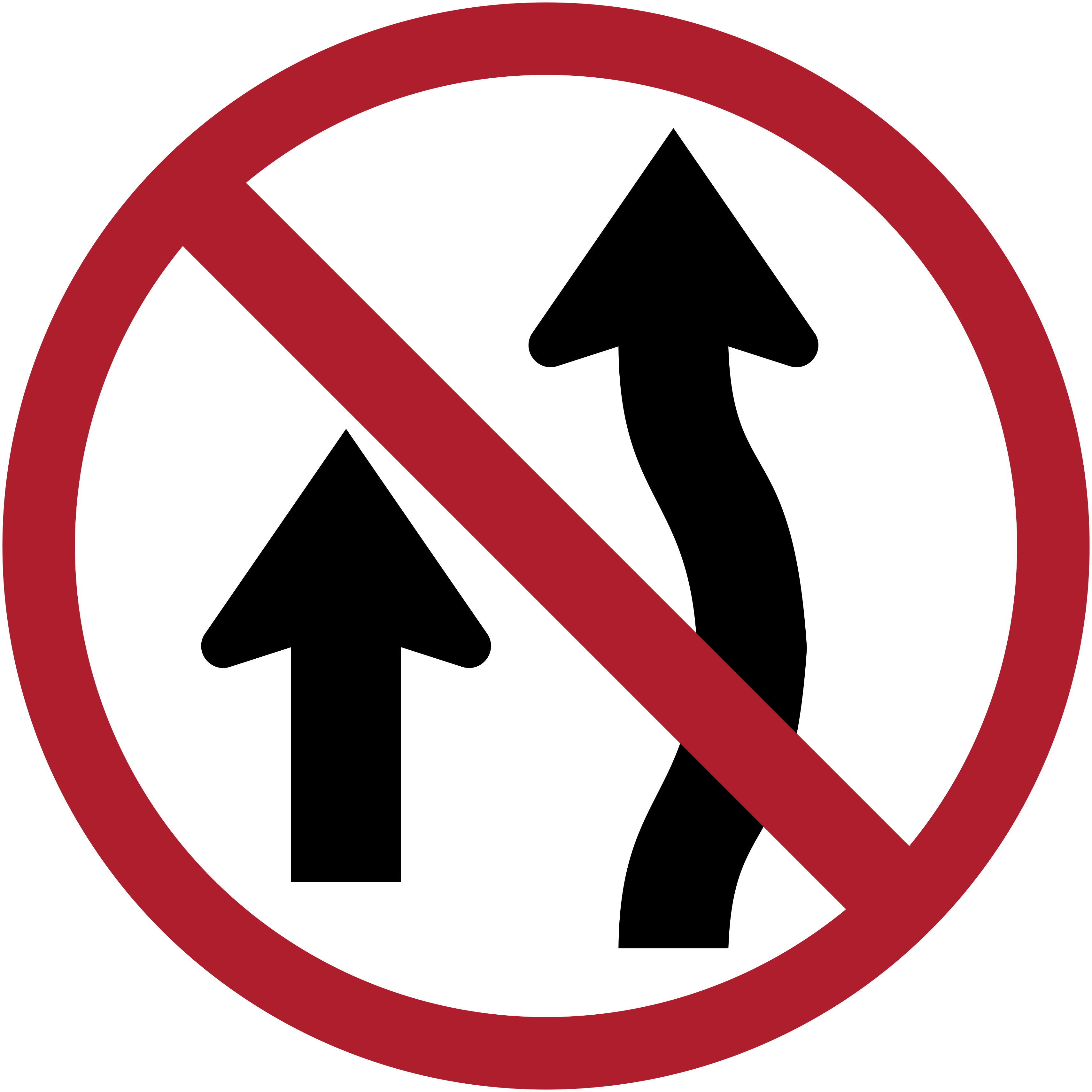
Overtaking is prohibited.
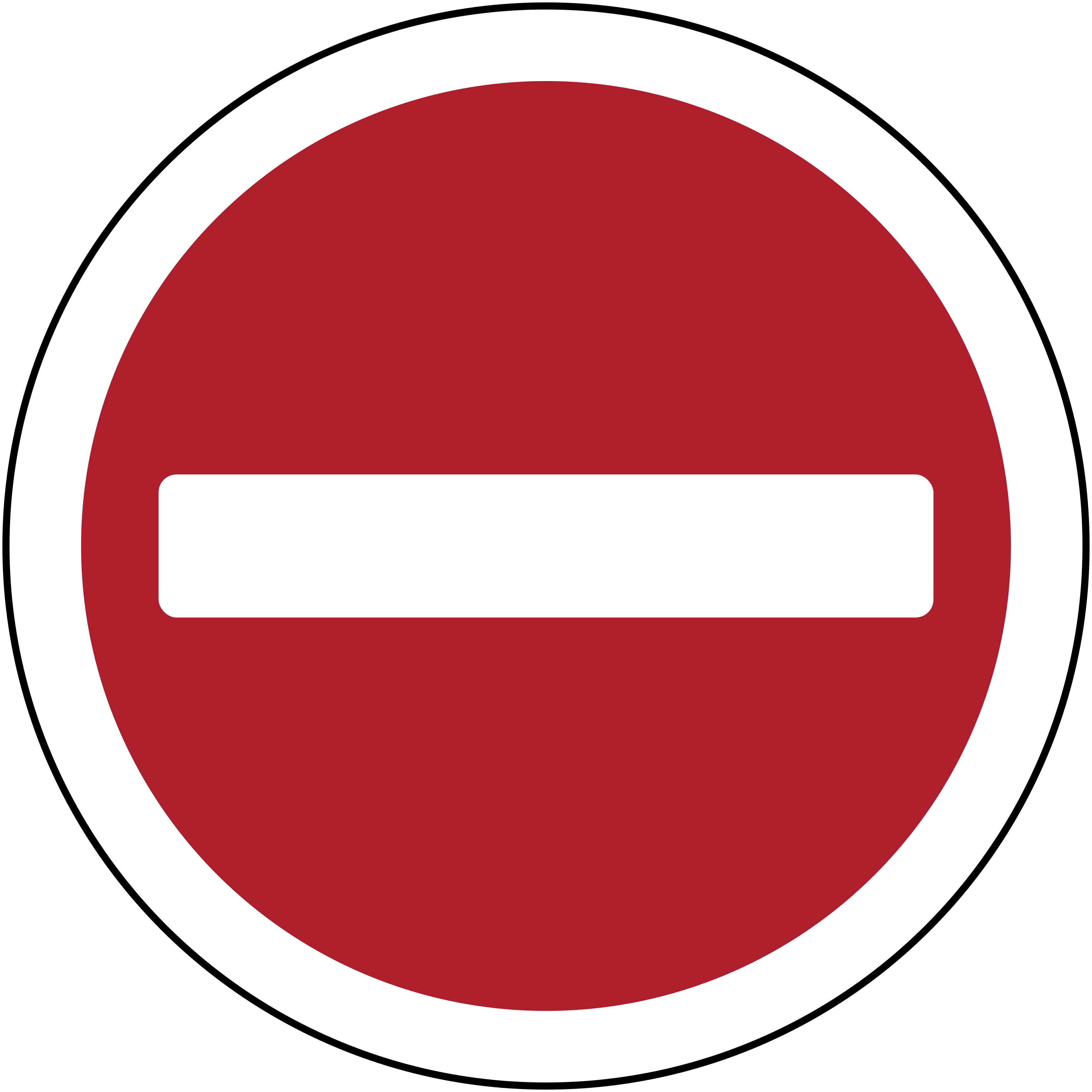
No vehicles may enter in this direction.
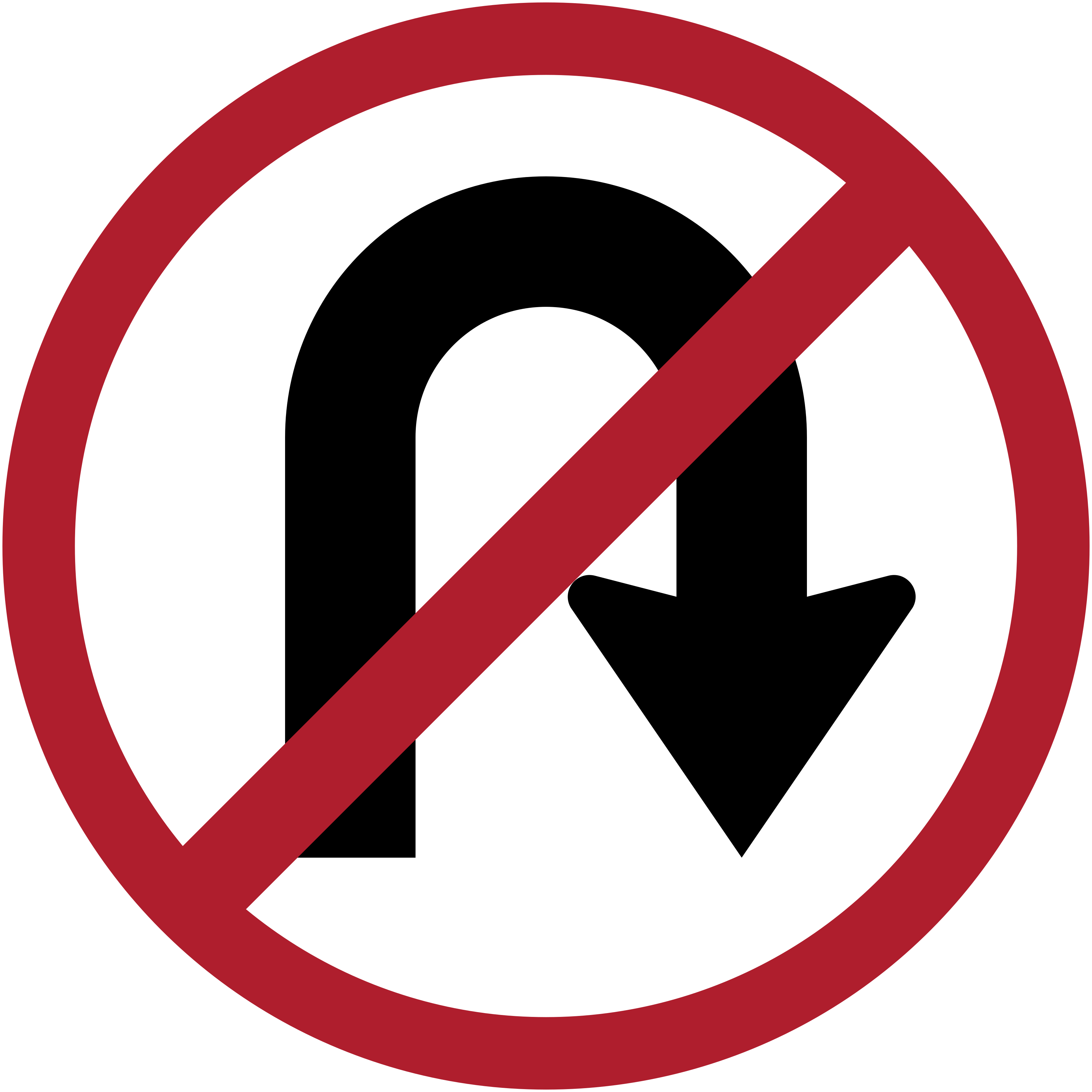
U-turns to the right are prohibited.
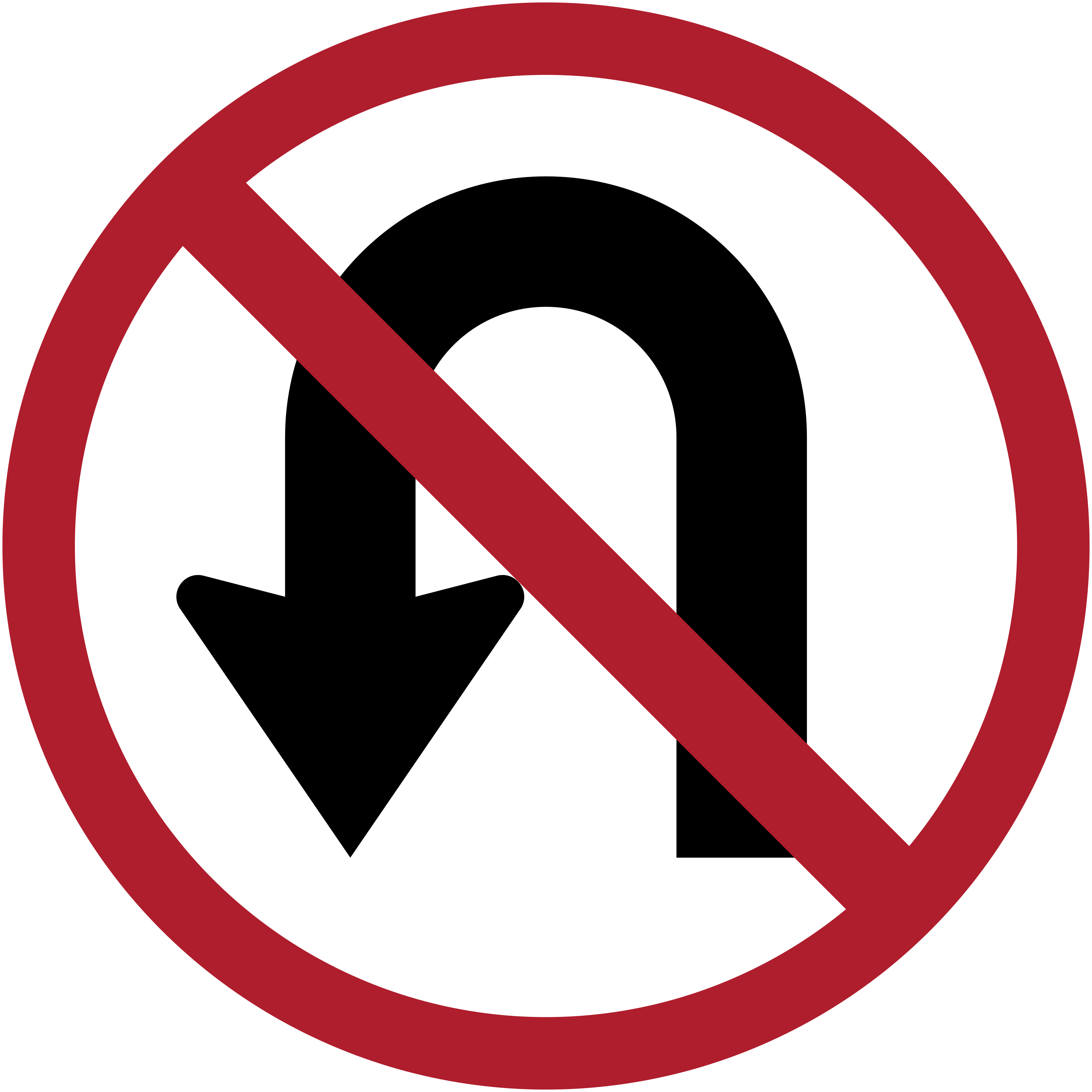
U-turns to the left are prohibited.
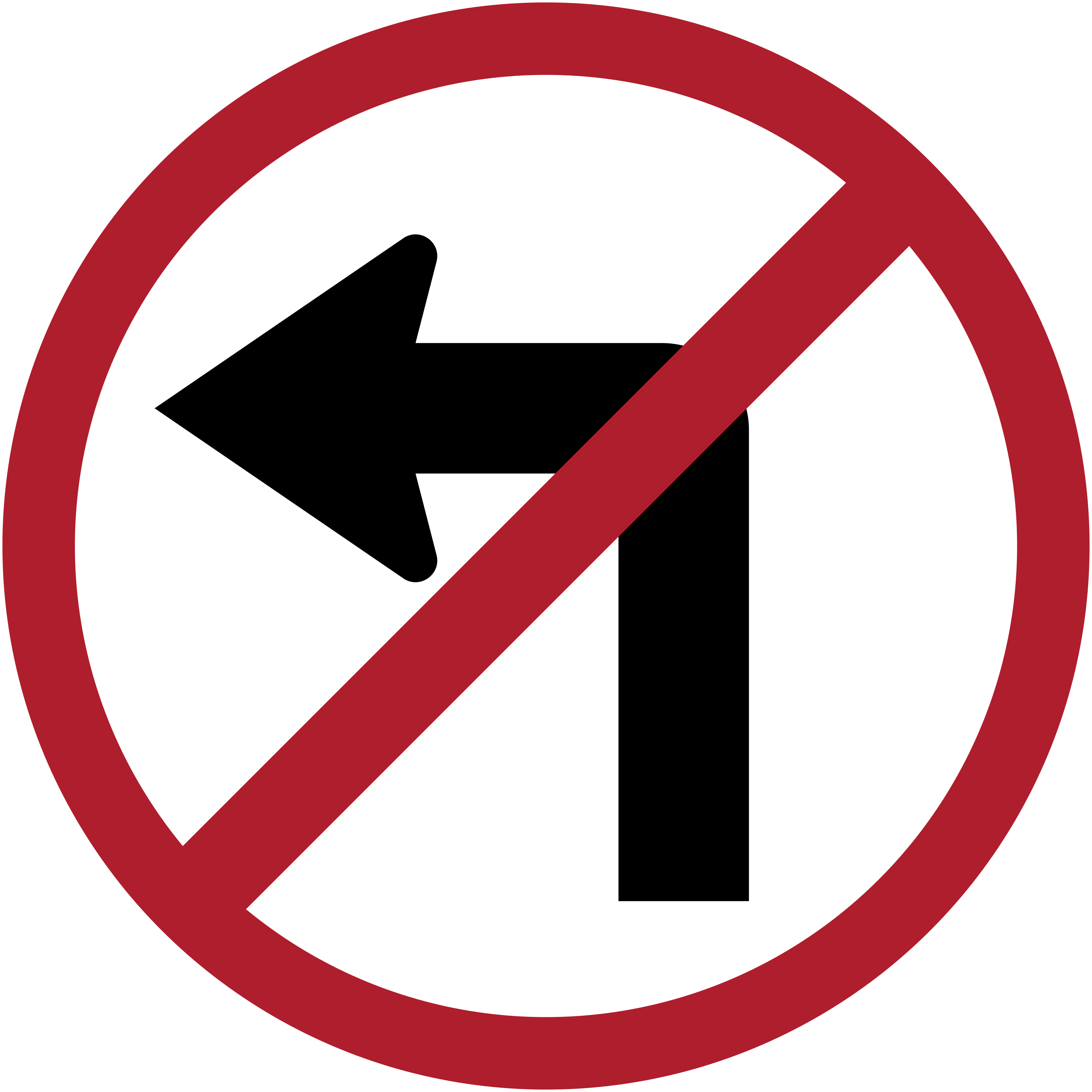
Turning left is prohibited.
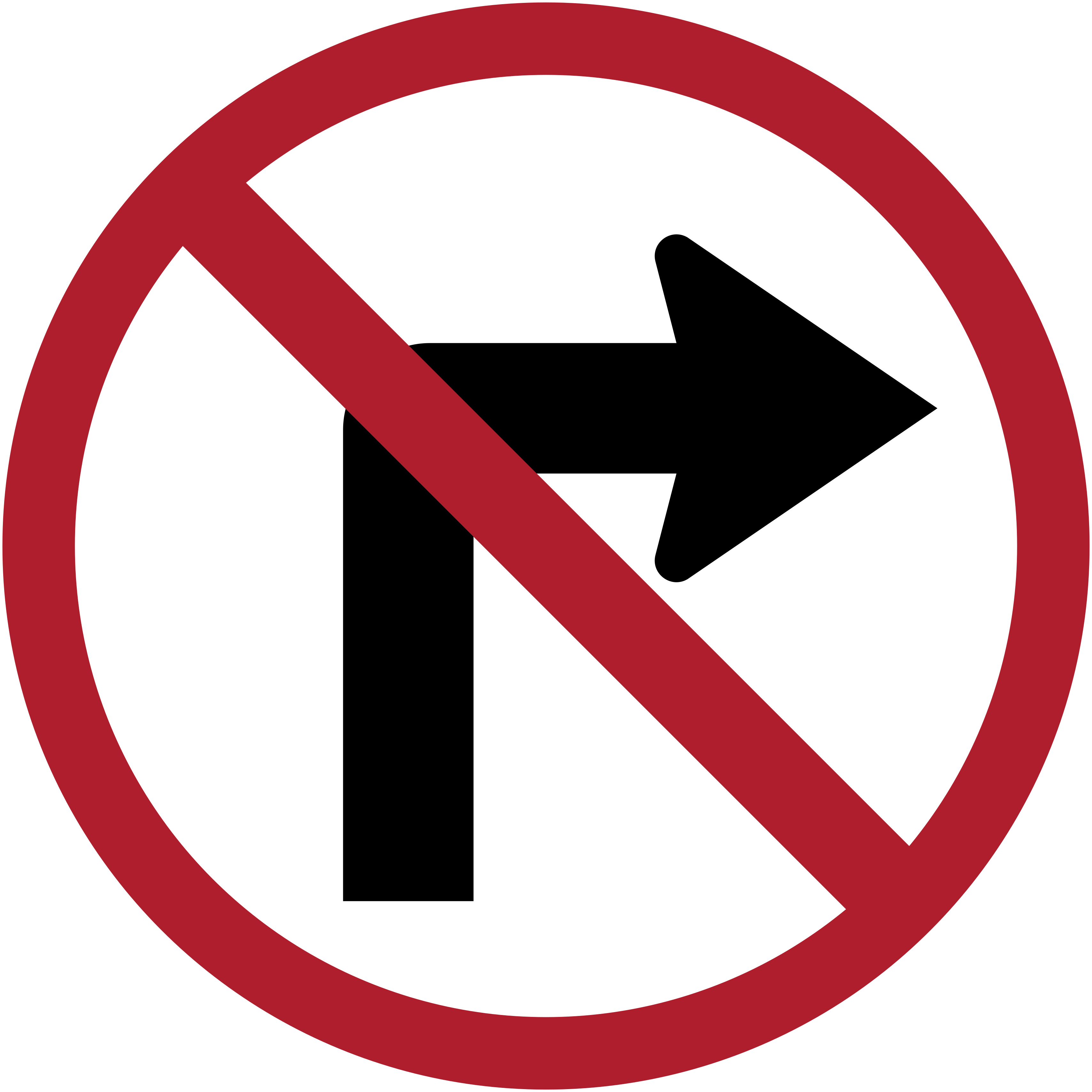
Turning right is prohibited.
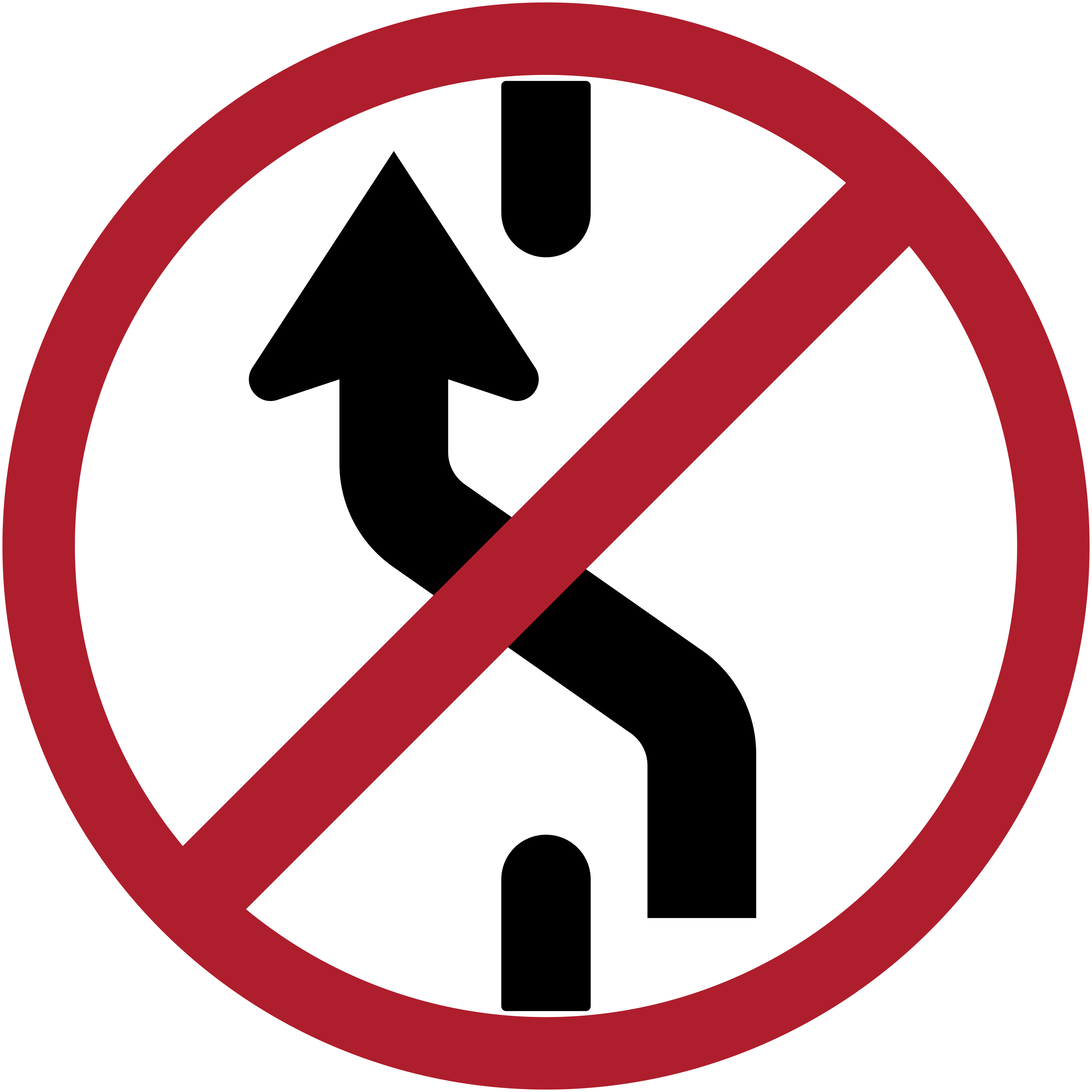
Do not move into the lane on your left.
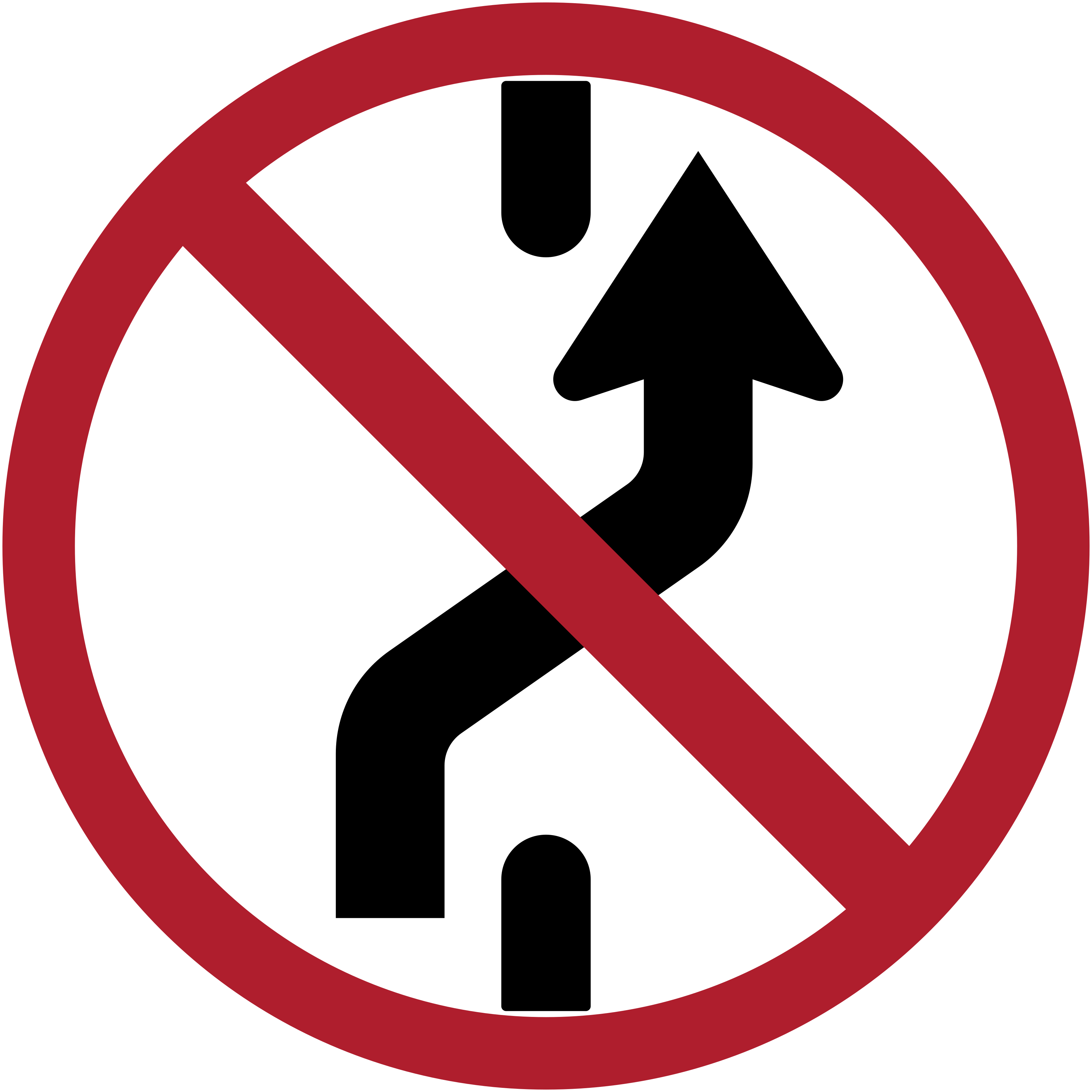
Do not move into the lane on your right.
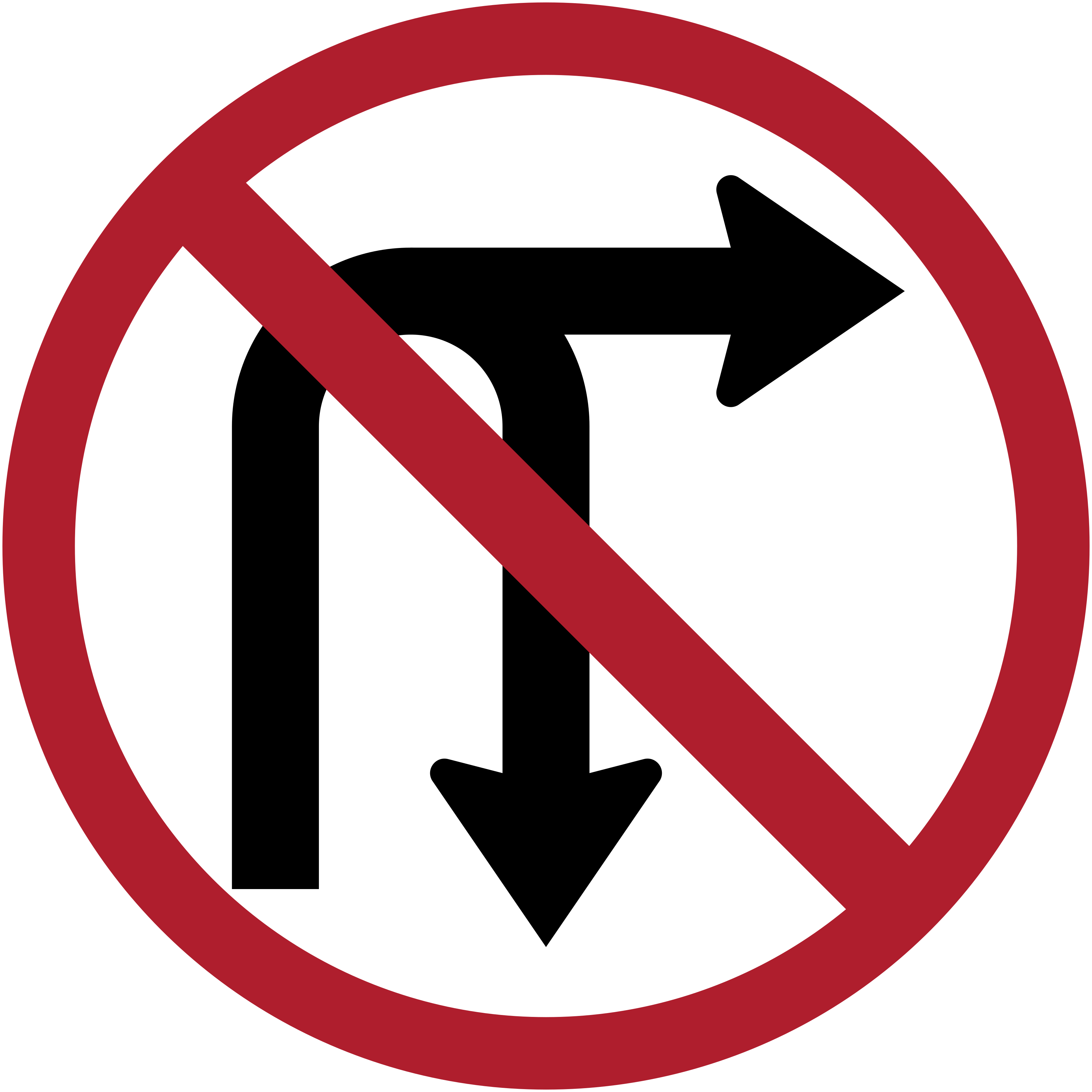
Both turning right and making a U-turn to the right are prohibited.
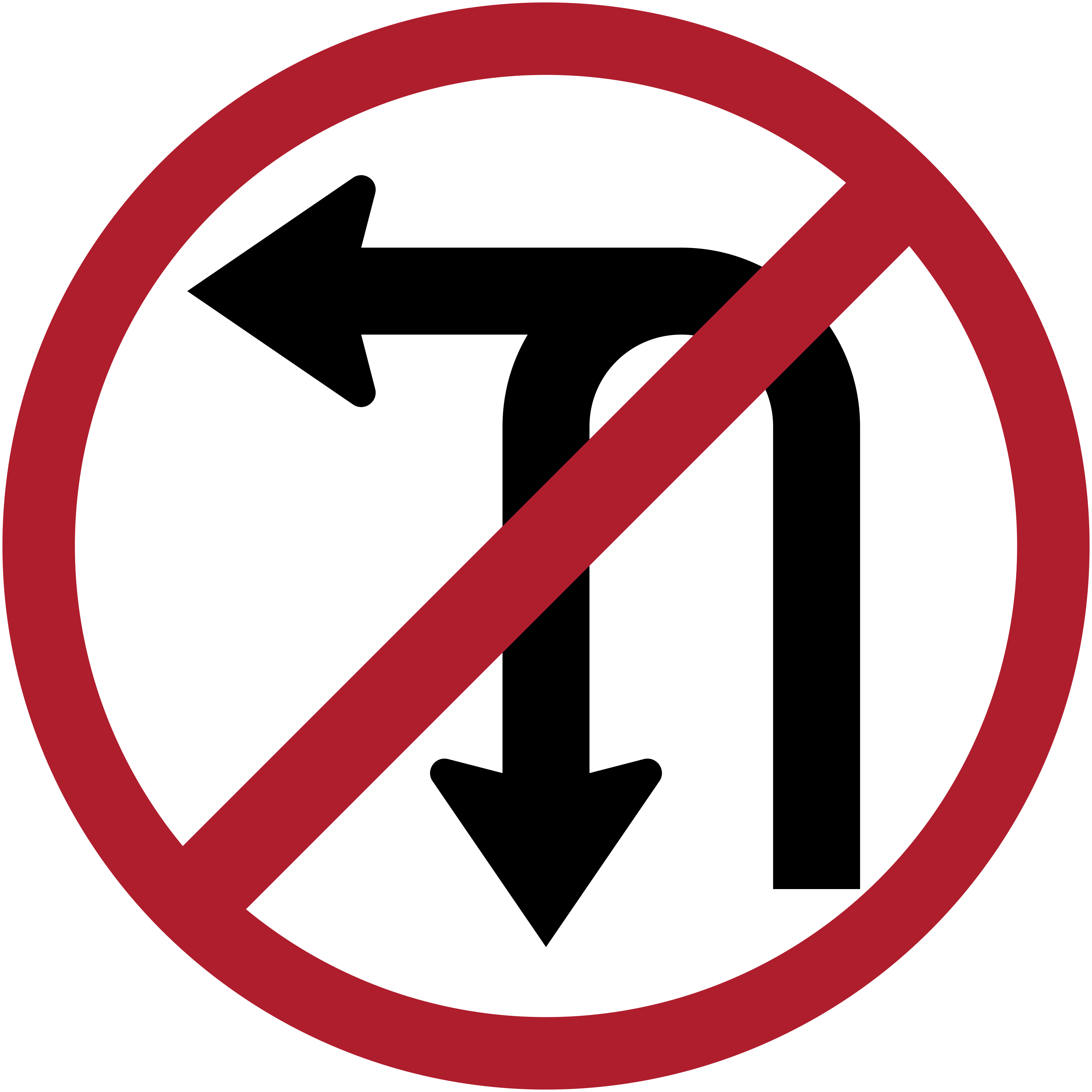
Both turning left and making a U-turn to the left are prohibited.
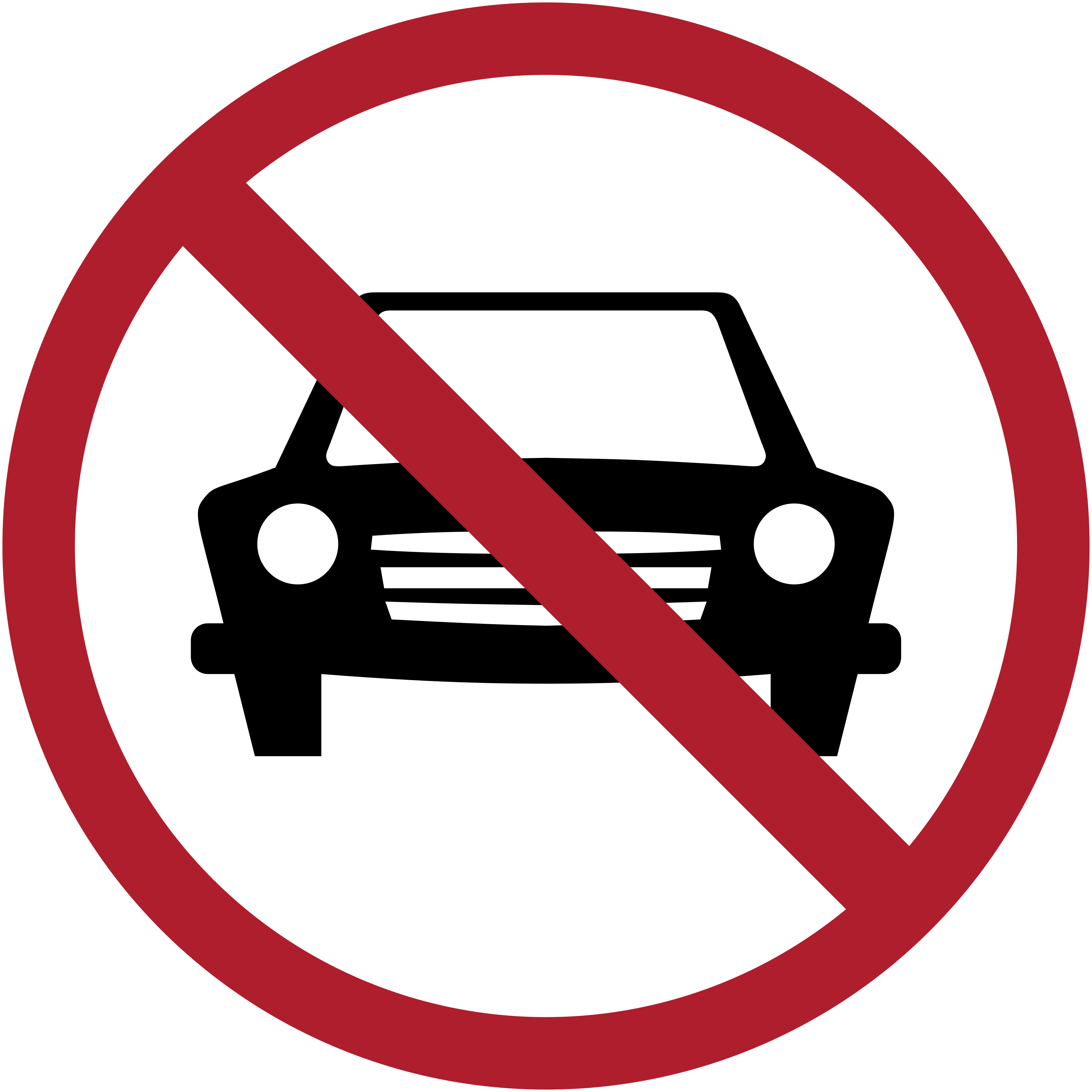
Cars may not enter.
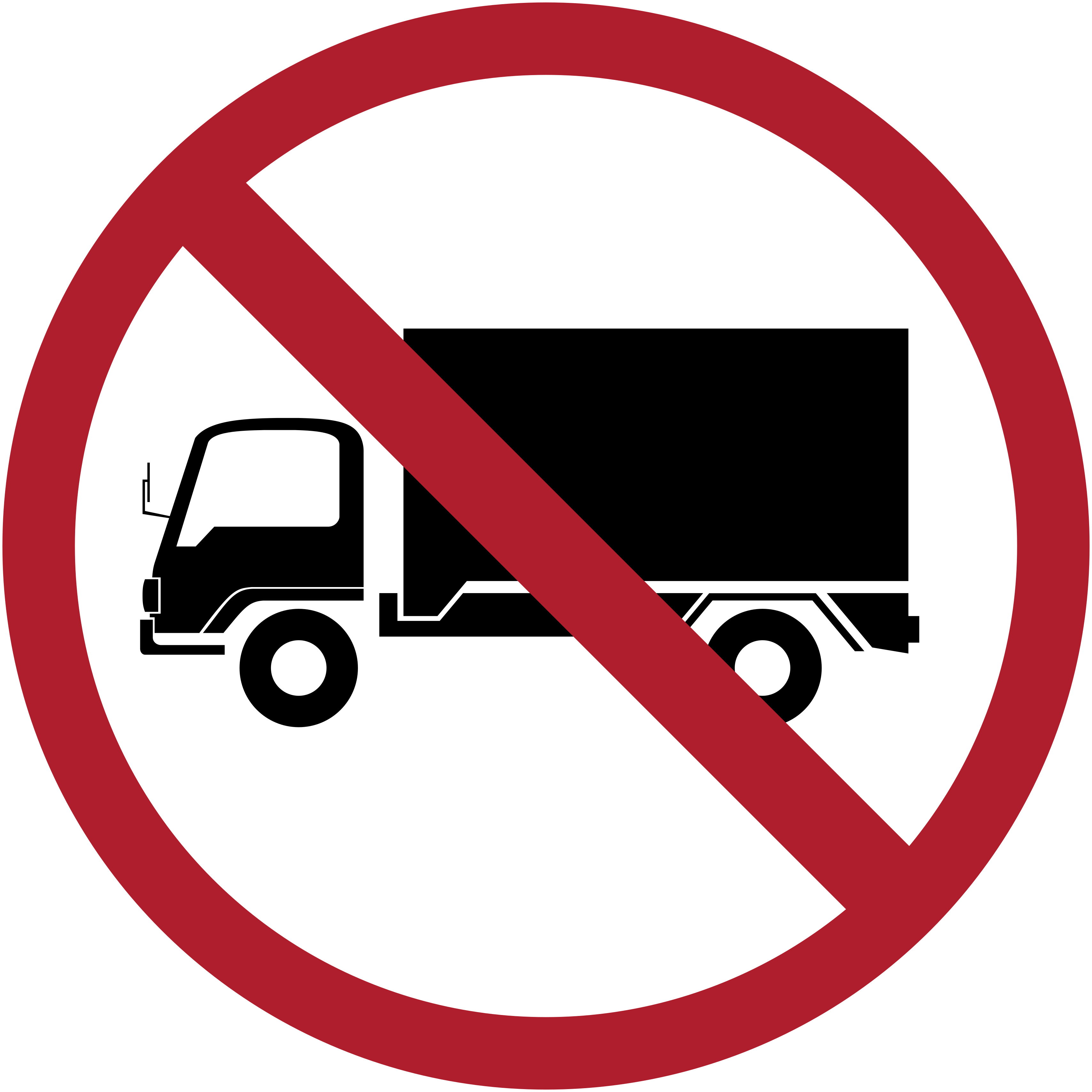
Trucks may not enter.
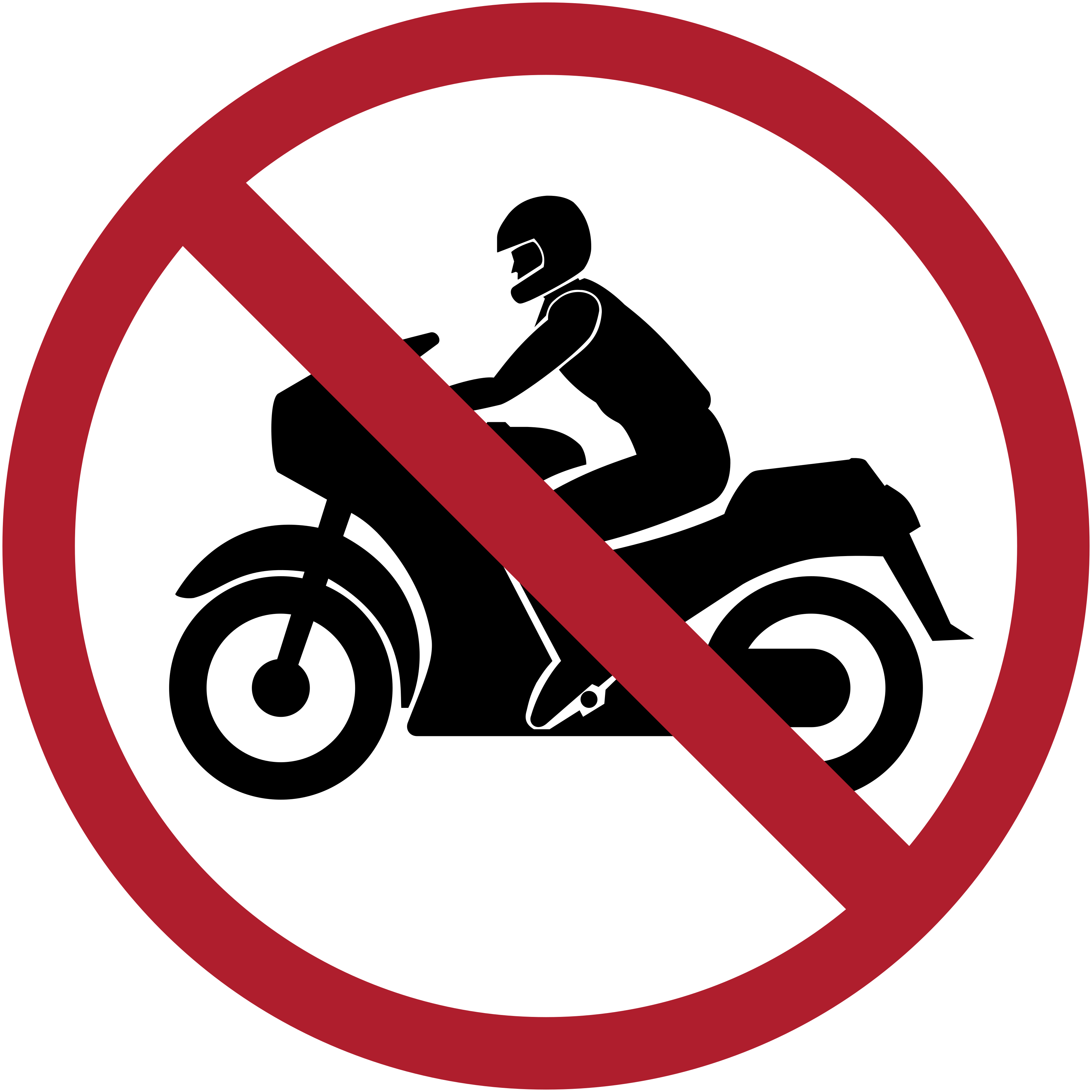
Motorcycles may not enter.
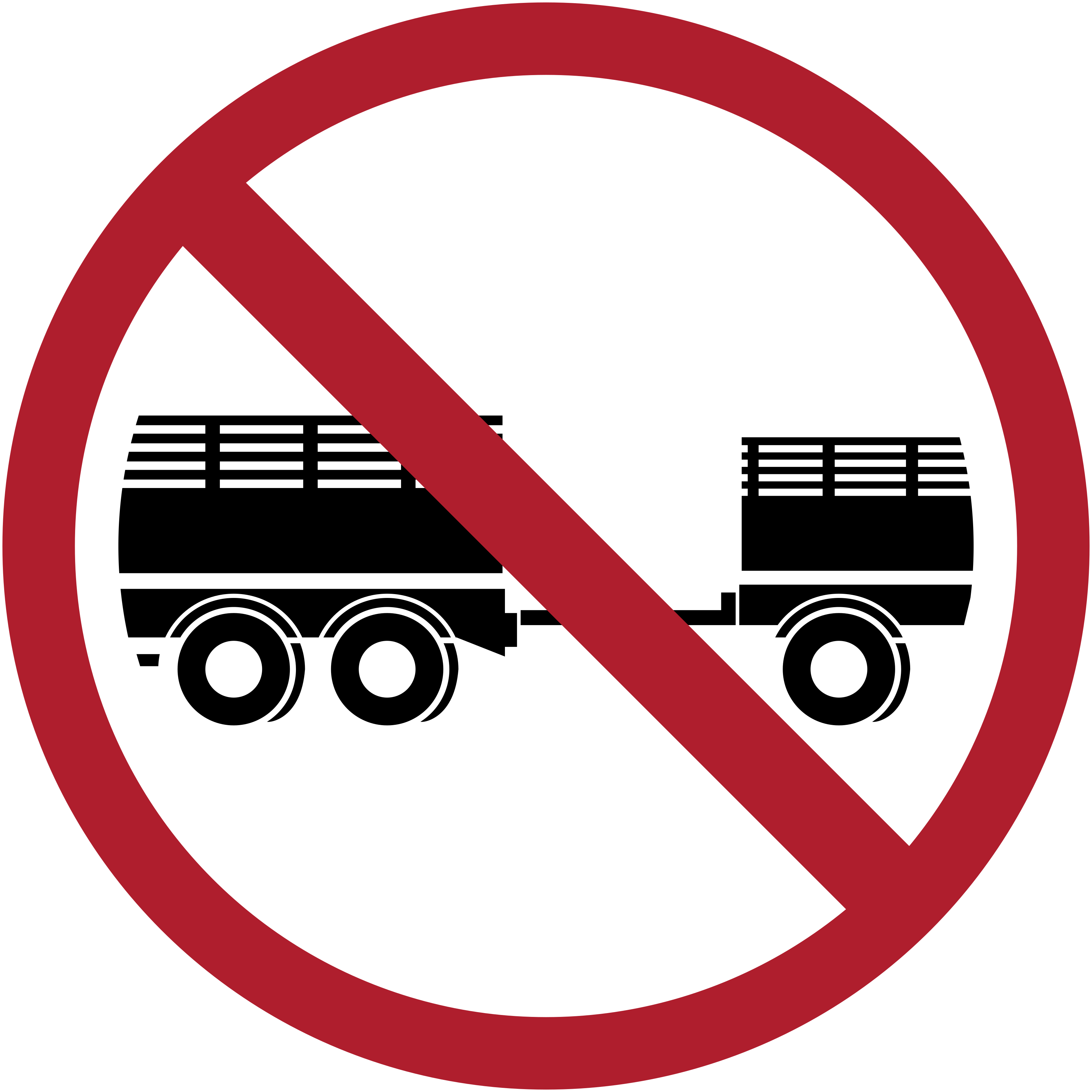
Vehicles towing trailers may not enter.
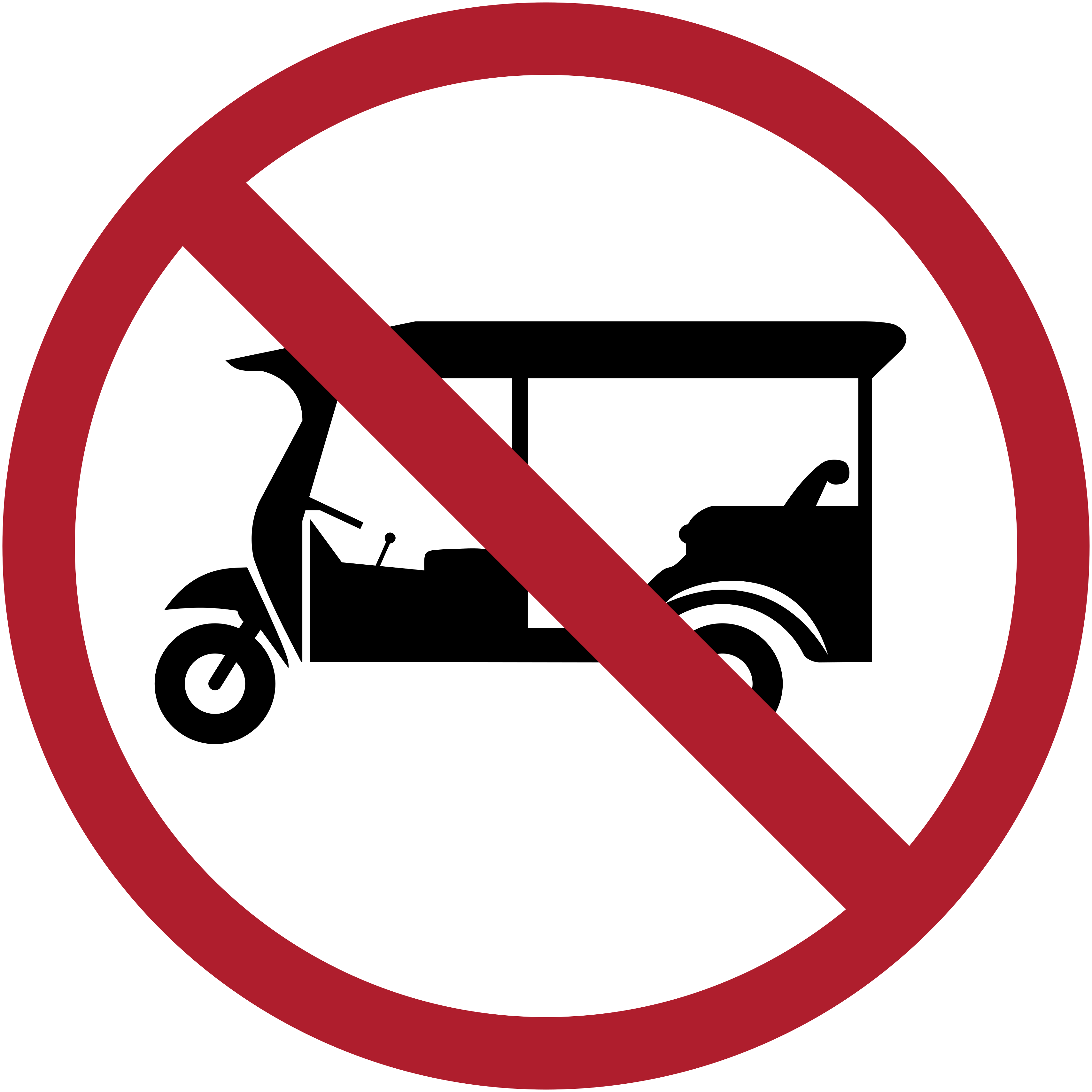
Three-wheeled motor vehicles may not enter.
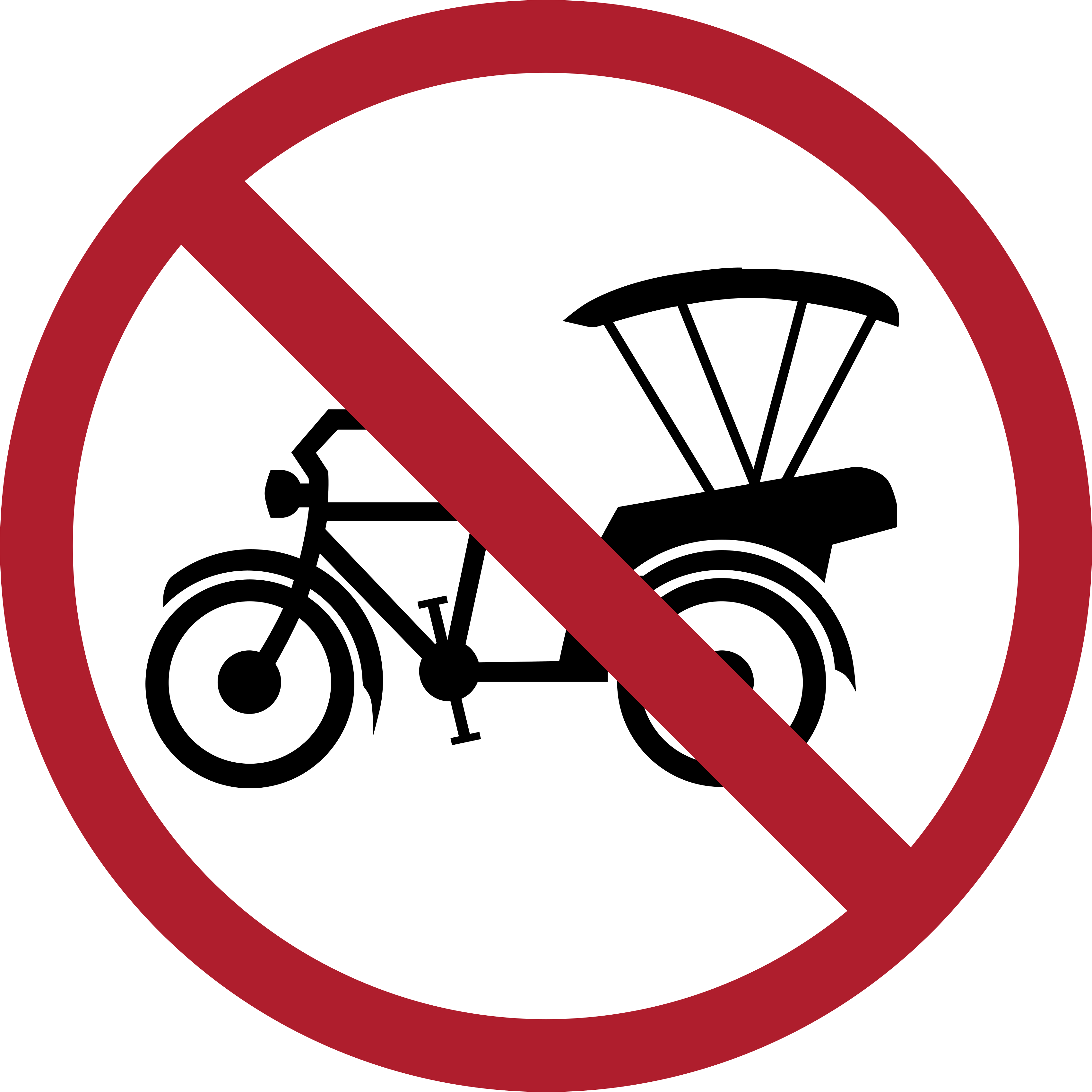
Pedal tricycles may not enter.
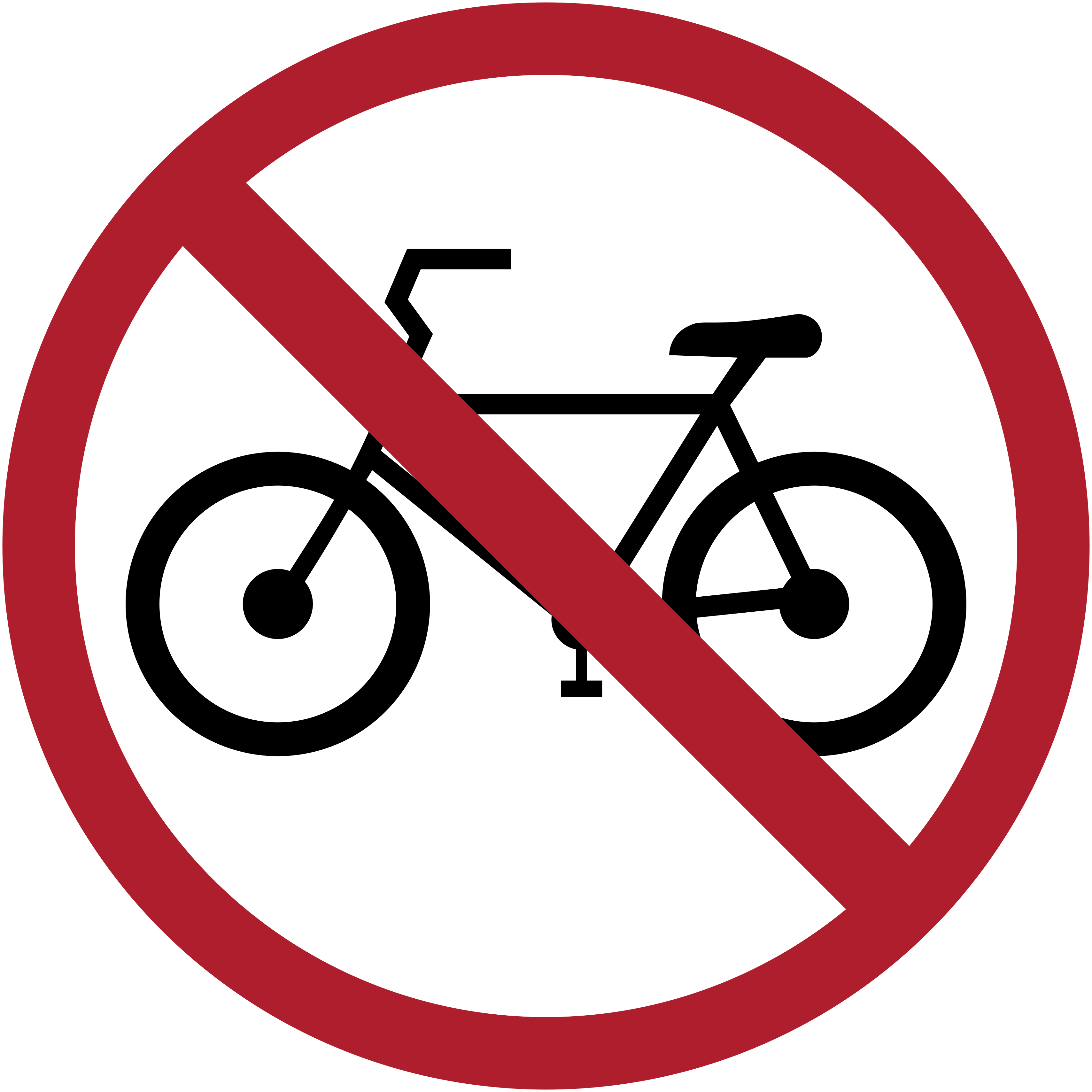
Bicycles may not enter.
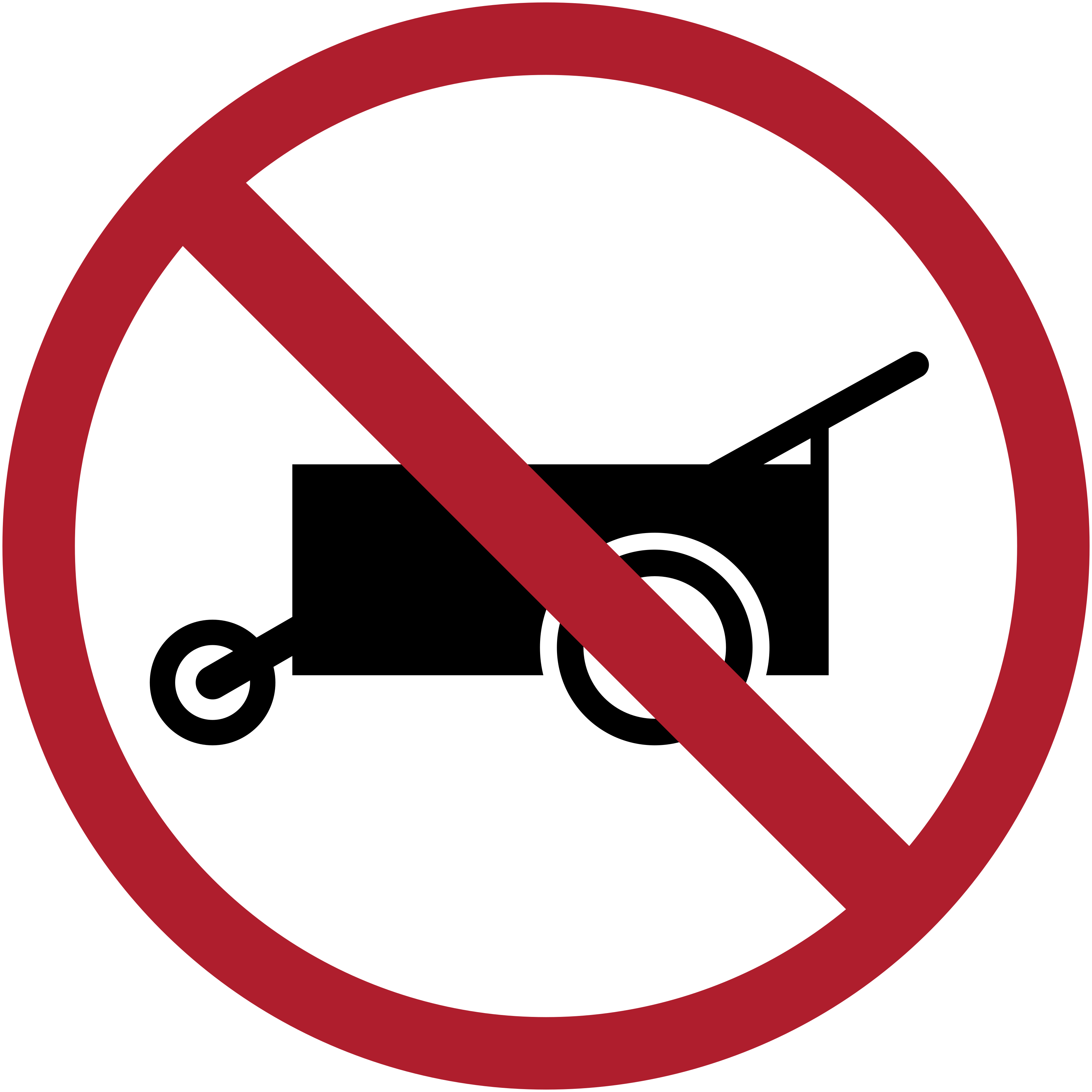
Handcarts may not enter.
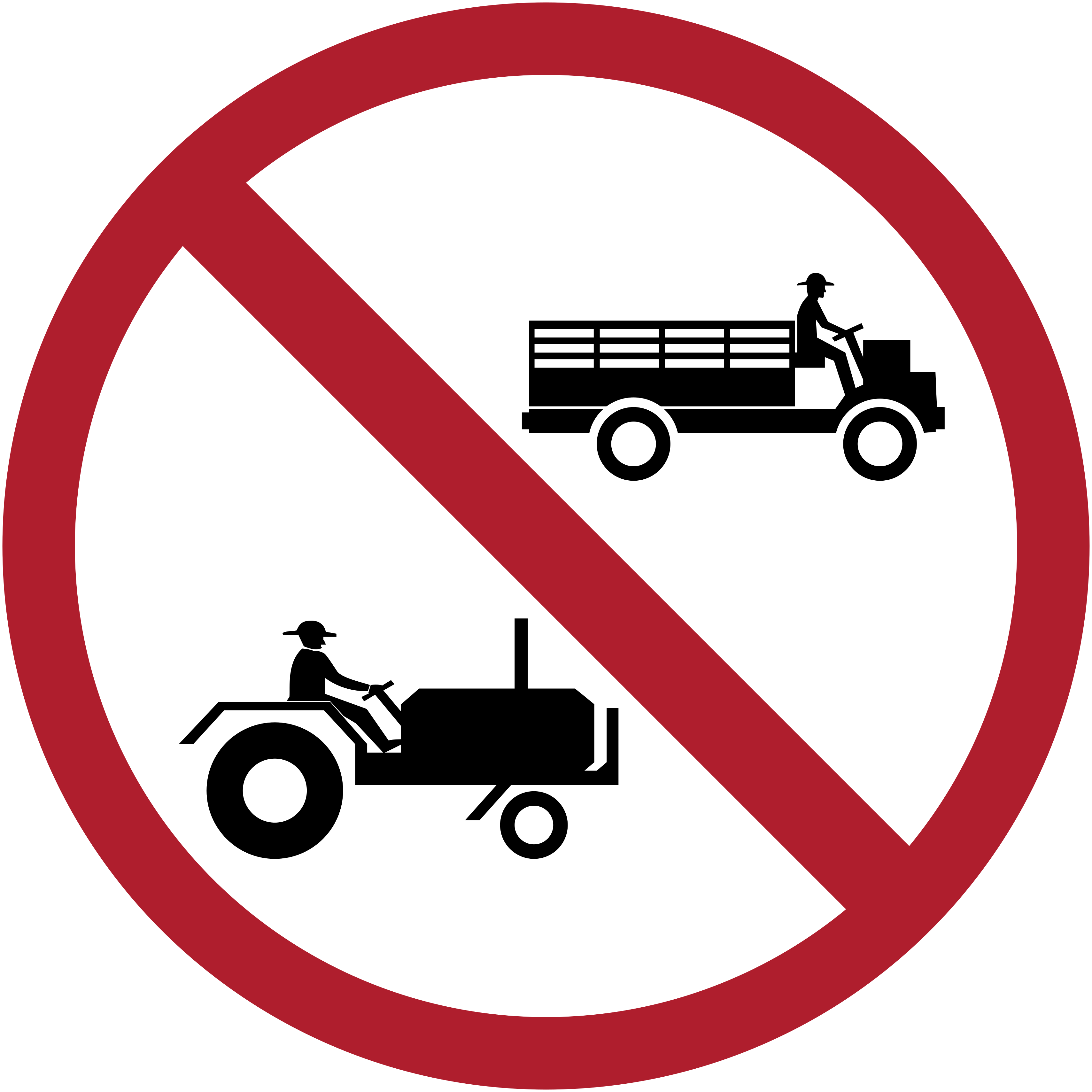
Tractors and agricultural vehicles may not enter.
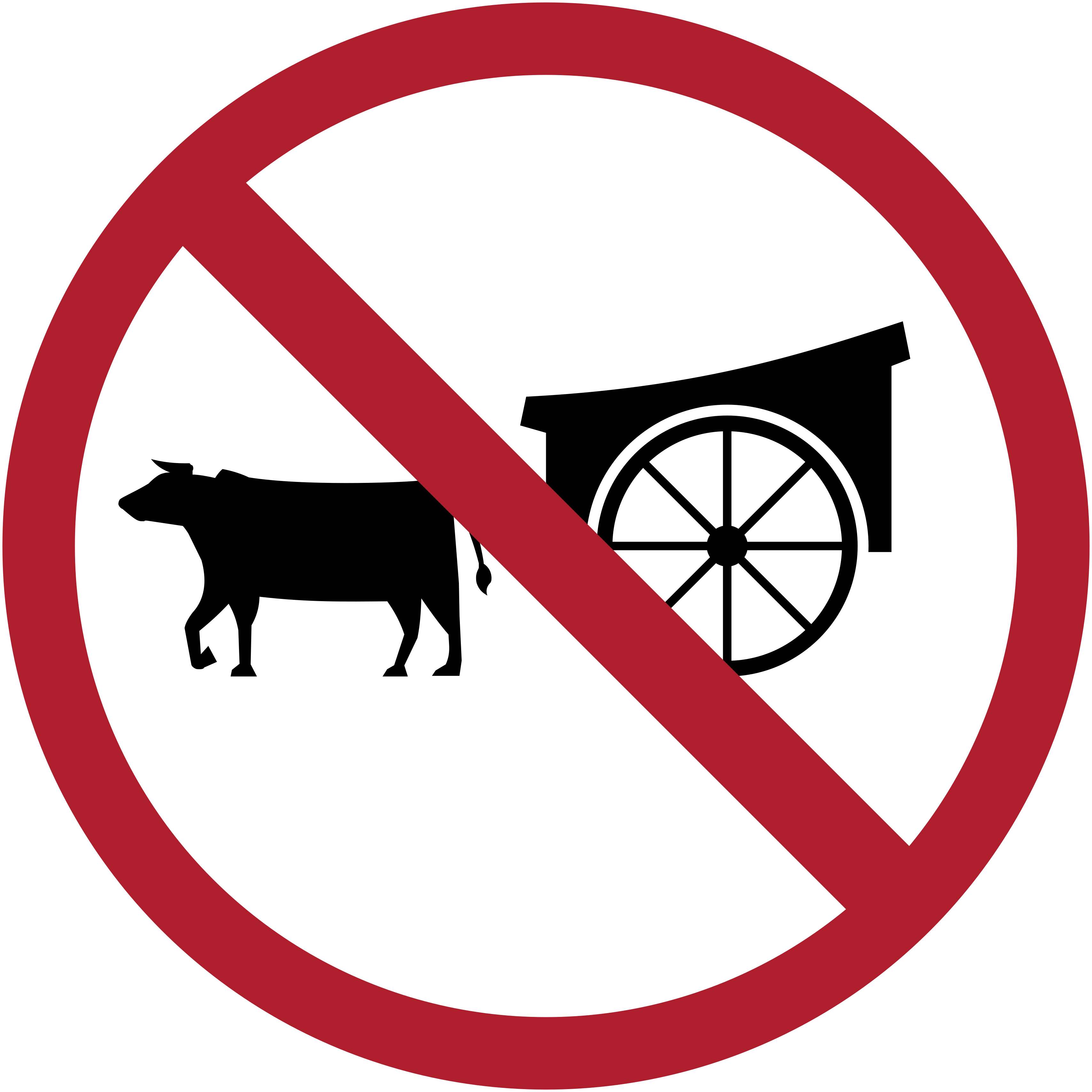
Carts pulled by animals may not enter.
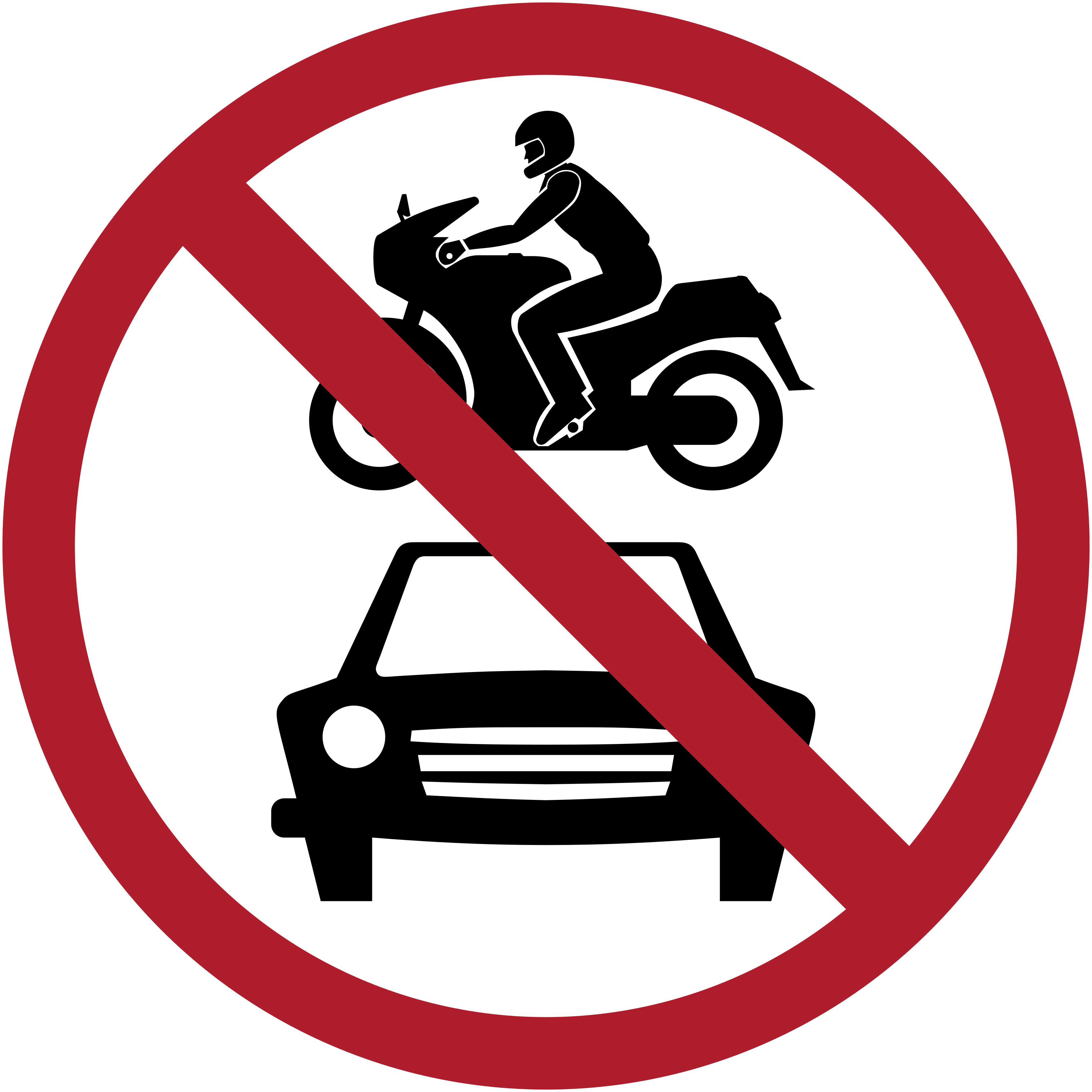
No cars or motorcycles may enter.
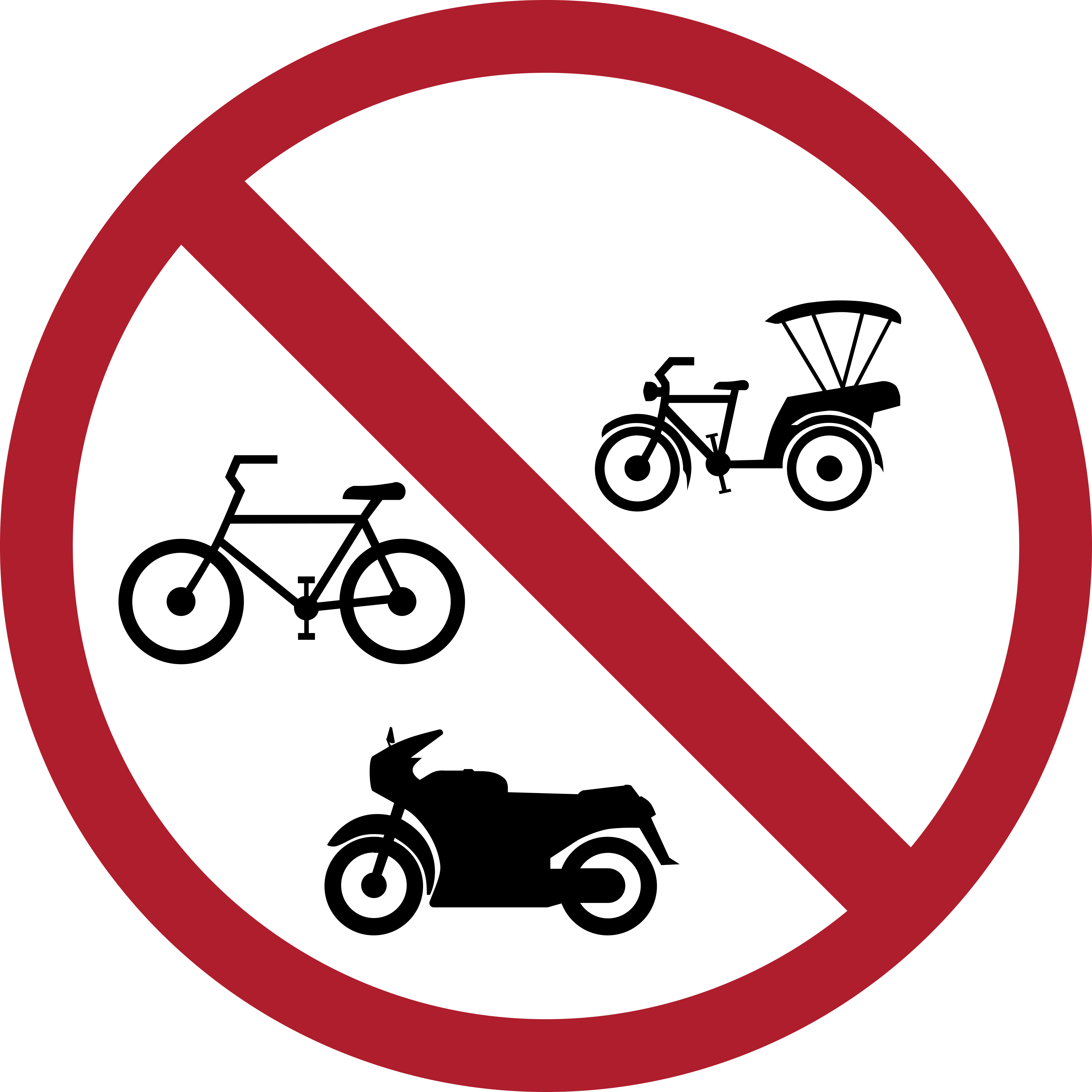
Bicycles, tricycles and motorcycles may not enter.
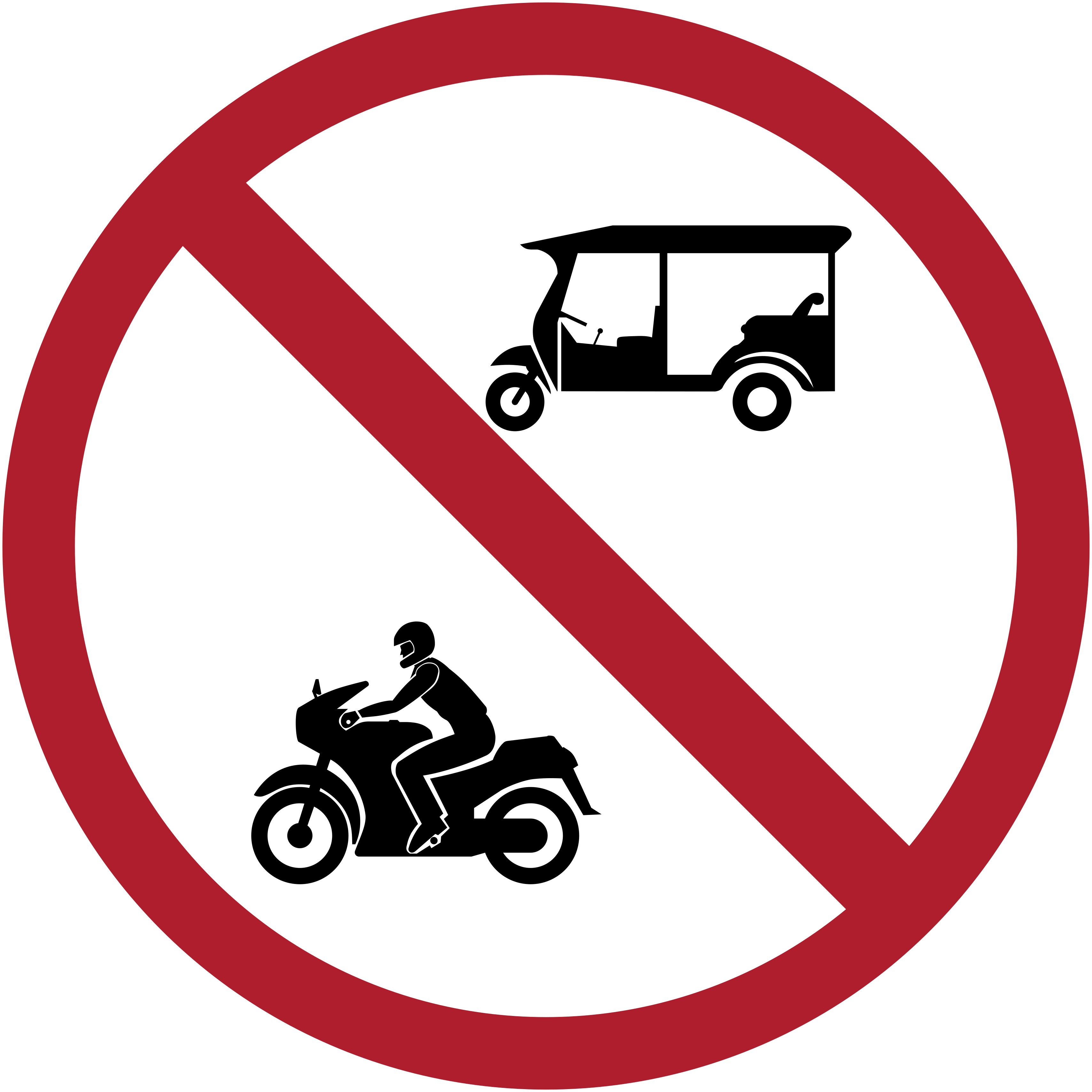
Motorcycles and three-wheeled motor vehicles may not enter.
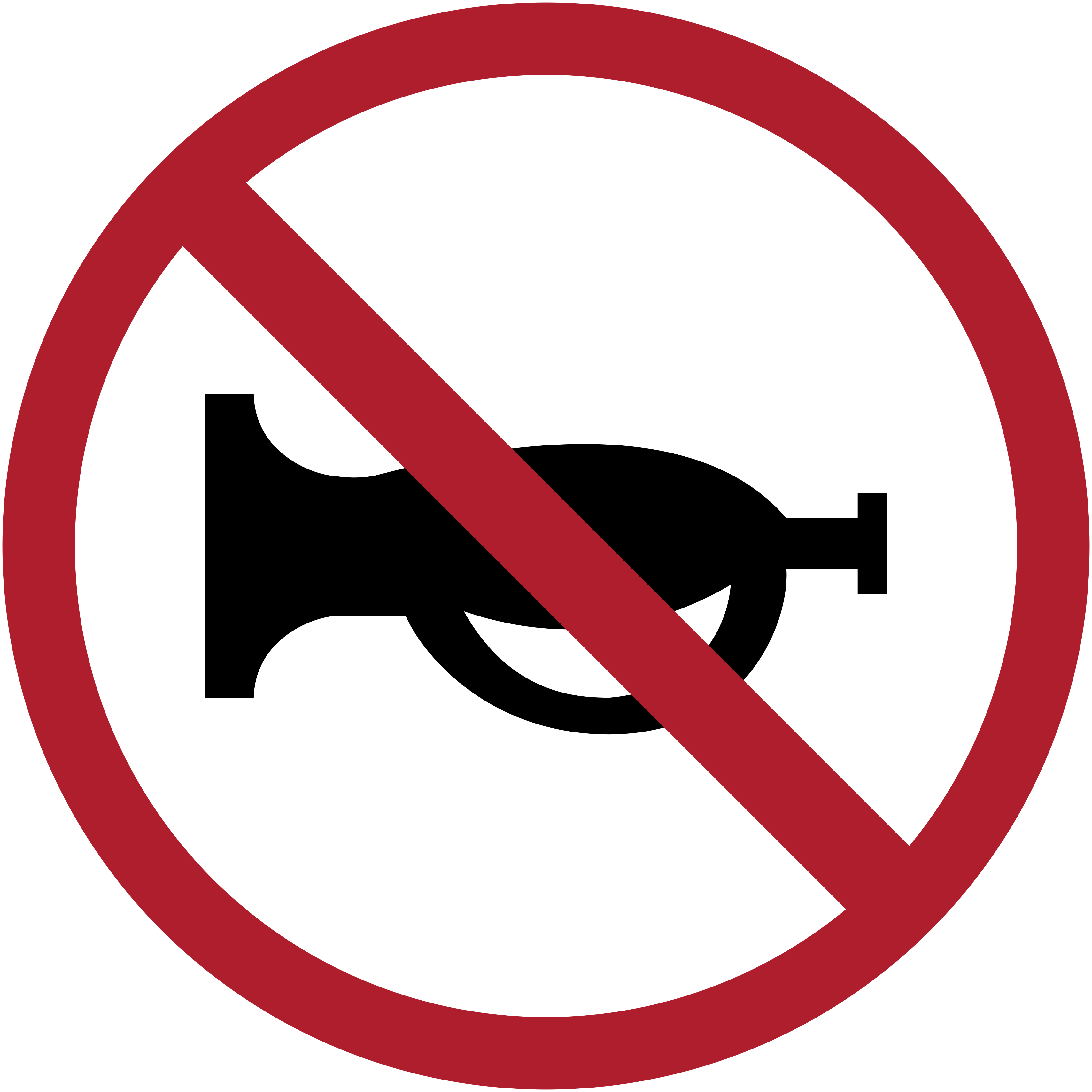
Using the horn is prohibited (e.g. near hospitals and schools).
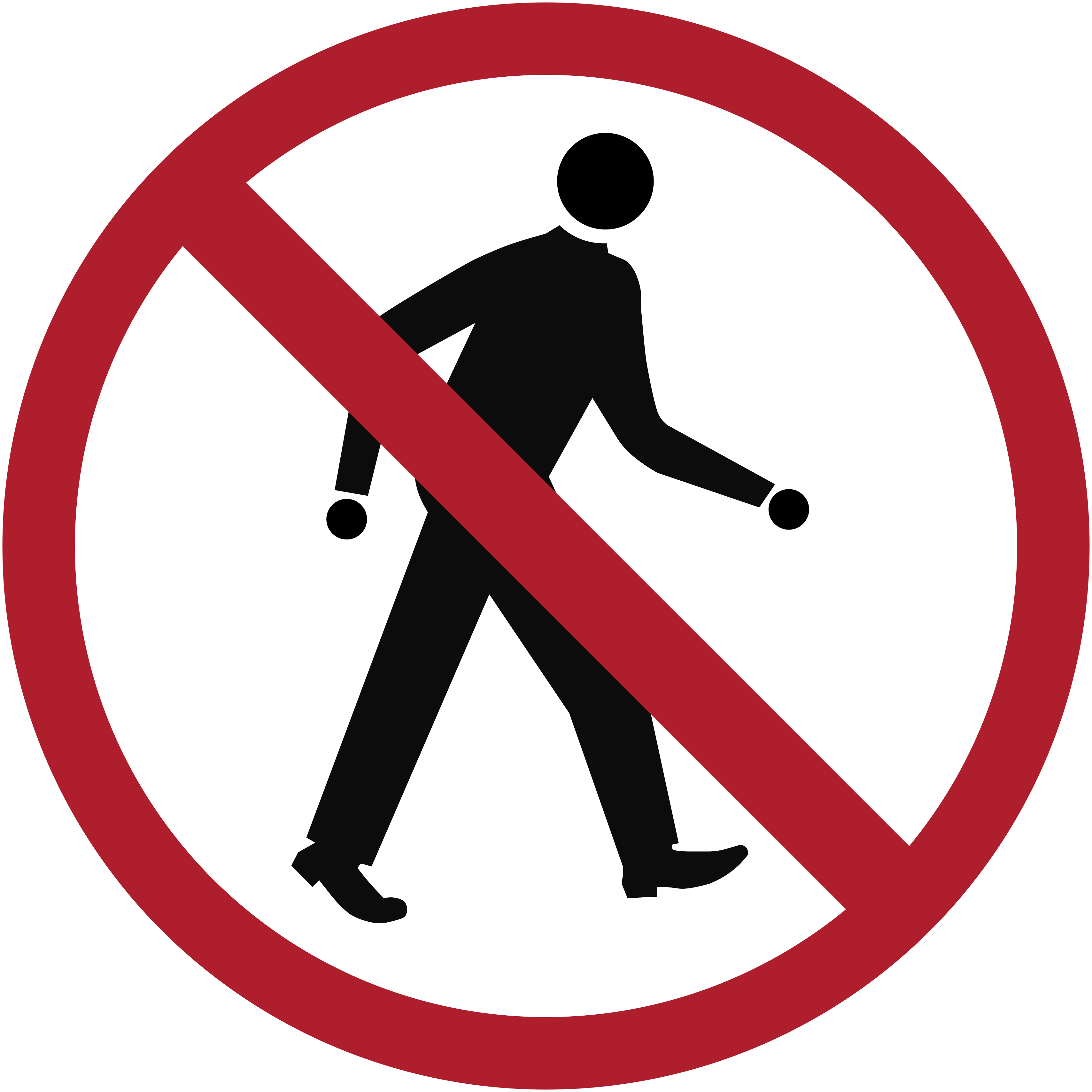
Pedestrians may not enter.
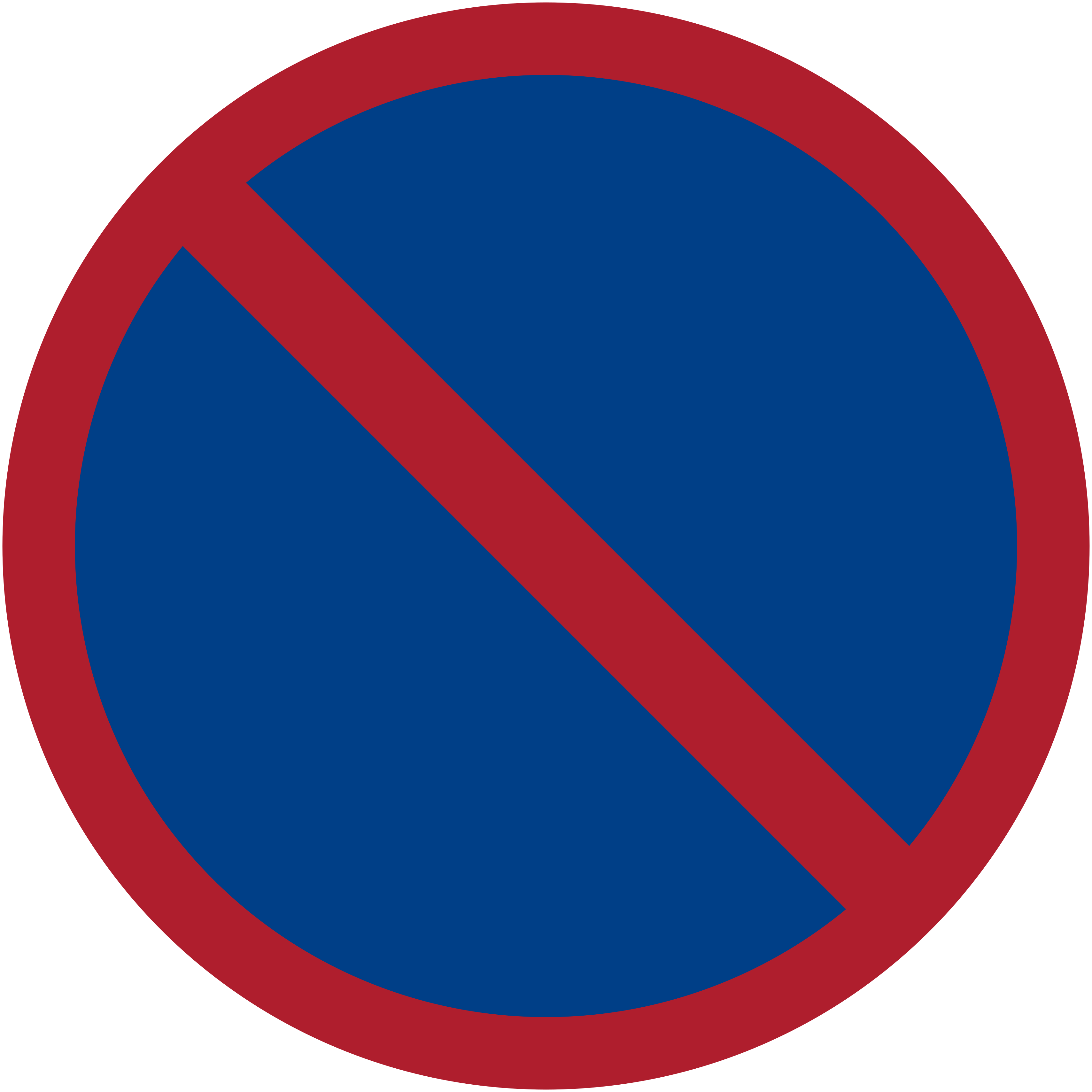
Parking is prohibited; stopping briefly is allowed.
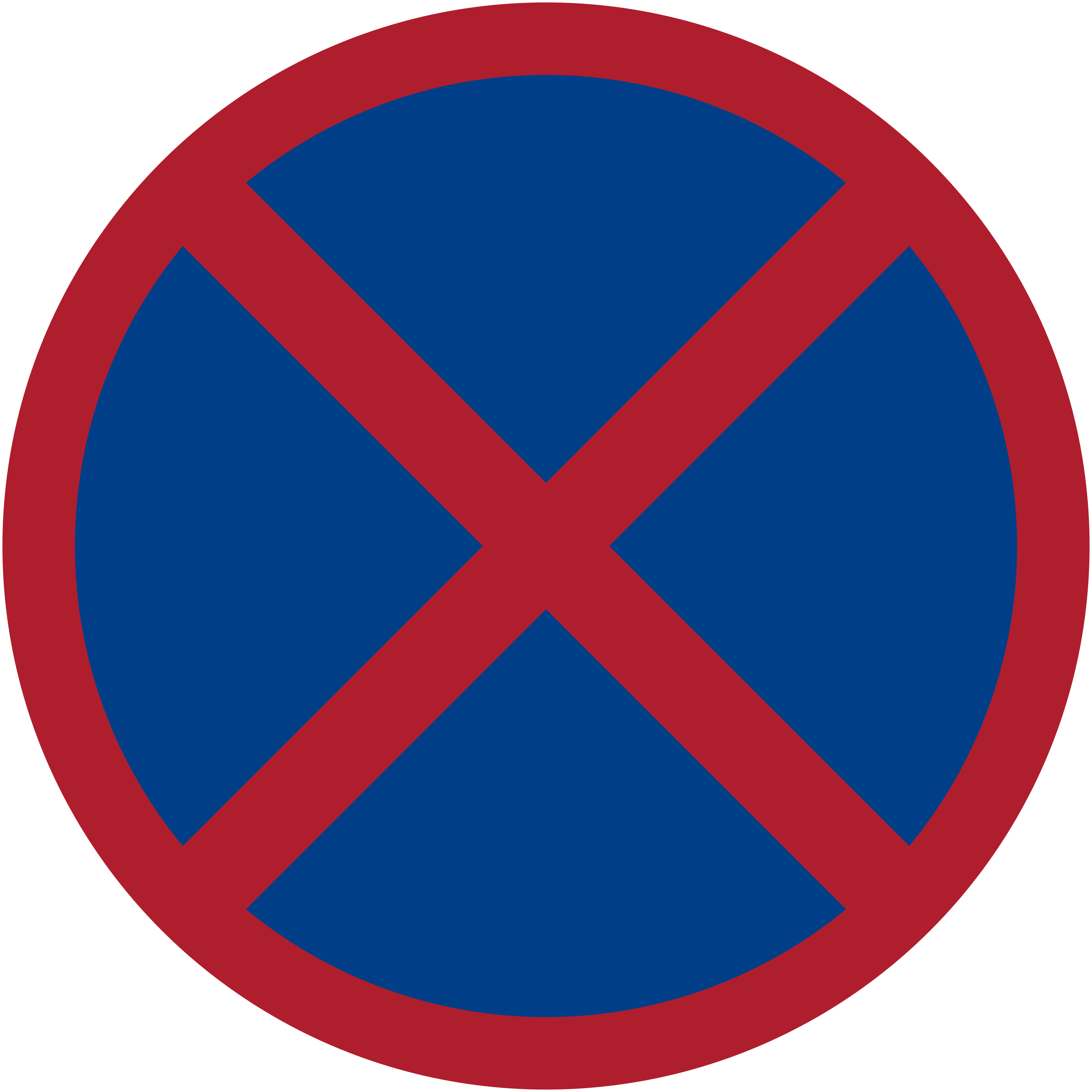
Stopping or parking for any reason is prohibited.
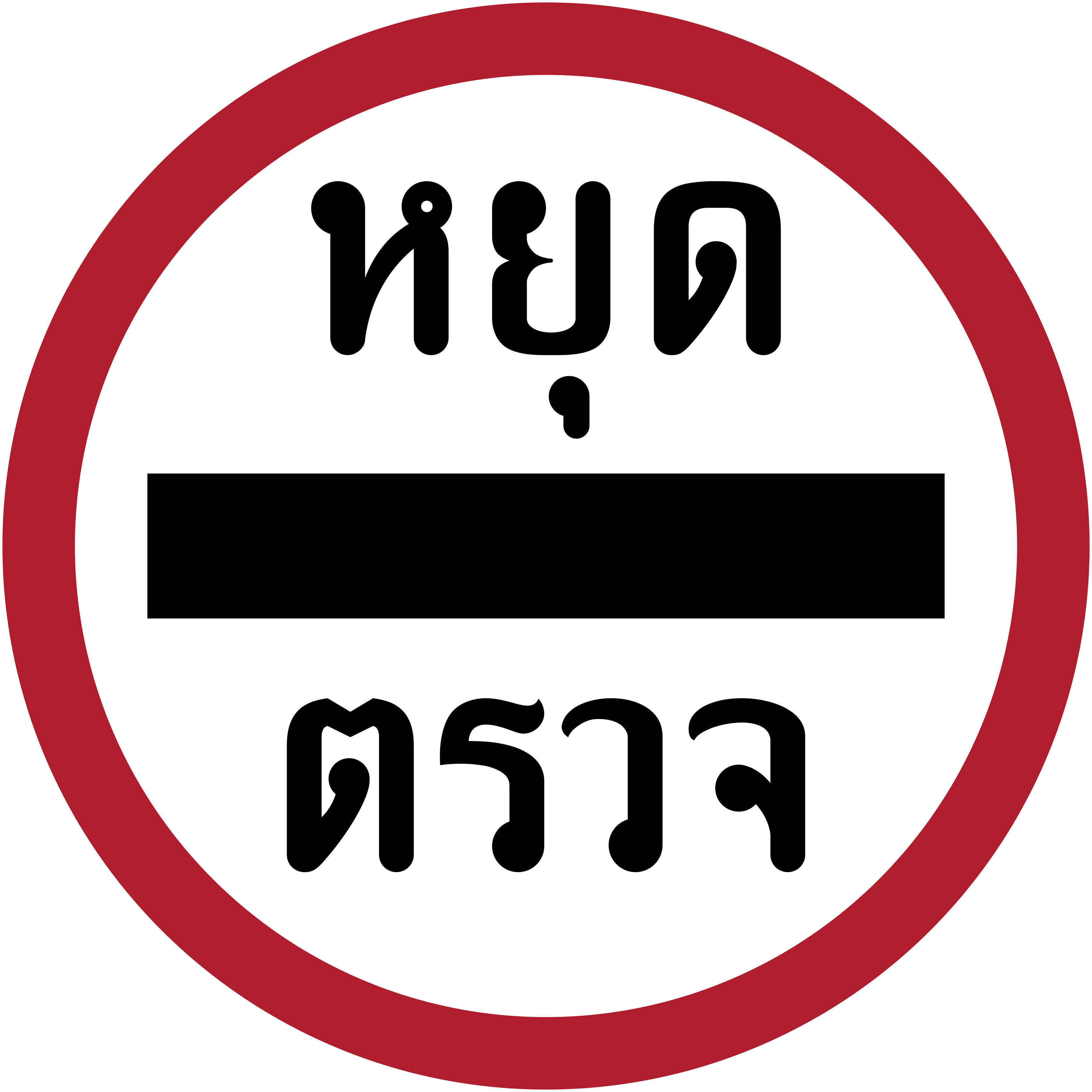
Stop at the checkpoint (e.g. police or customs) before continuing.
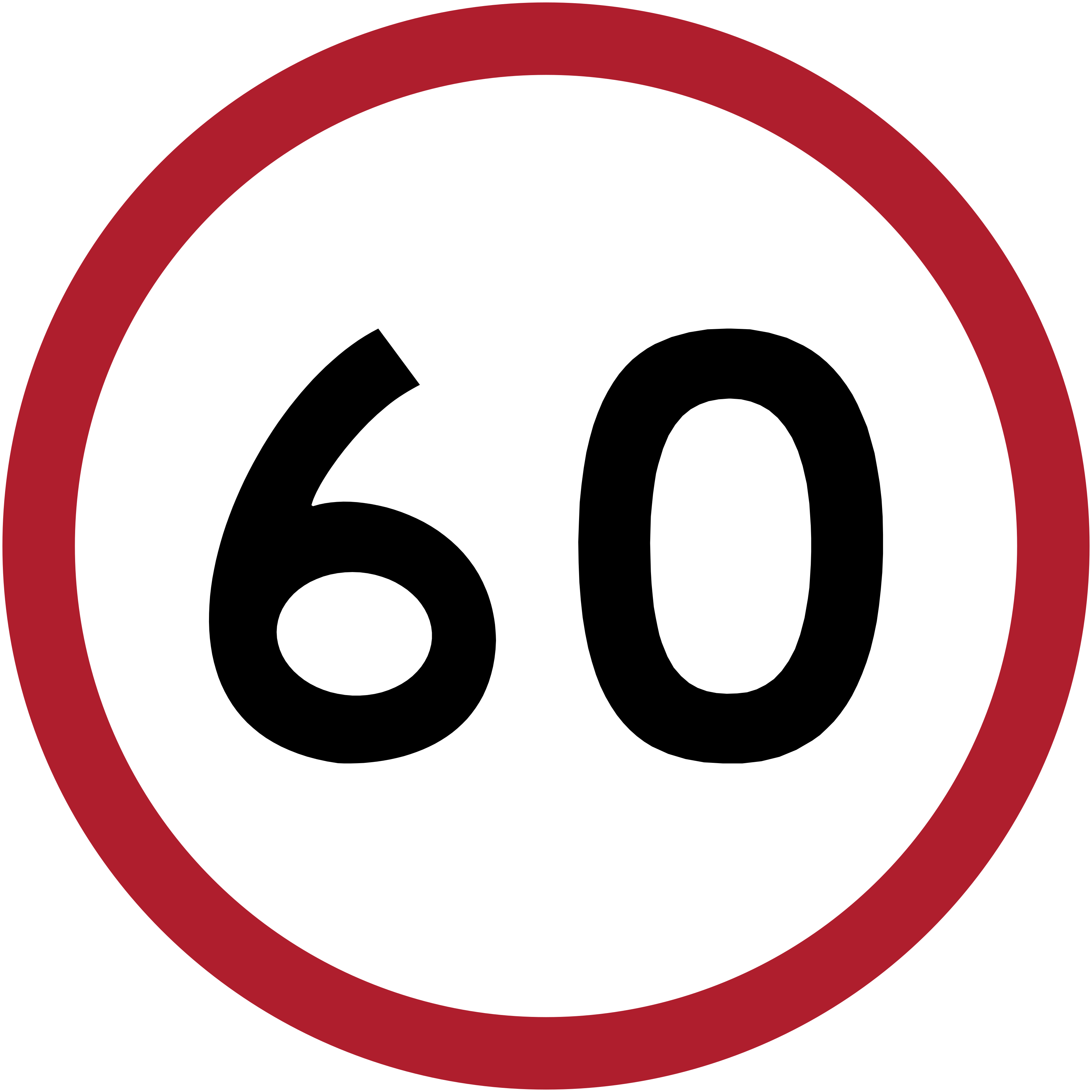
Do not drive faster than the number shown.
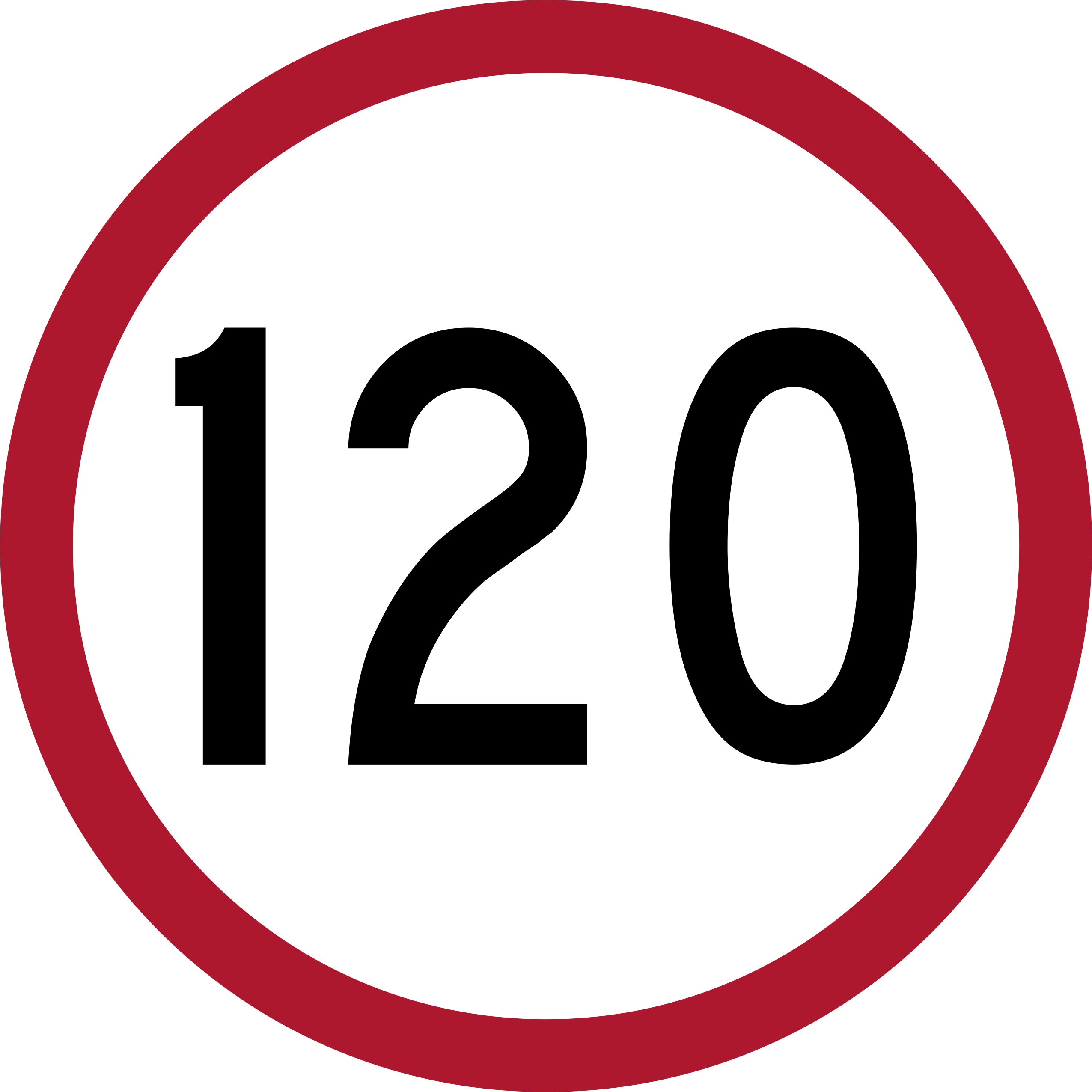
Do not drive faster than the number shown.
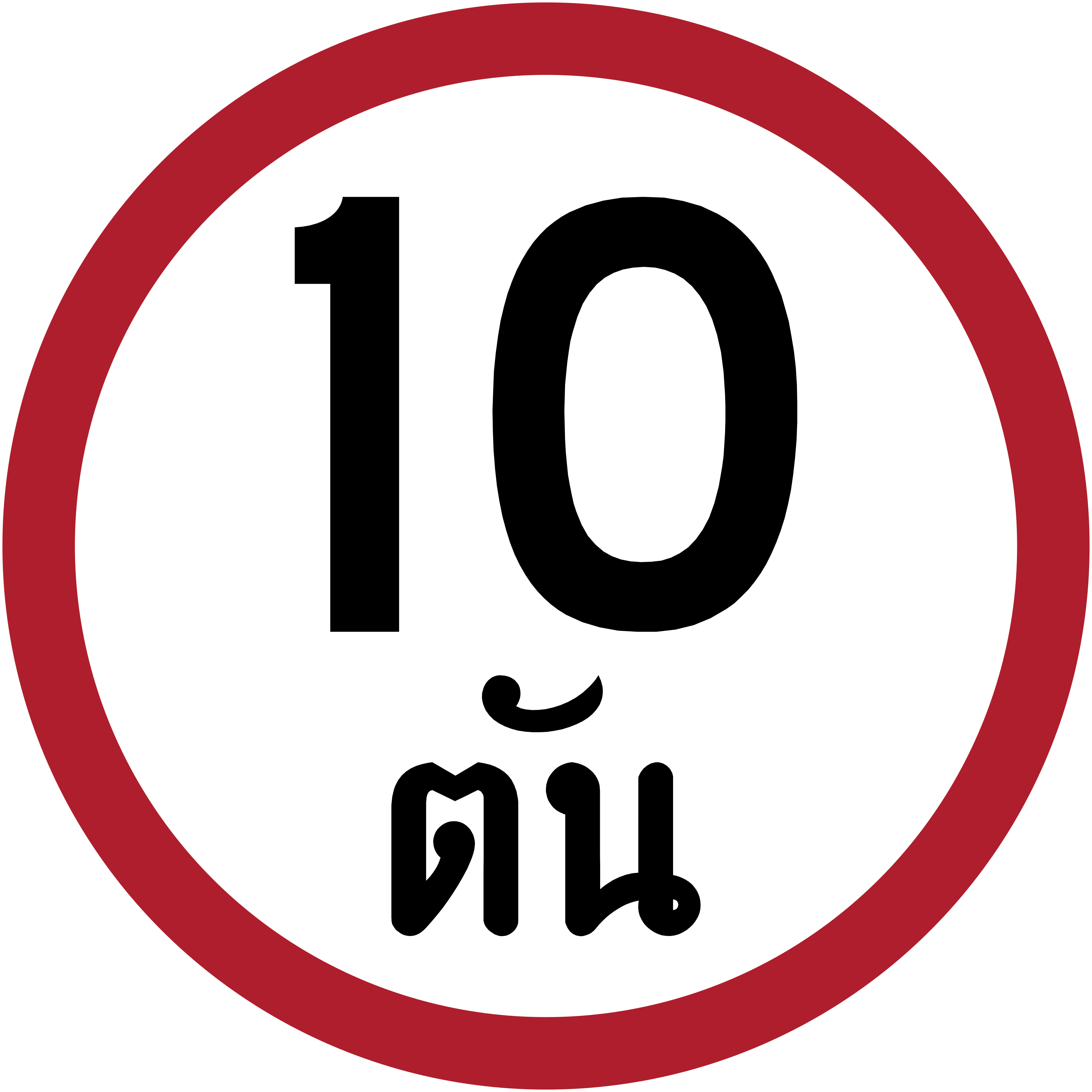
Vehicles heavier than the weight shown may not enter.
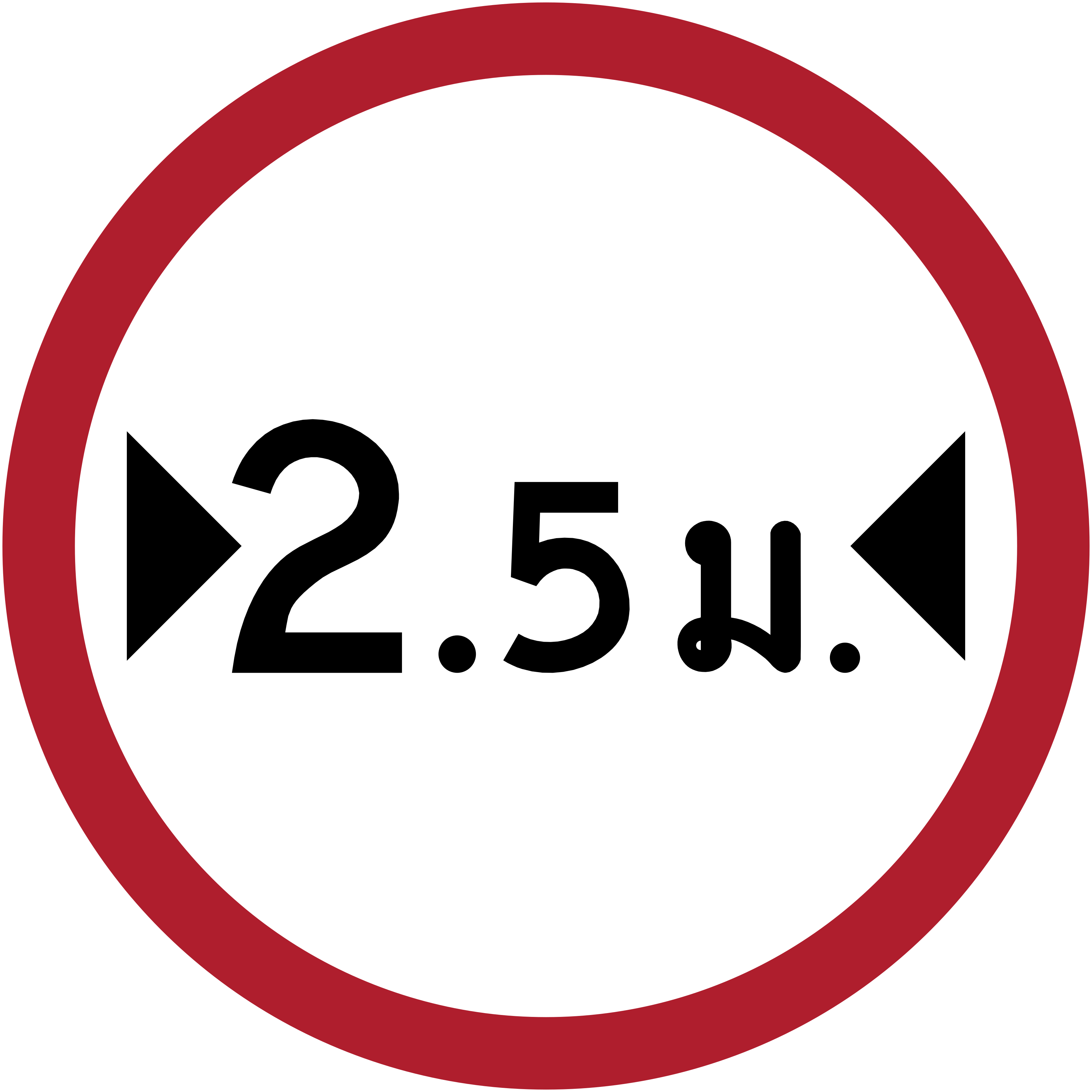
Vehicles wider than the width shown may not enter.
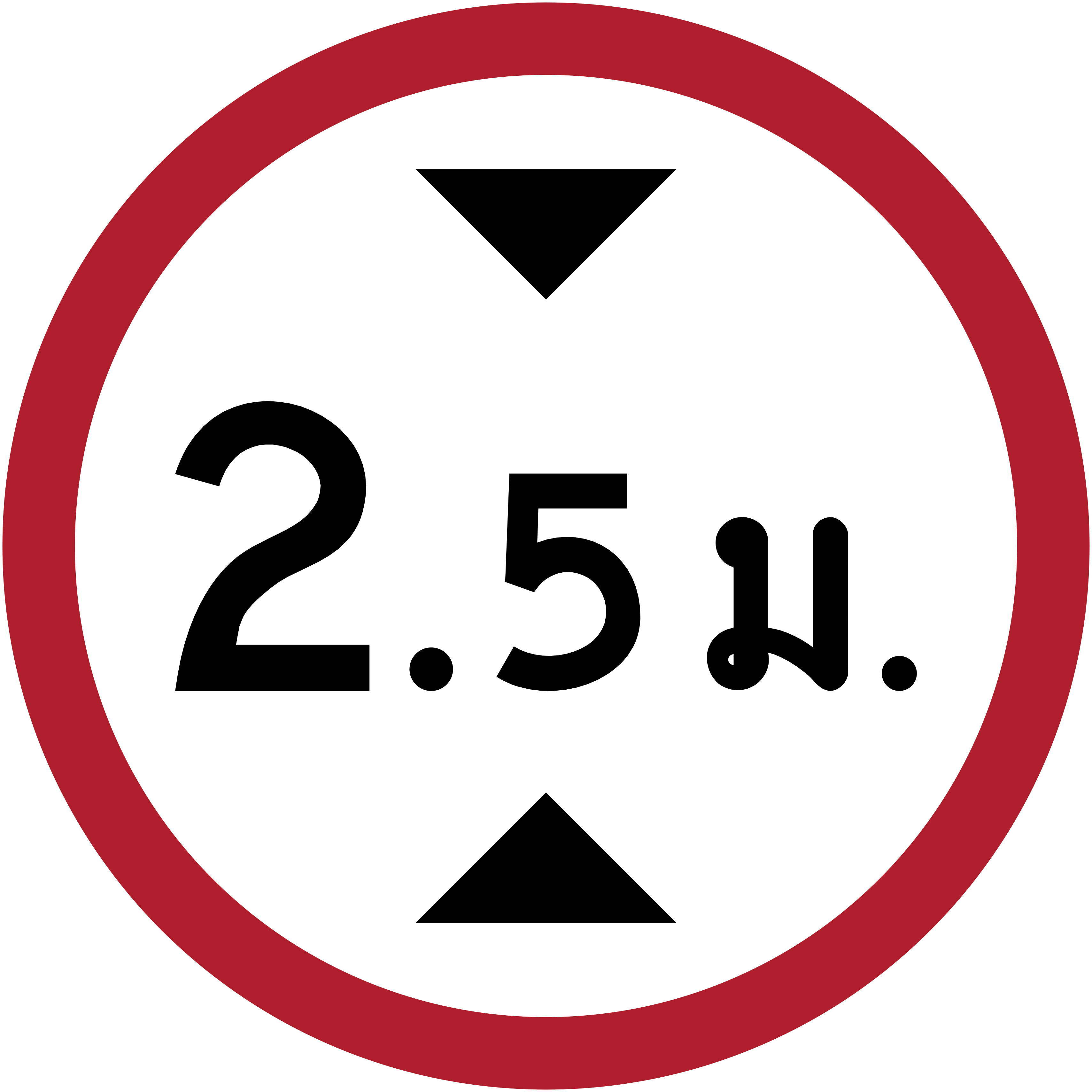
Vehicles taller than the height shown may not enter.
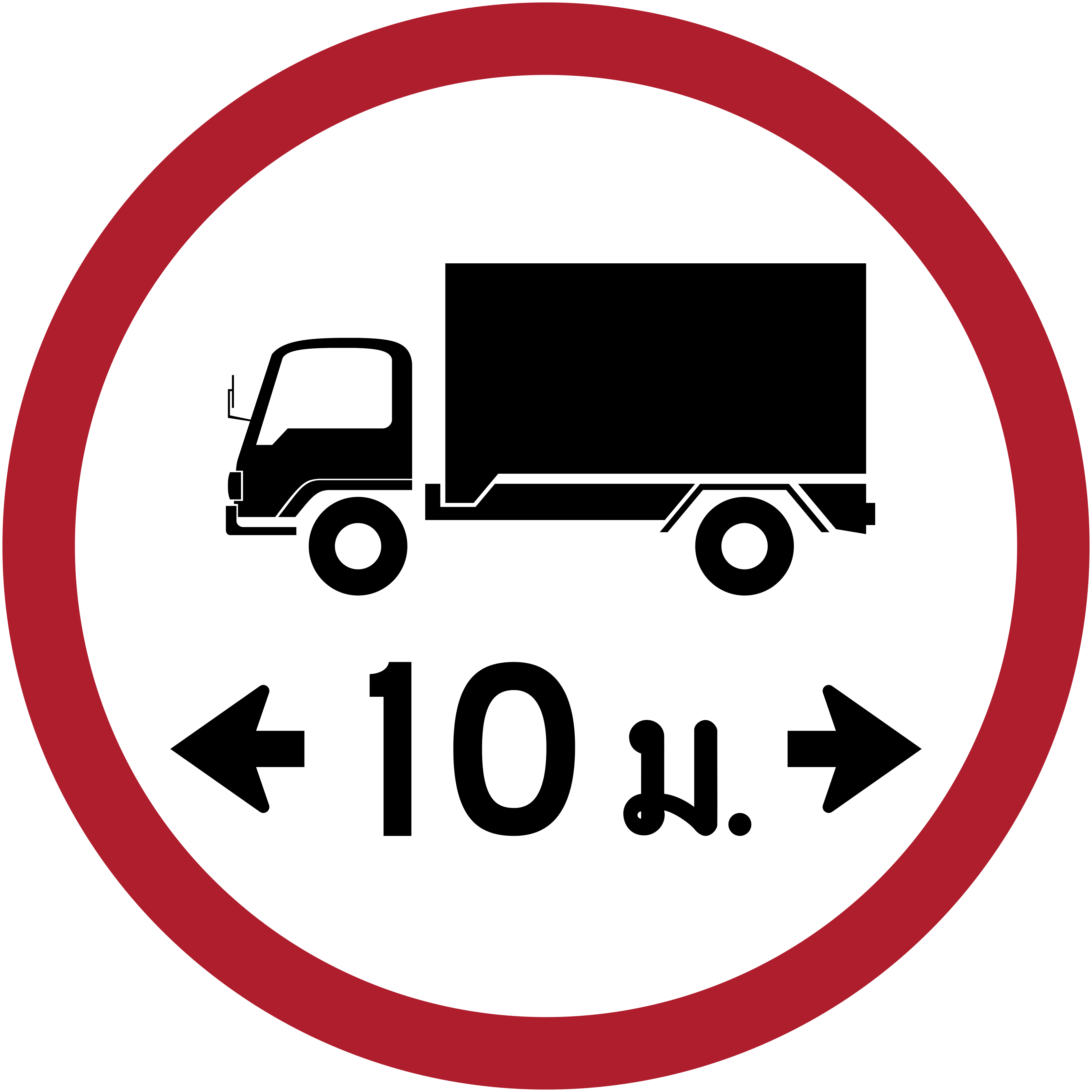
Vehicles longer than the length shown may not enter.
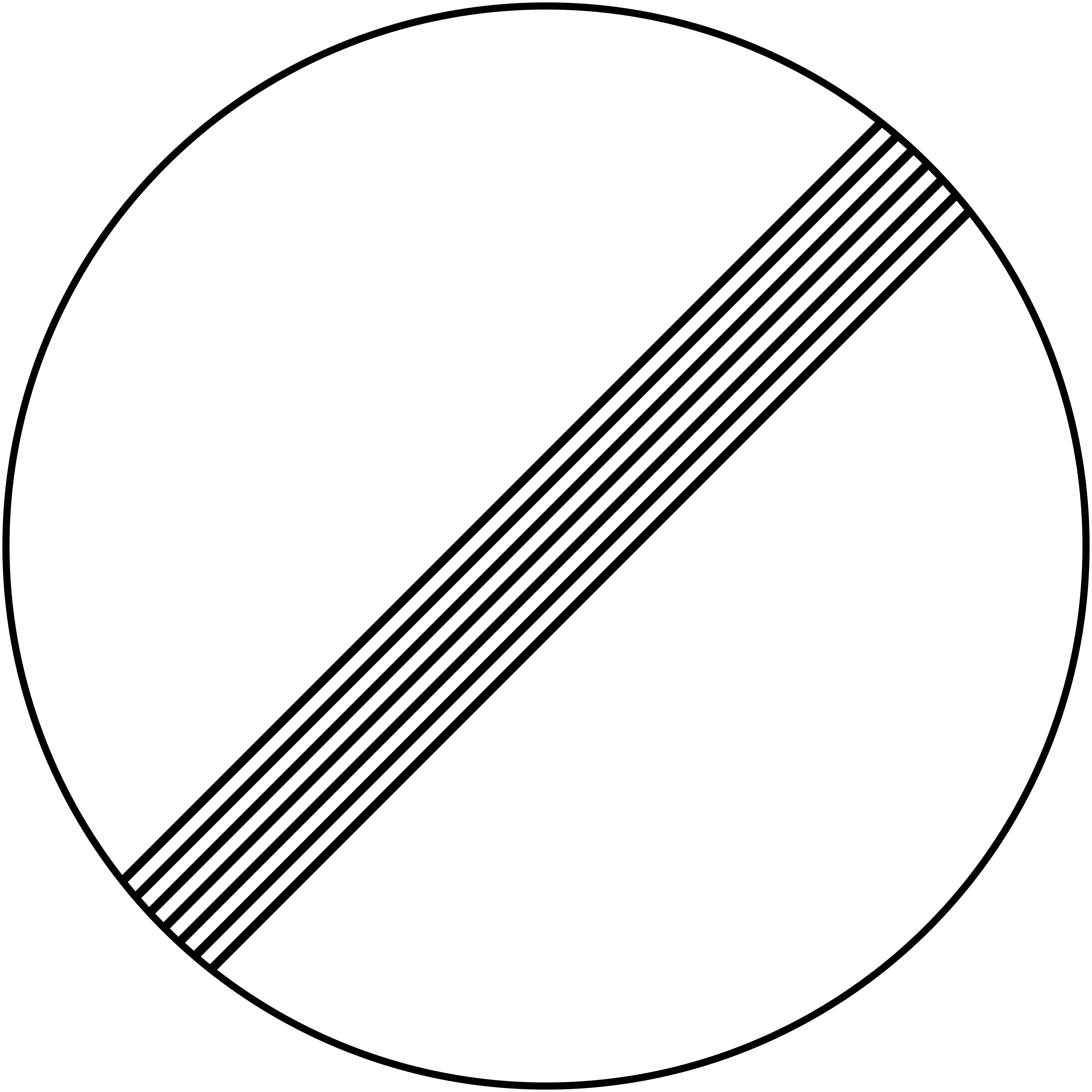
The special speed limit ends; the general limit applies again.
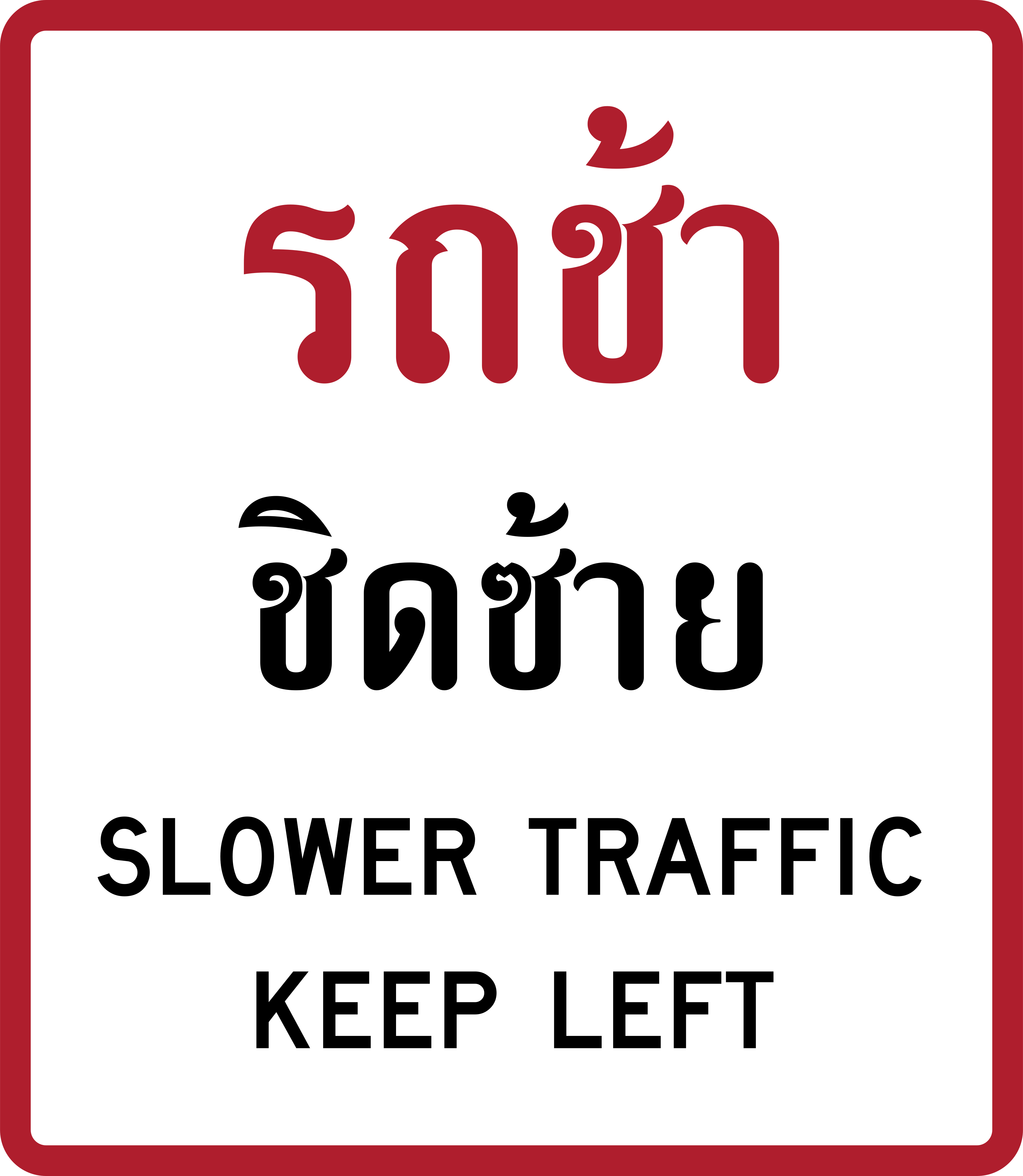
Slow vehicles must use the left lane.
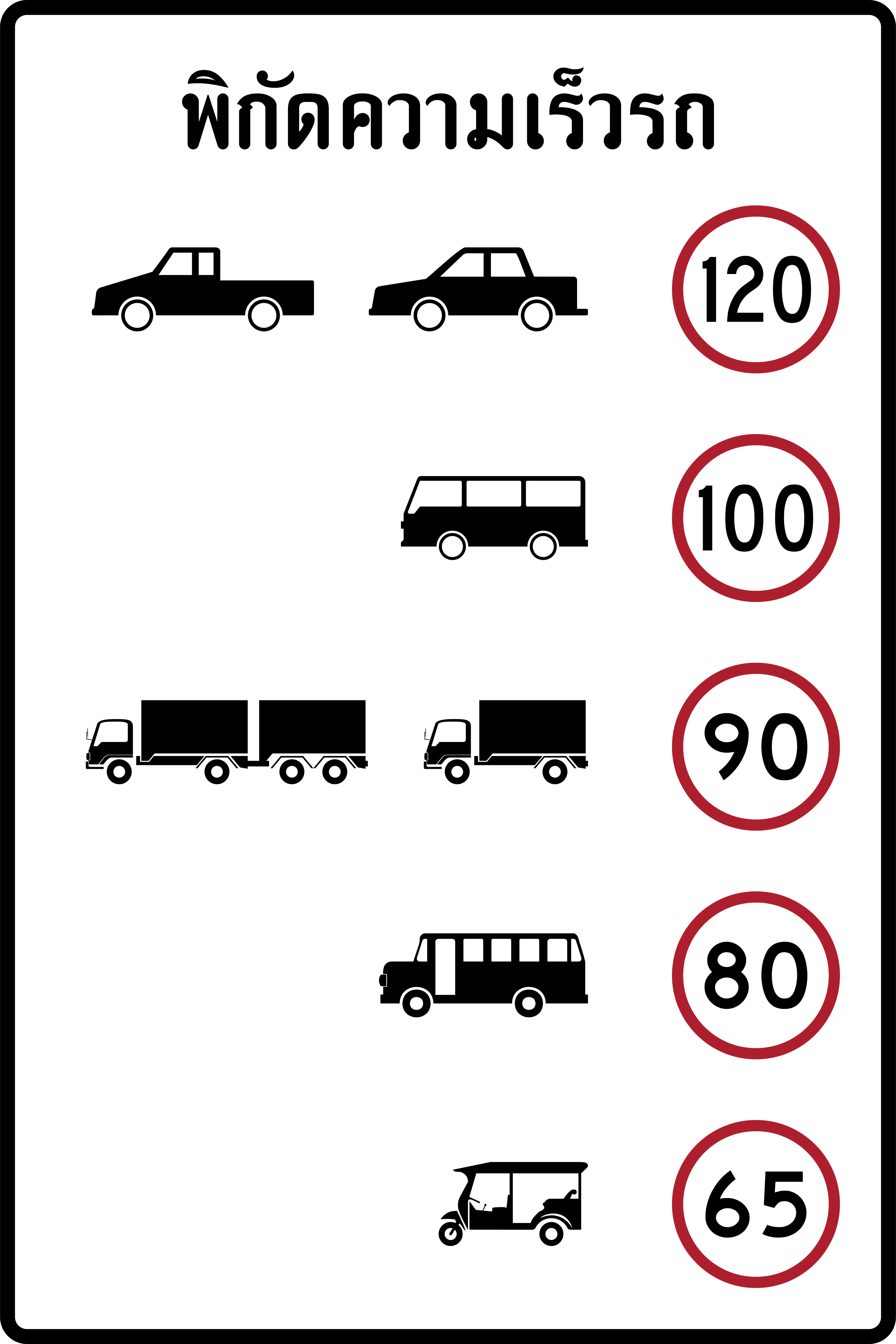
Shows the maximum speeds for each type of vehicle on this road (2021 regulation).
Mandatory signs
Blue circle, white symbol: do exactly this. A white number on a blue circle is a minimum speed, not a limit.
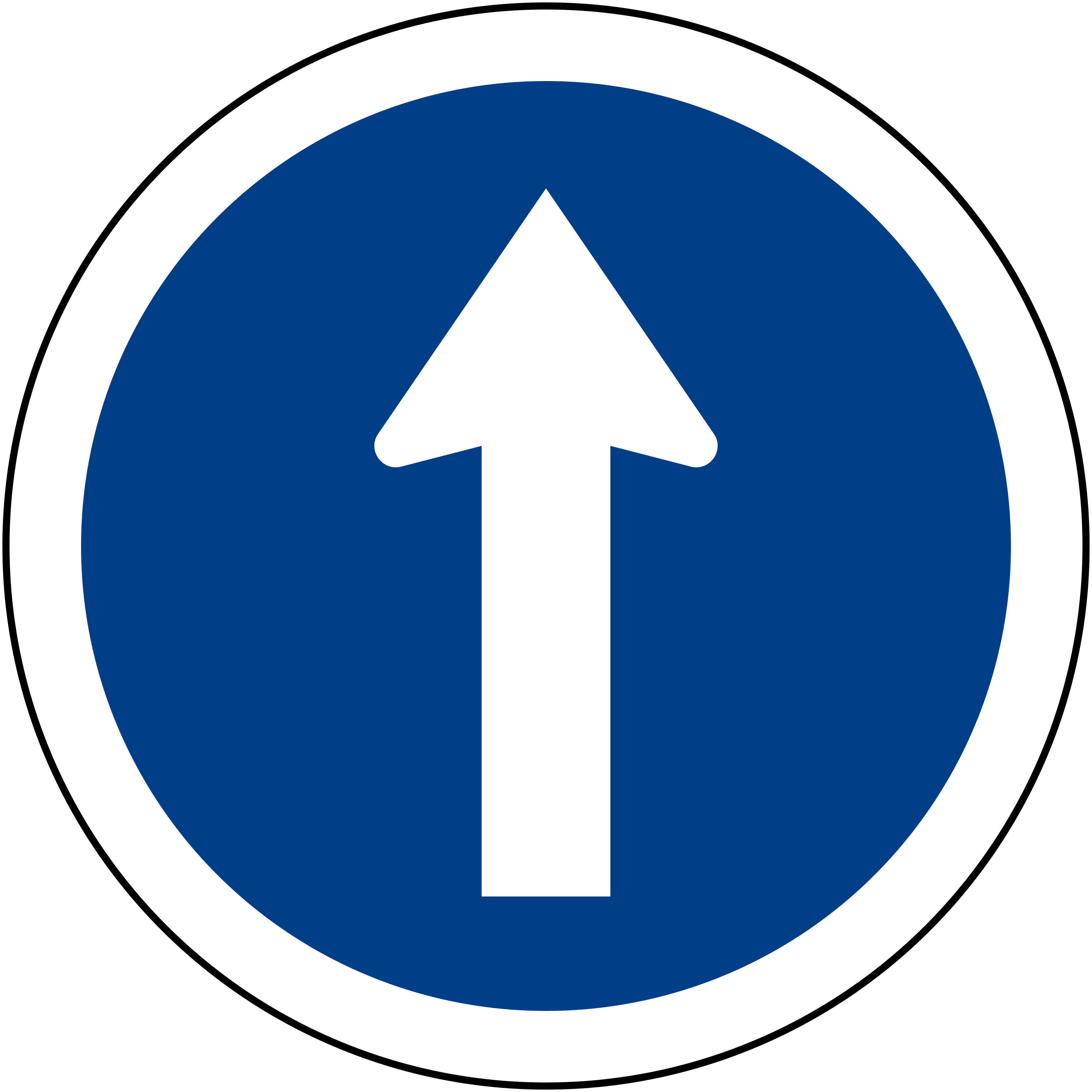
You must go straight ahead.
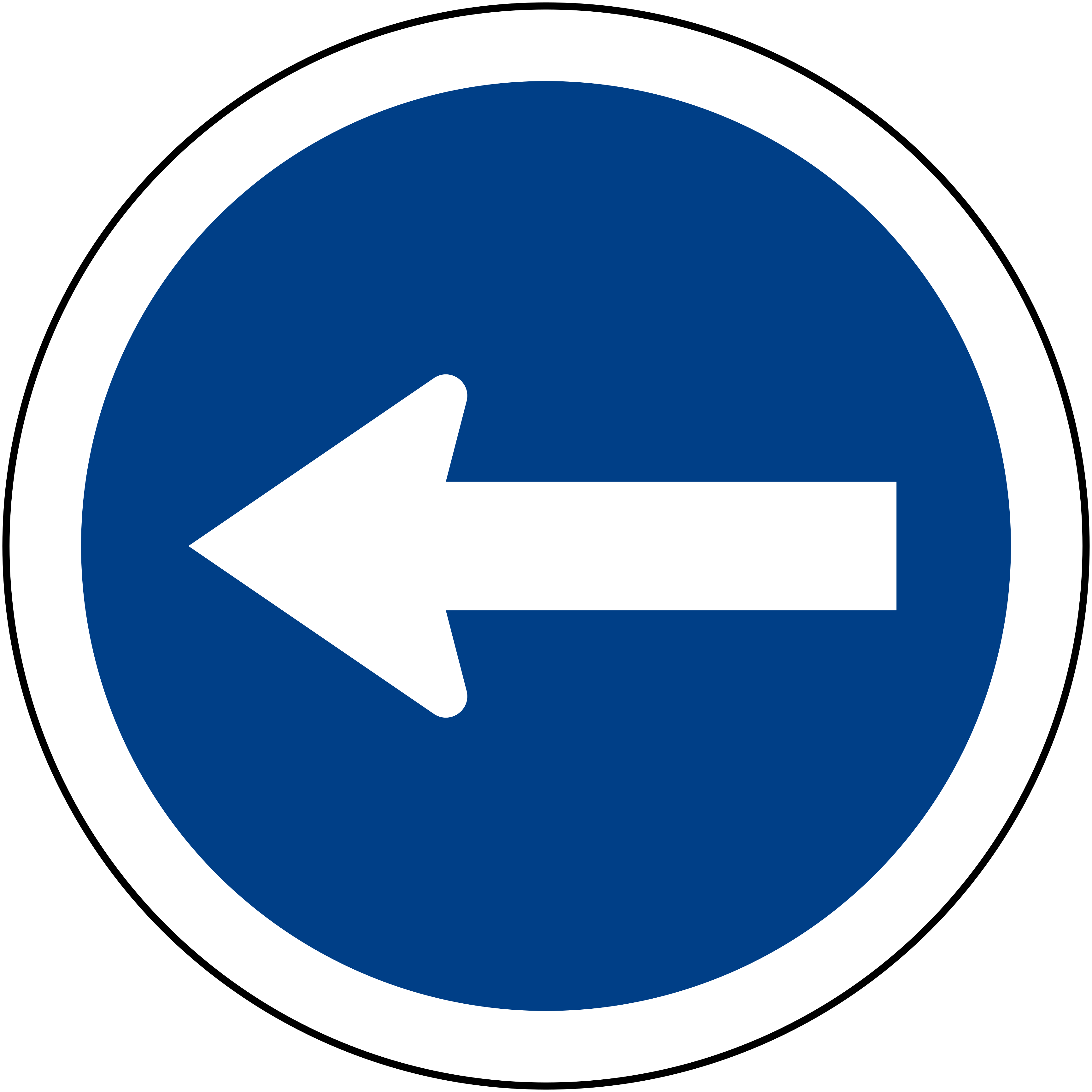
You must turn left.
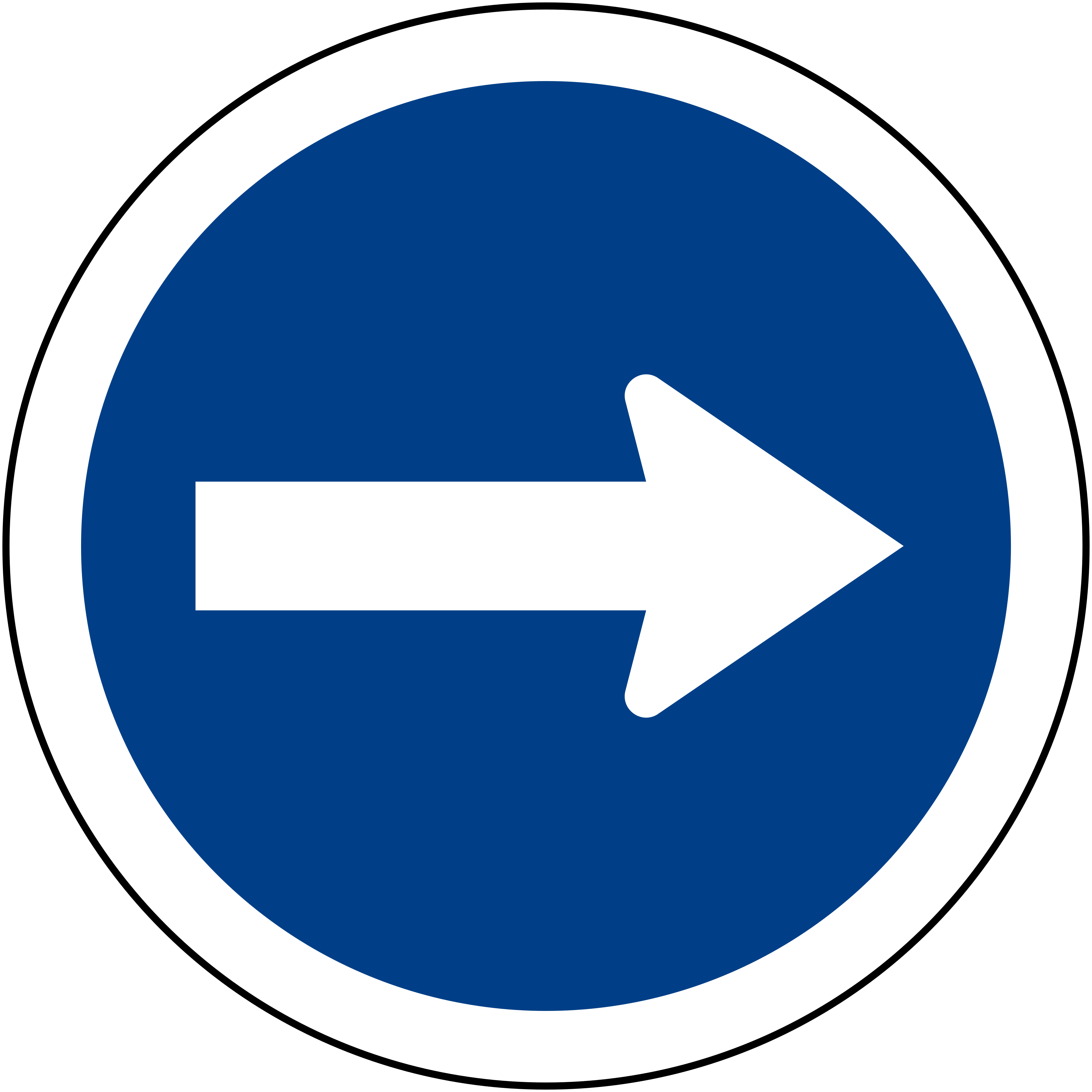
You must turn right.
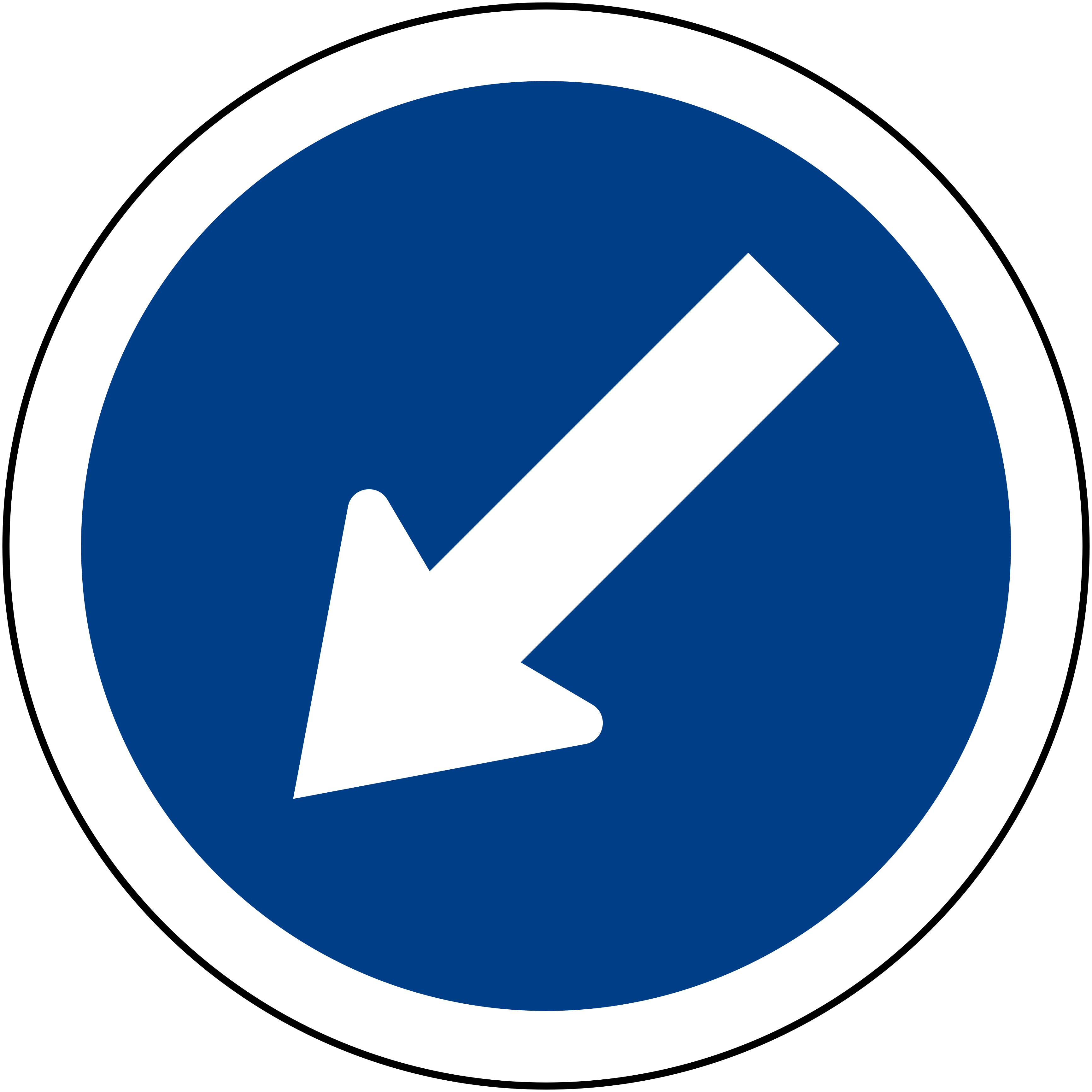
Pass the obstacle or island on its left side.
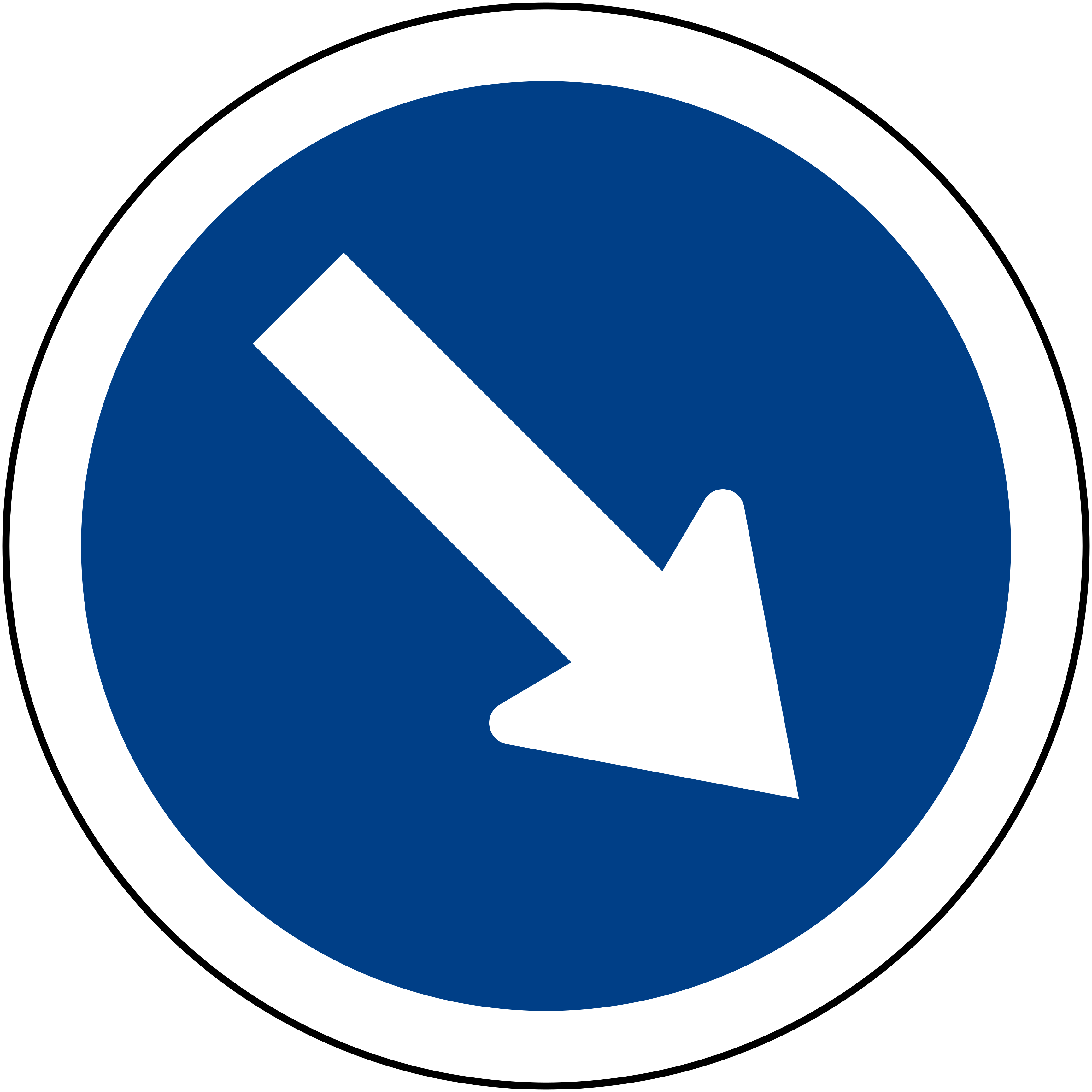
Pass the obstacle or island on its right side.
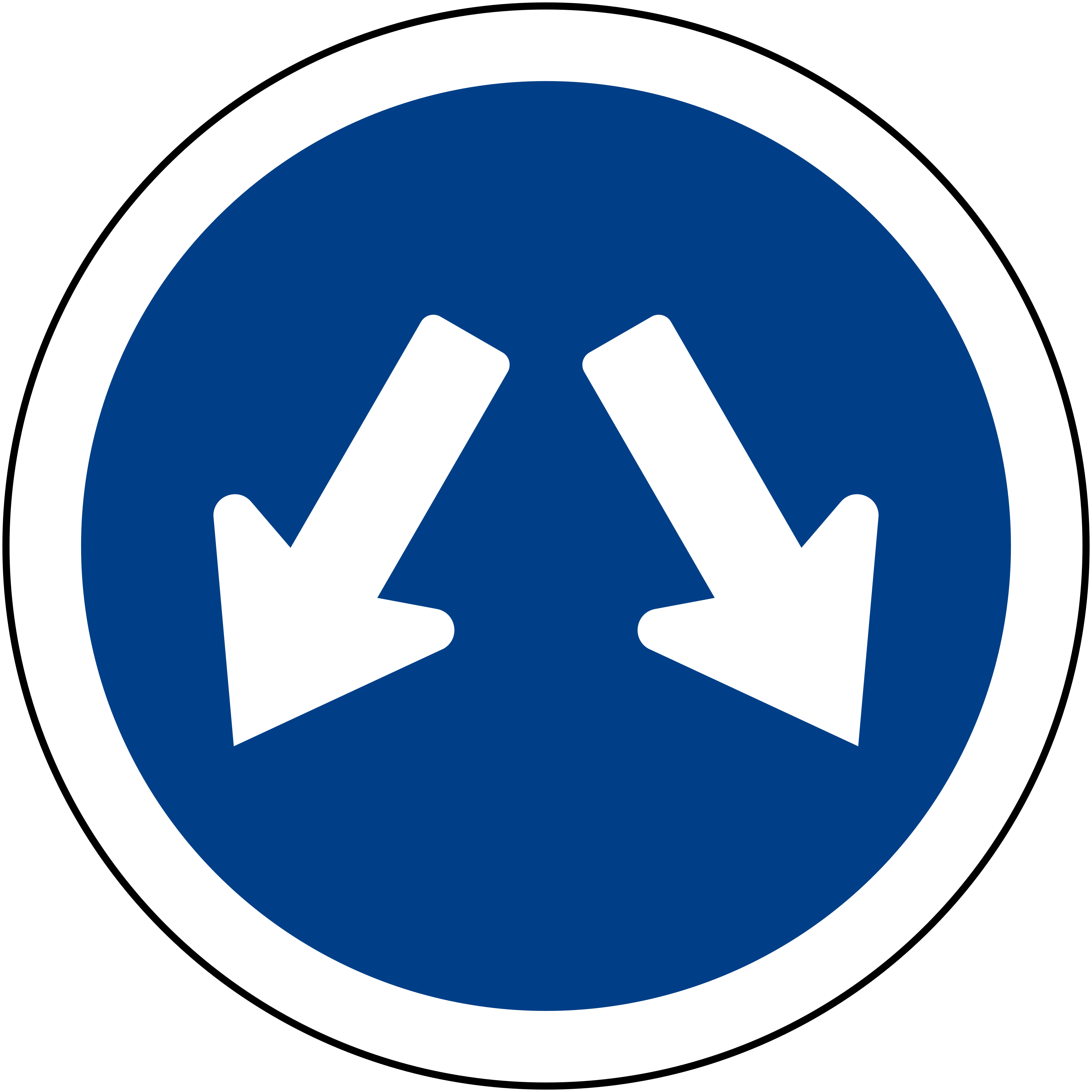
You may pass the obstacle on either side.
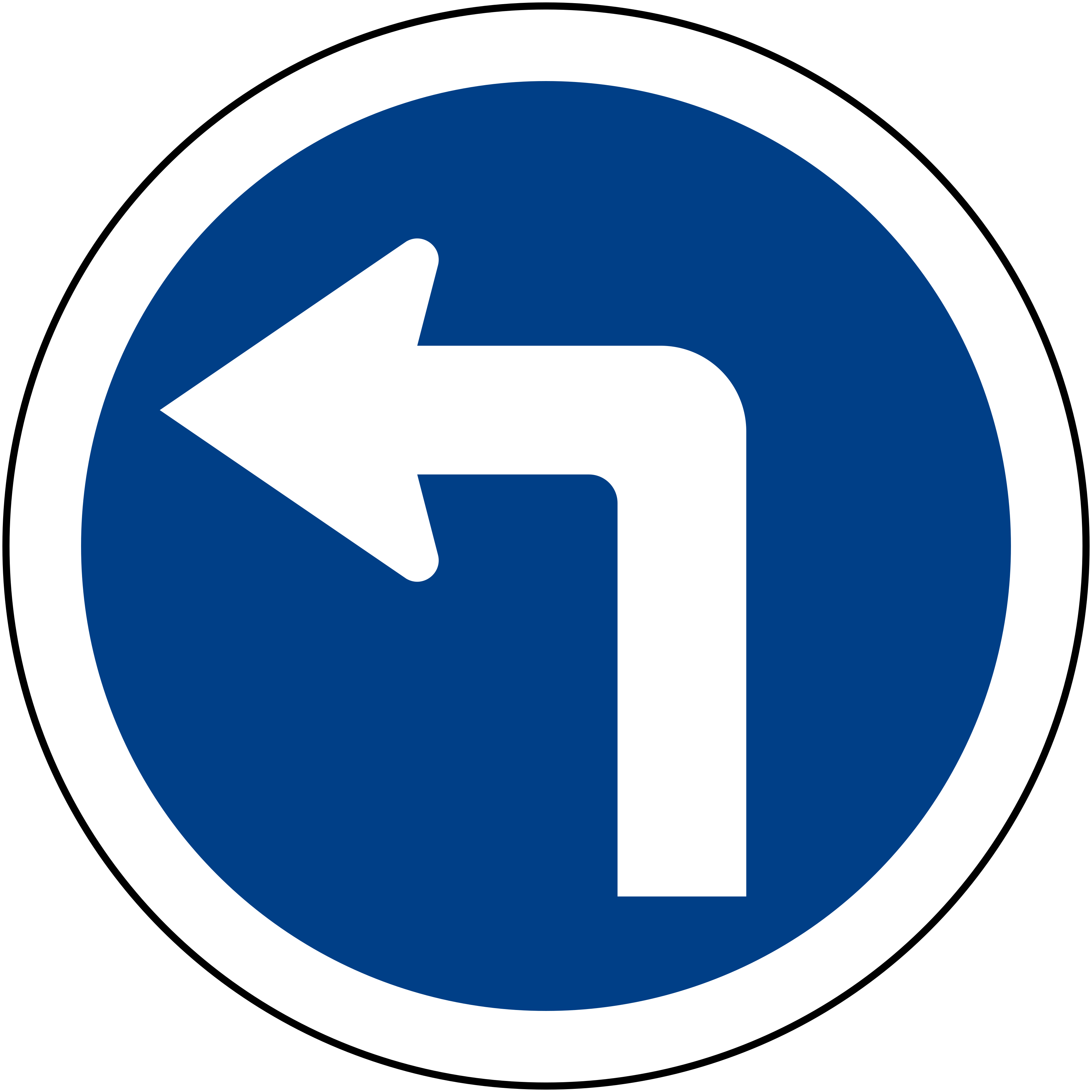
At the junction ahead, you must turn left.
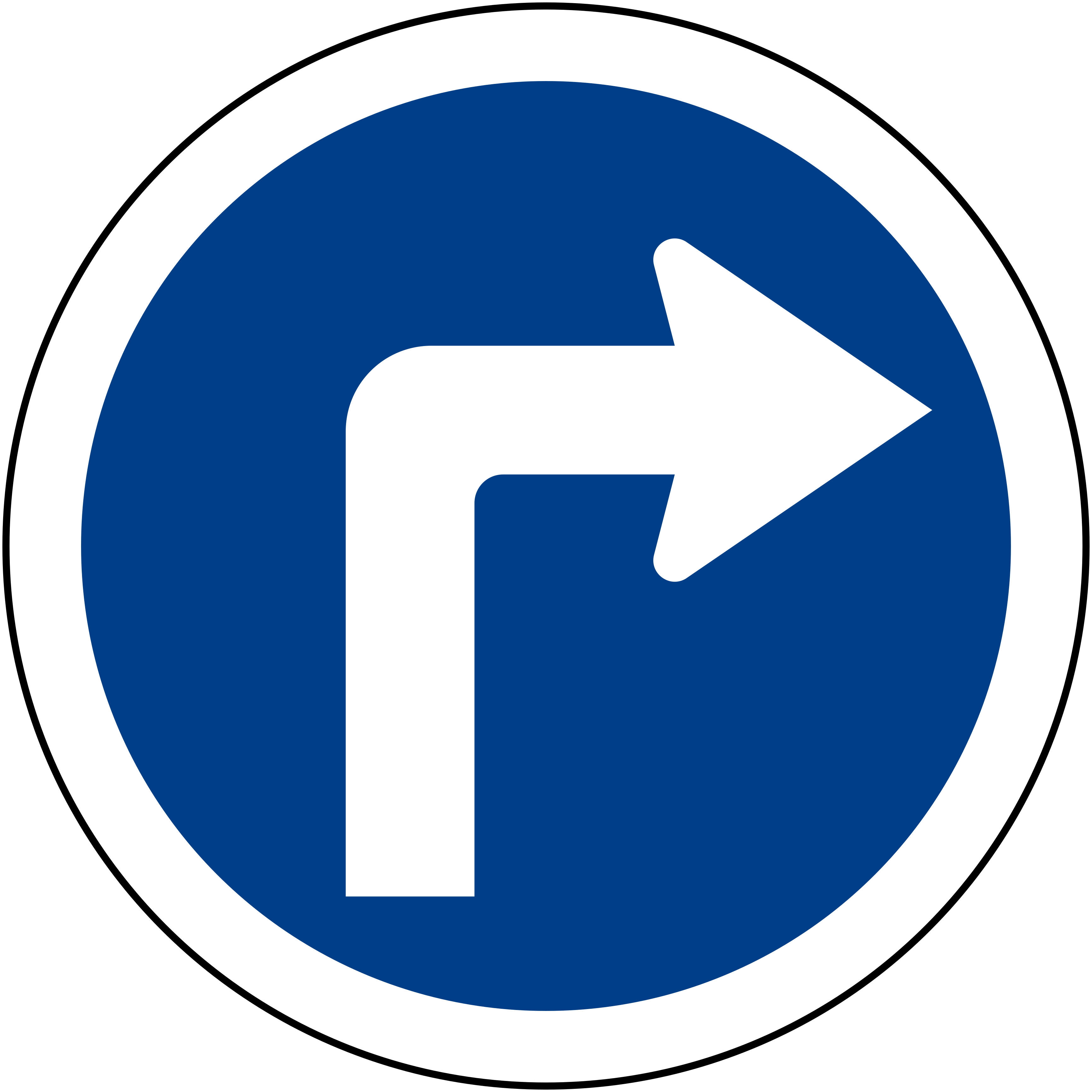
At the junction ahead, you must turn right.
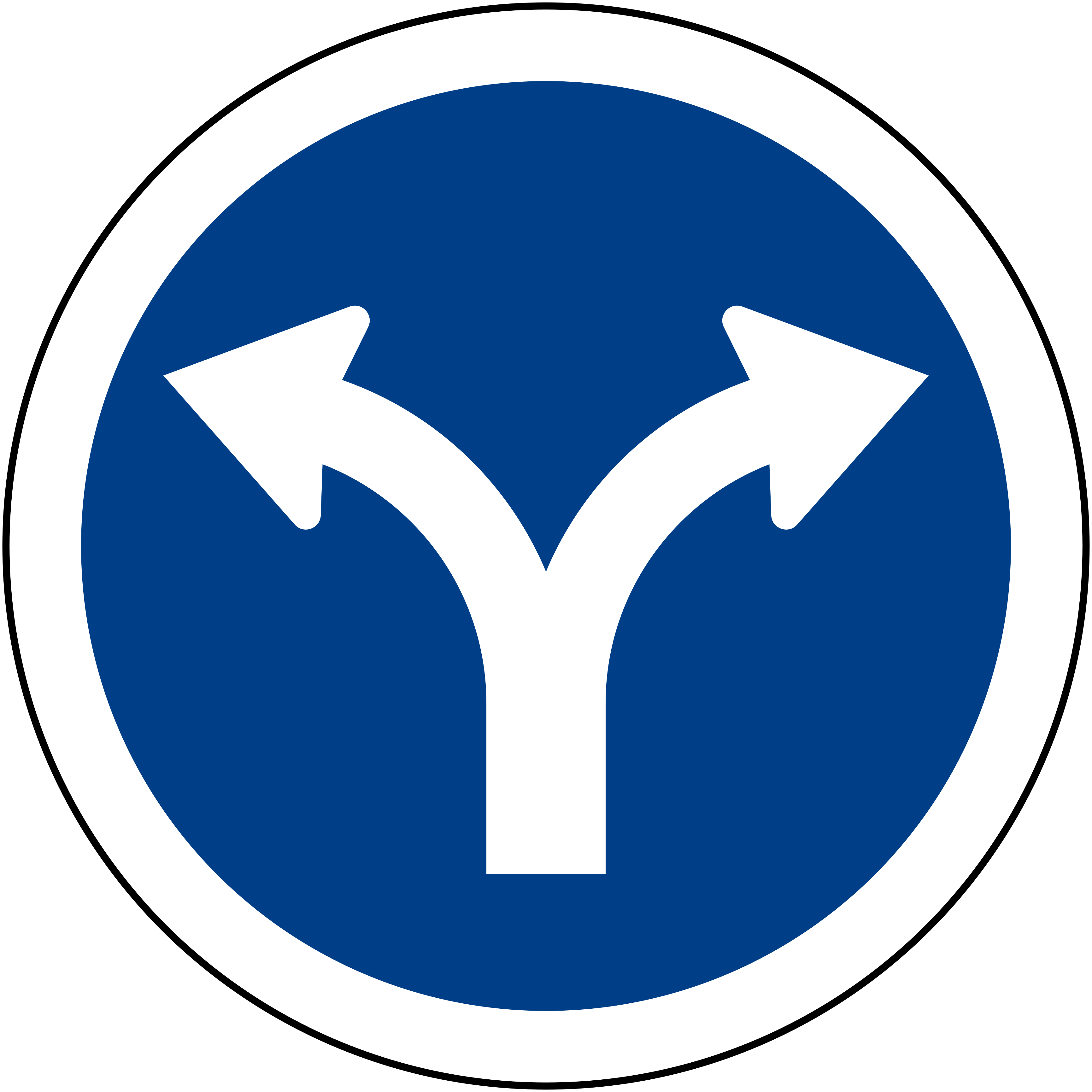
You must turn either left or right; going straight is not allowed.
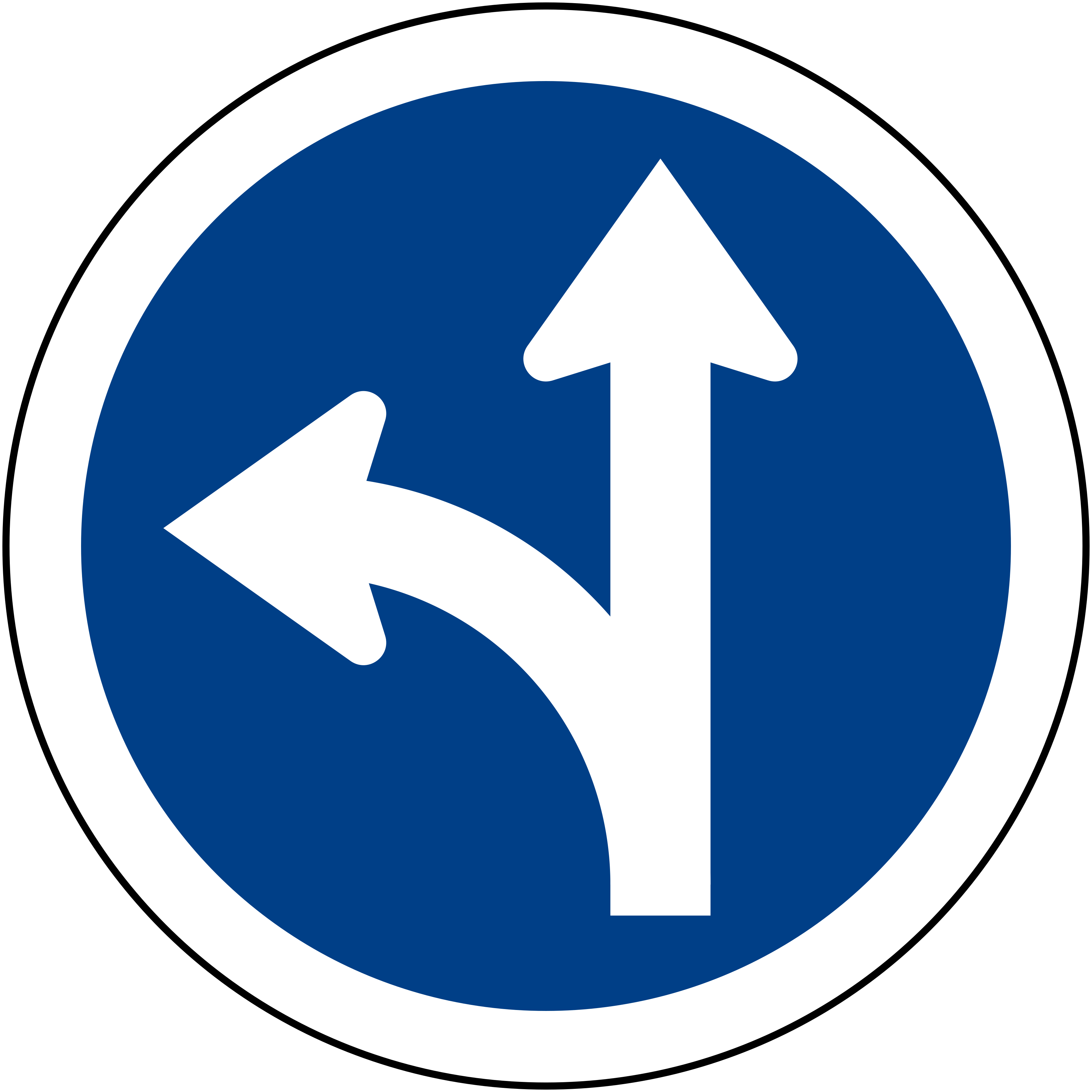
You may go straight or turn left.
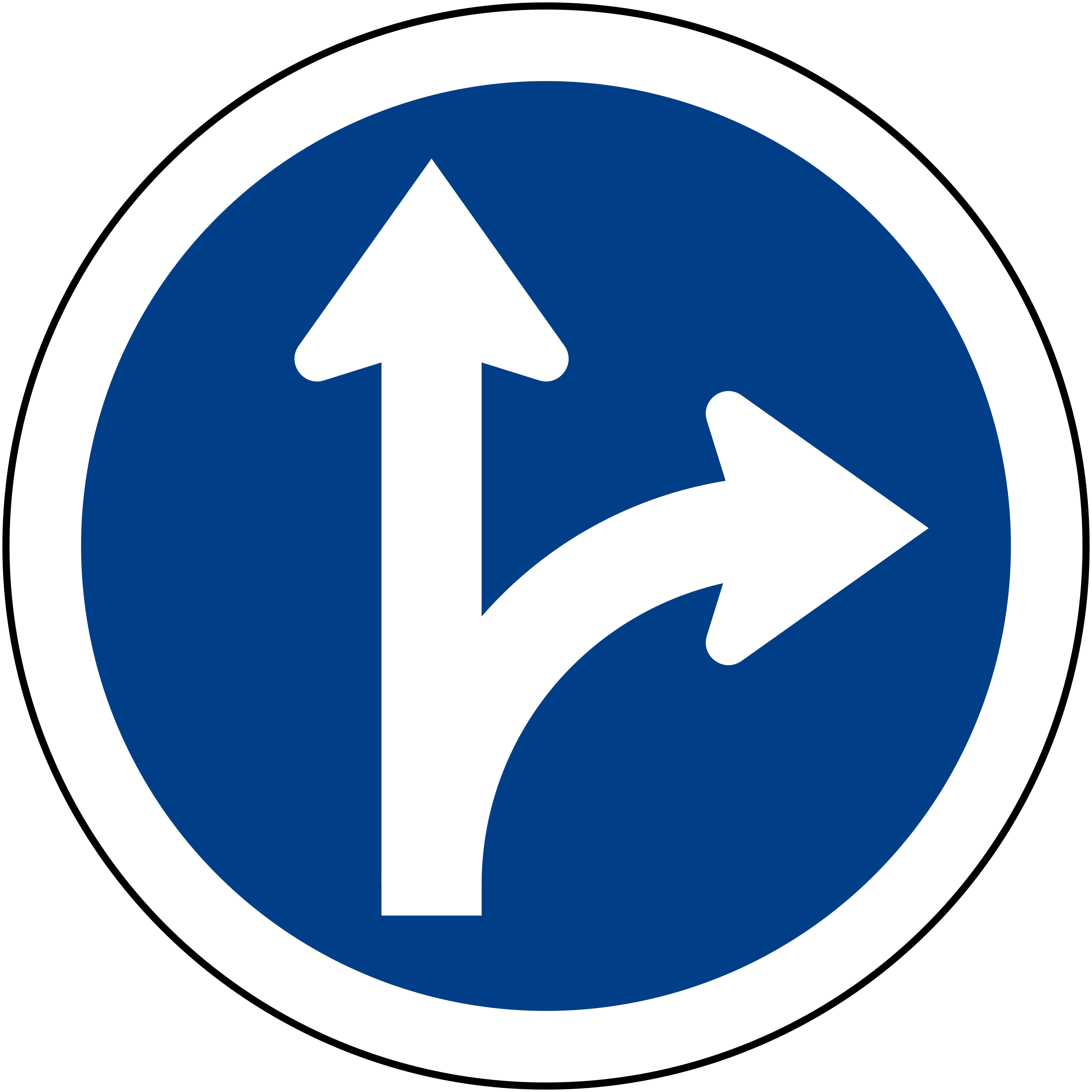
You may go straight or turn right.
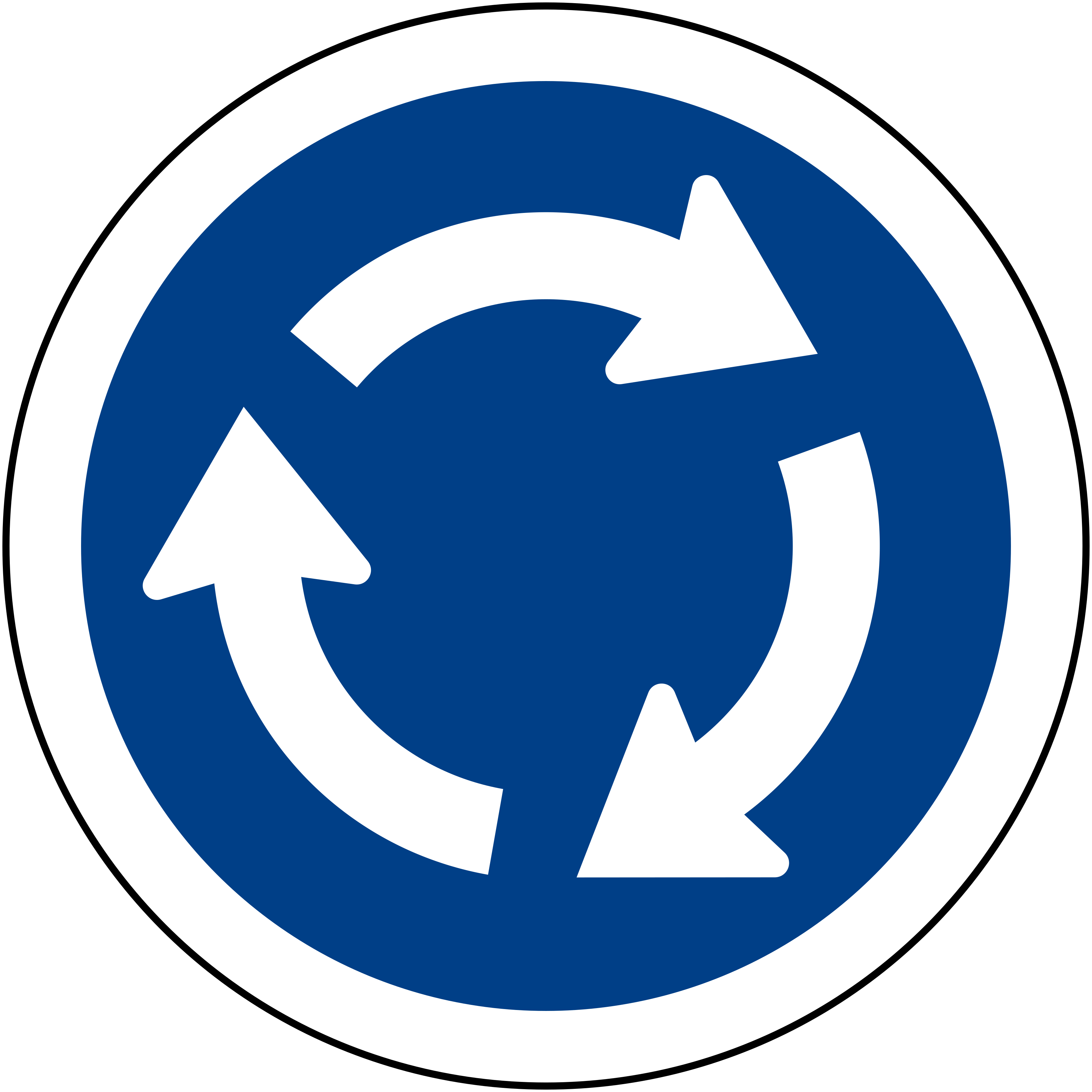
Drive around the roundabout in the direction of the arrows.
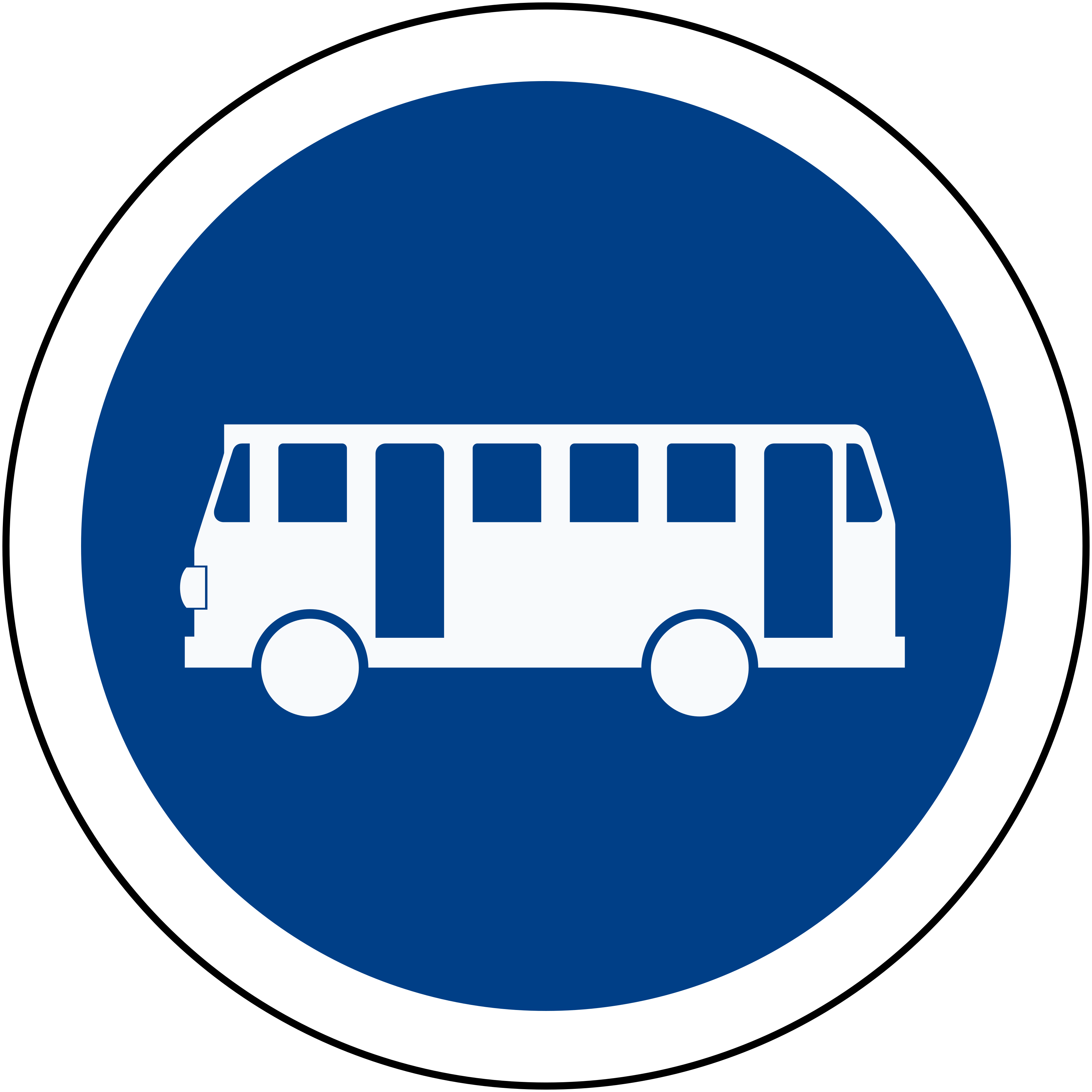
Lane or road reserved for buses.
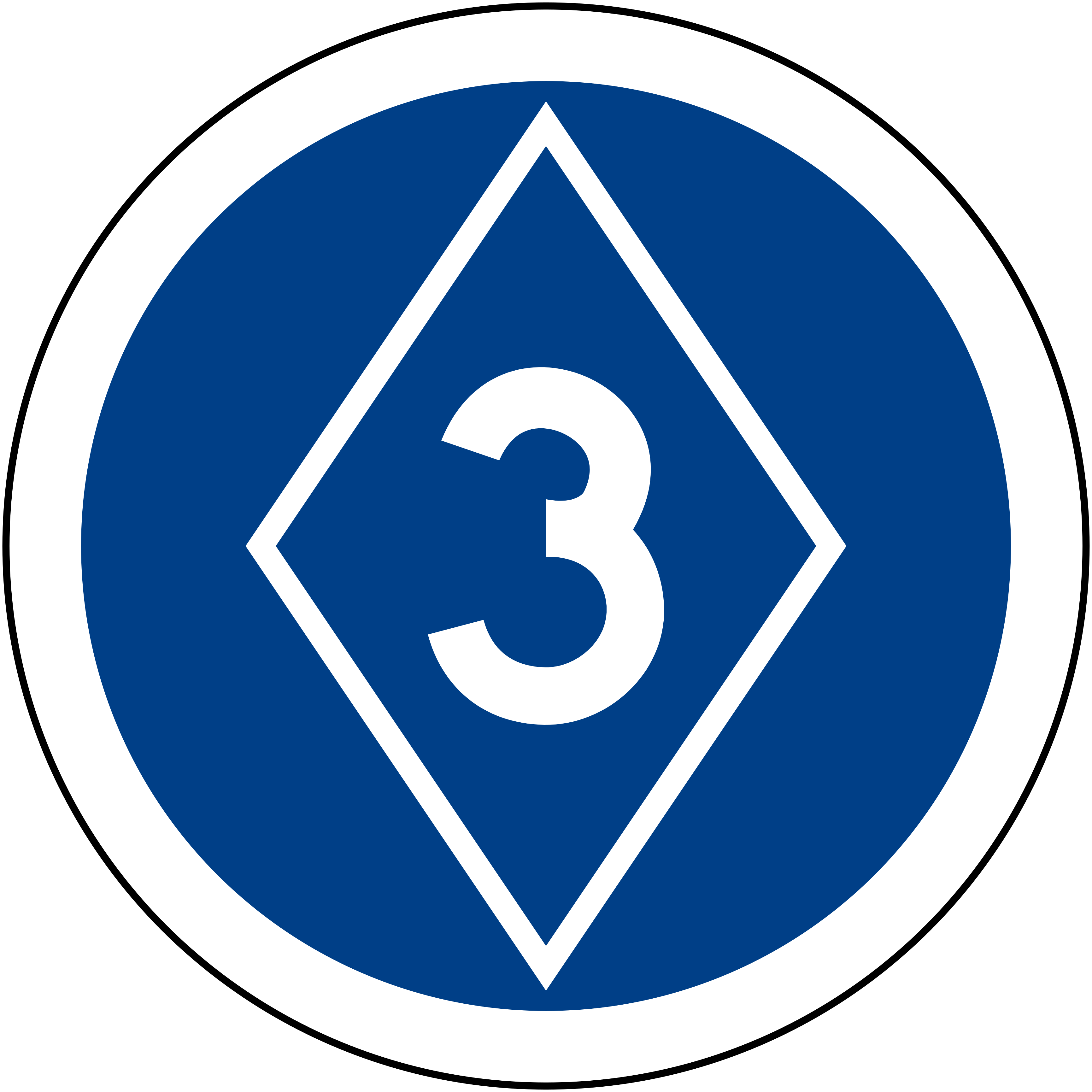
Lane reserved for vehicles carrying at least the number of people shown.
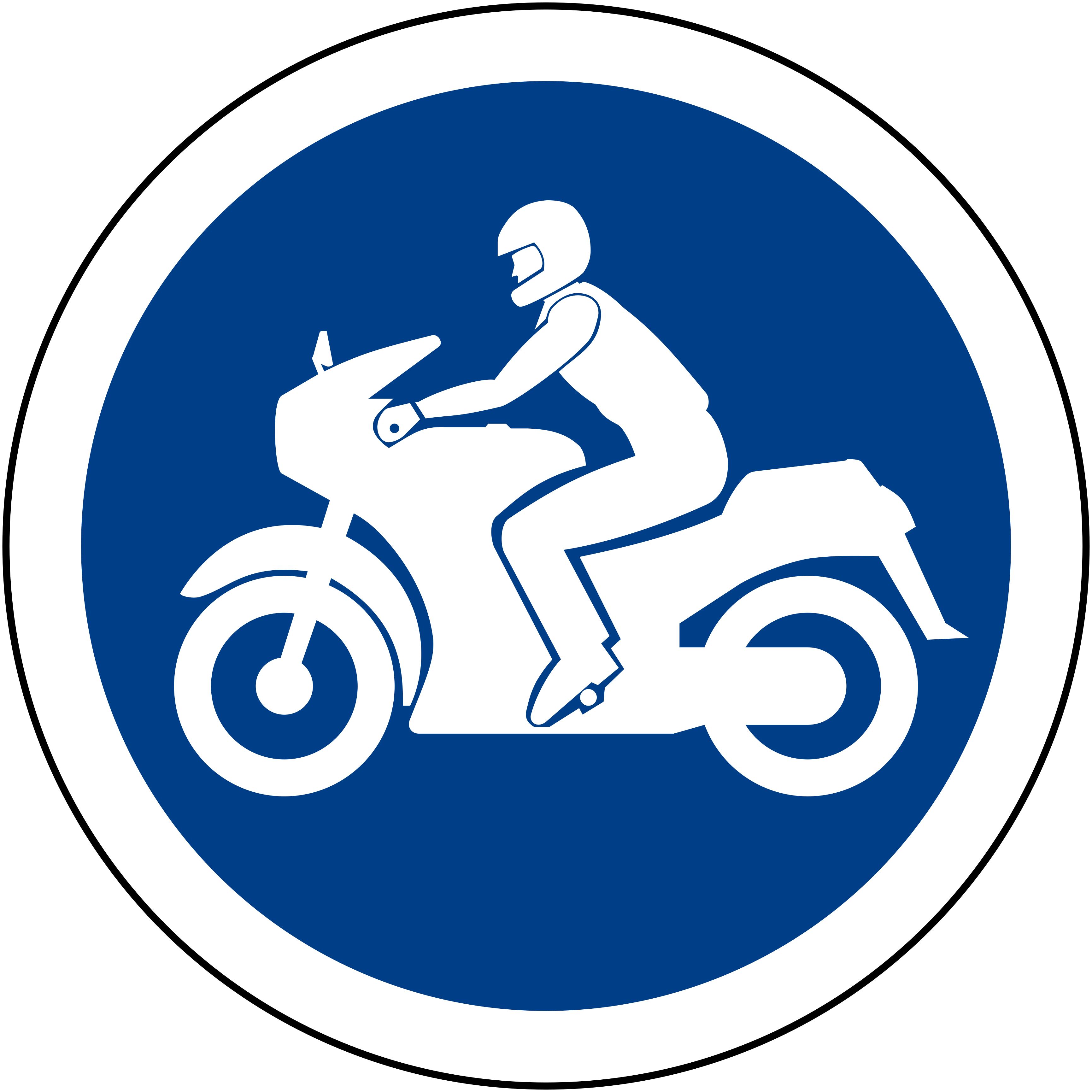
Lane or road reserved for motorcycles.
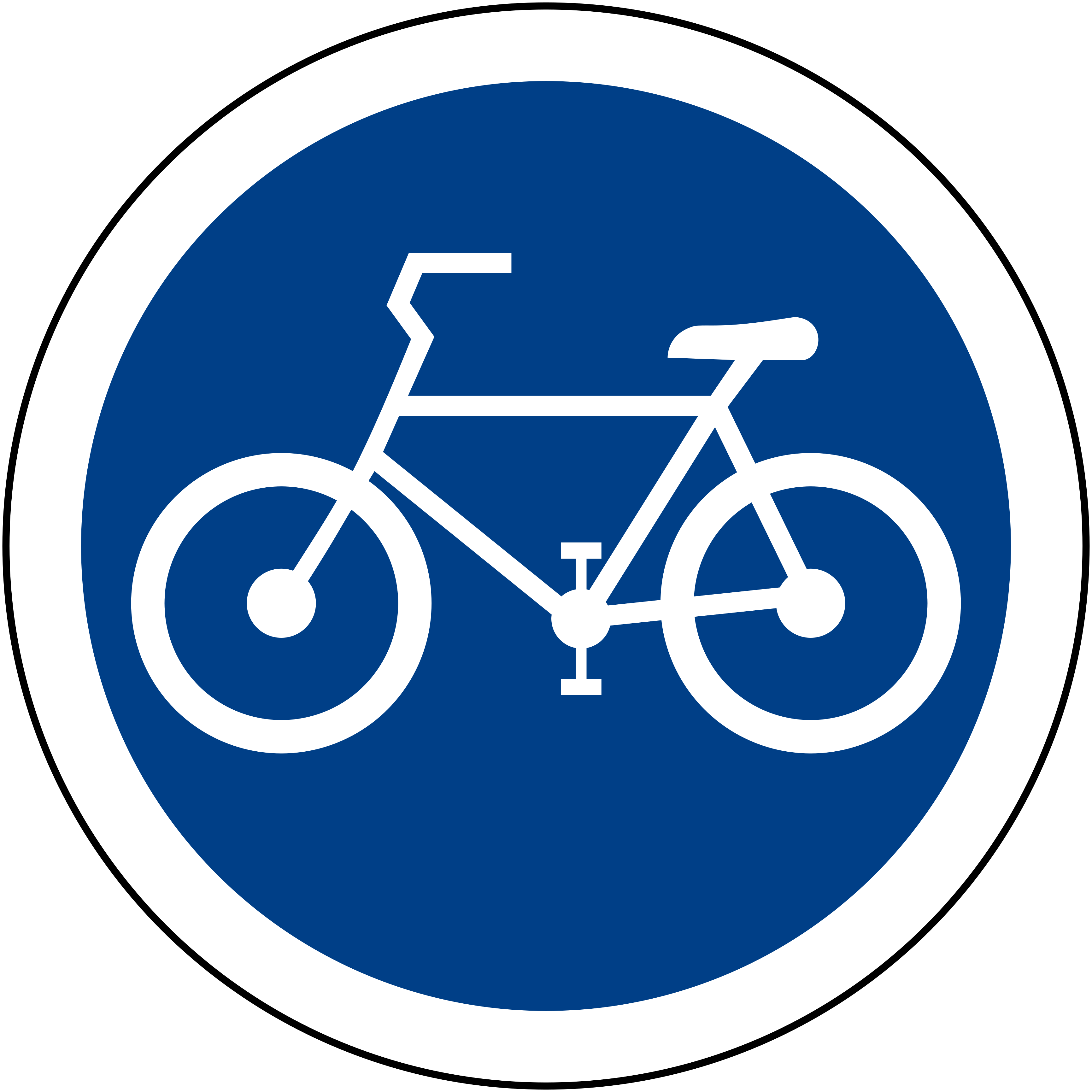
Lane or path reserved for bicycles.
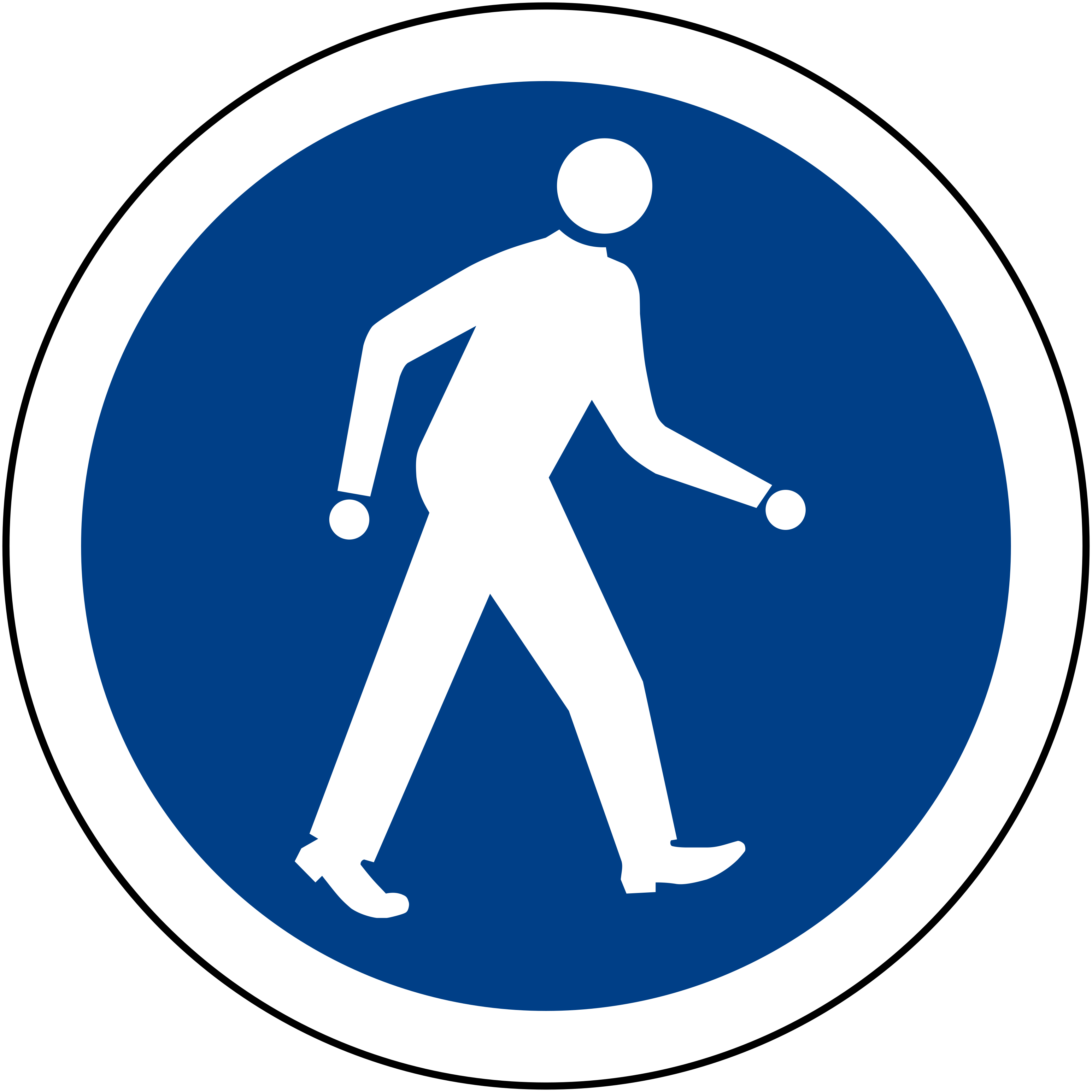
Path reserved for pedestrians.
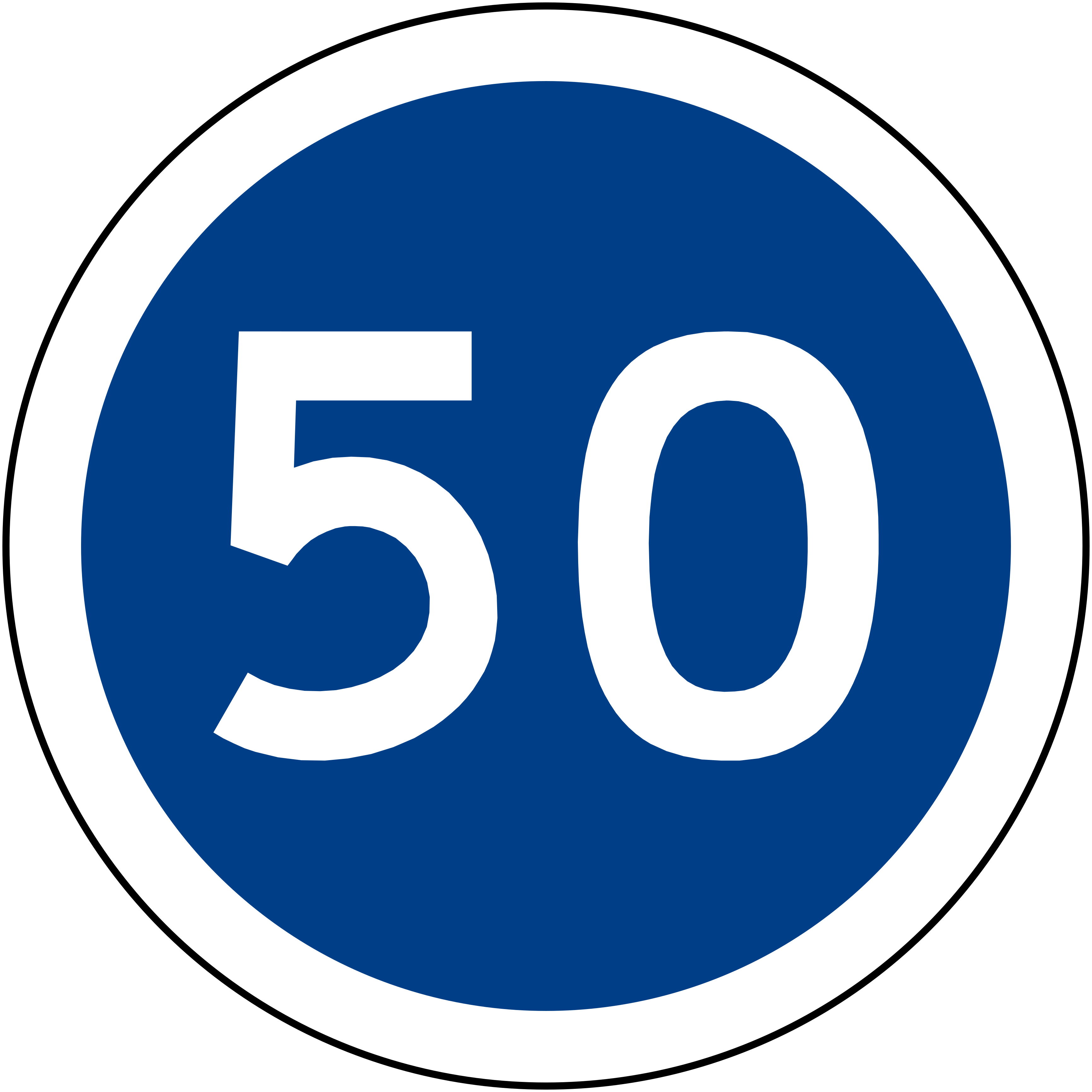
You must drive at least the speed shown (unless conditions make it unsafe).
Warning signs
Yellow diamonds, black symbols, placed some distance before the hazard. Slow down and be ready.
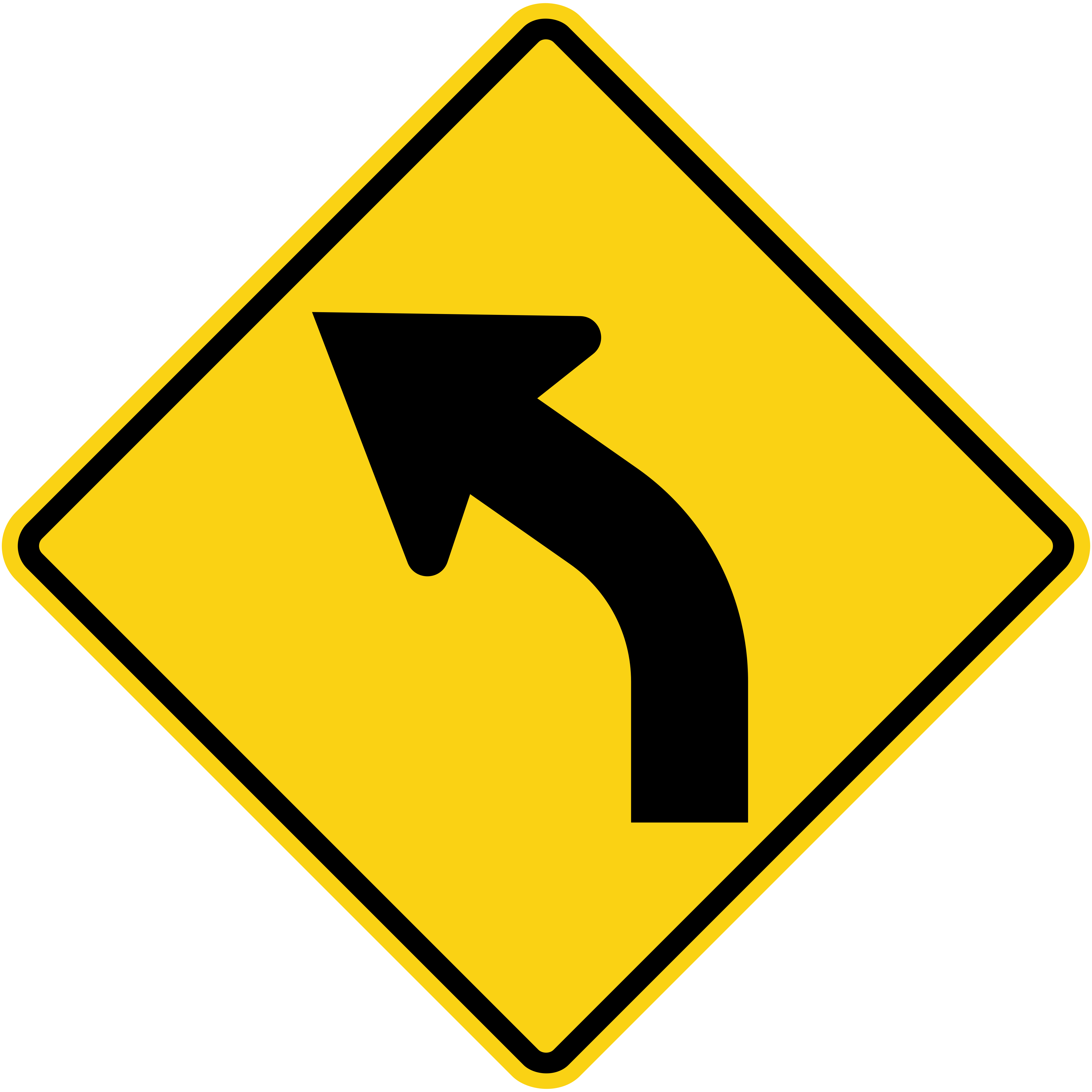
The road bends to the left ahead.
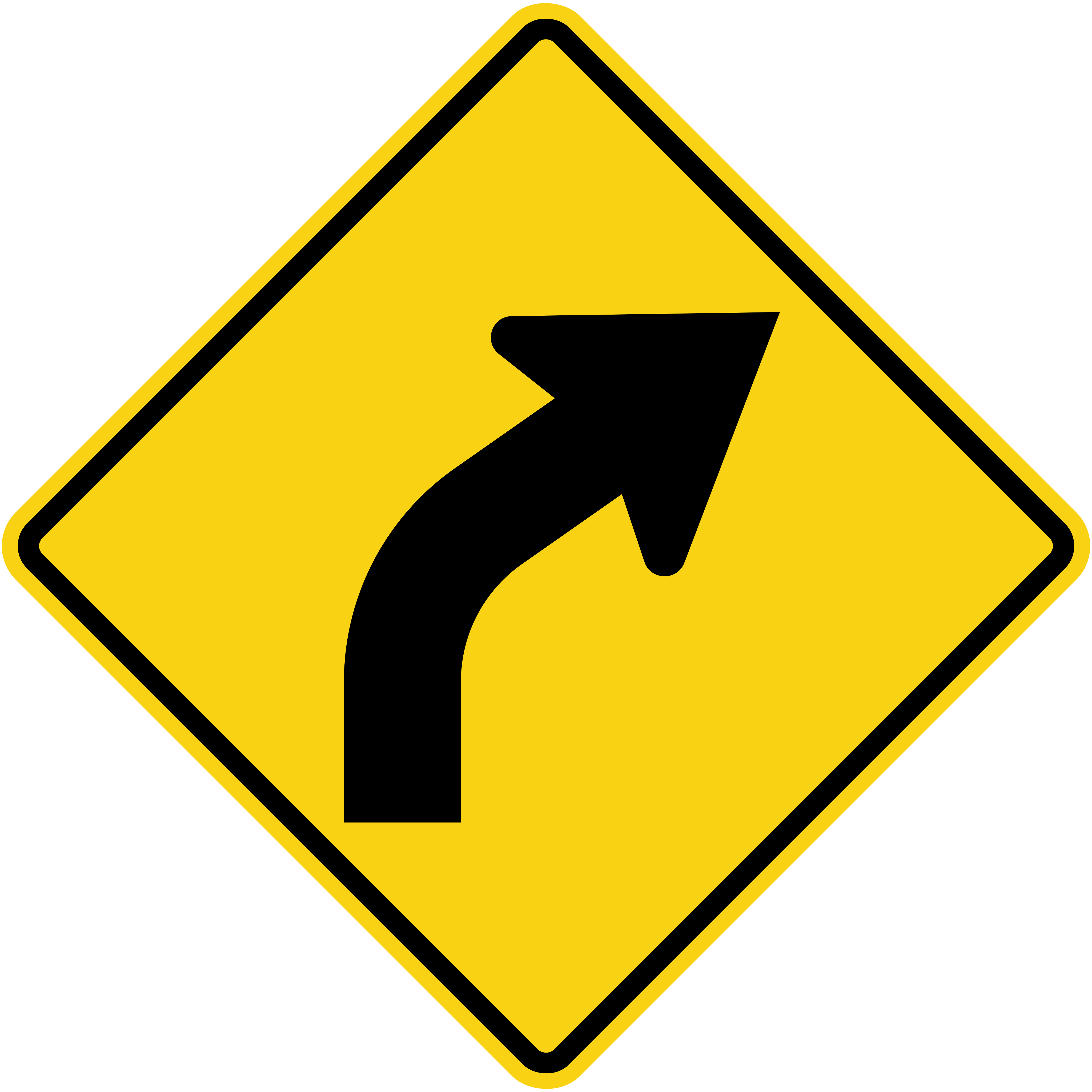
The road bends to the right ahead.
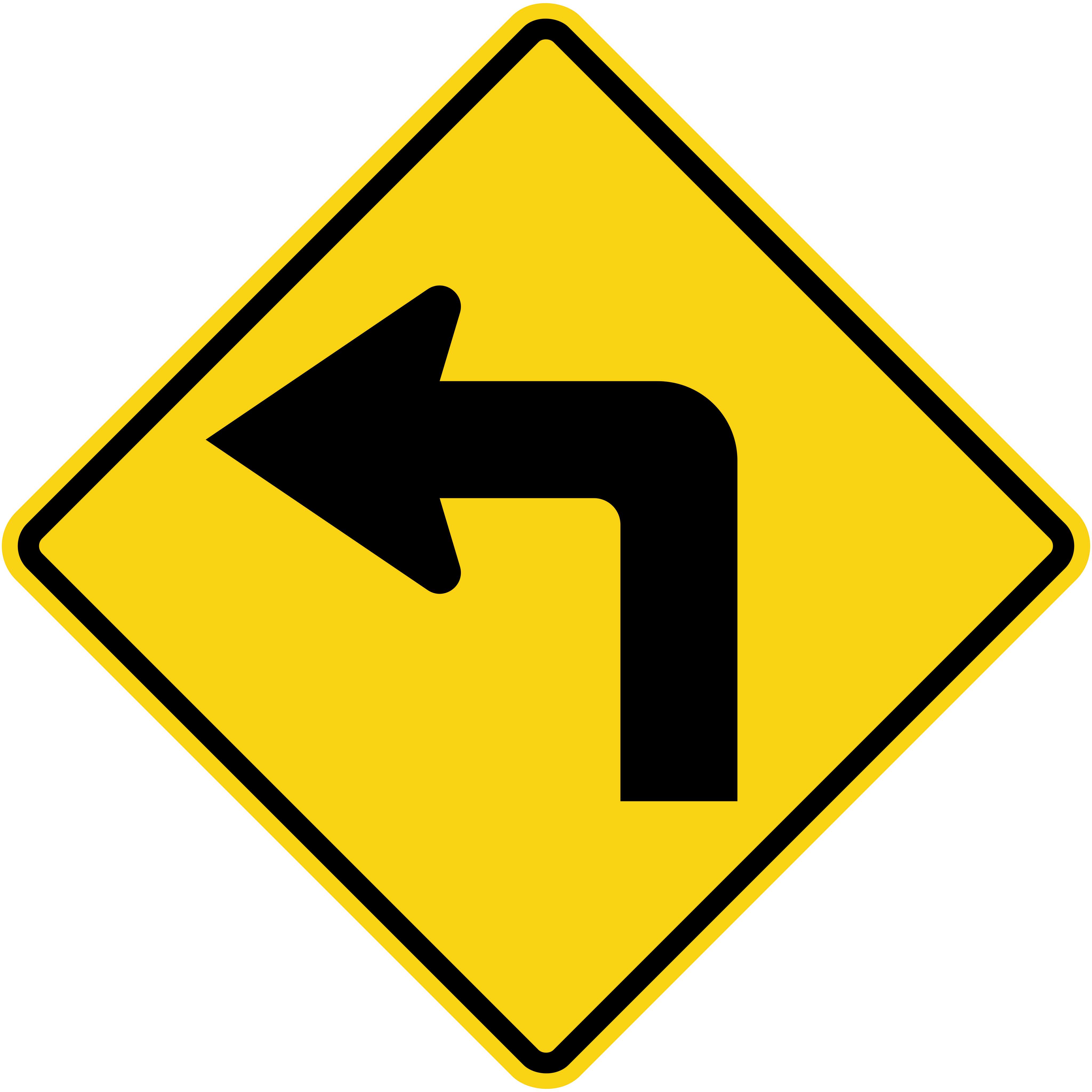
A sharp left bend ahead; slow down.
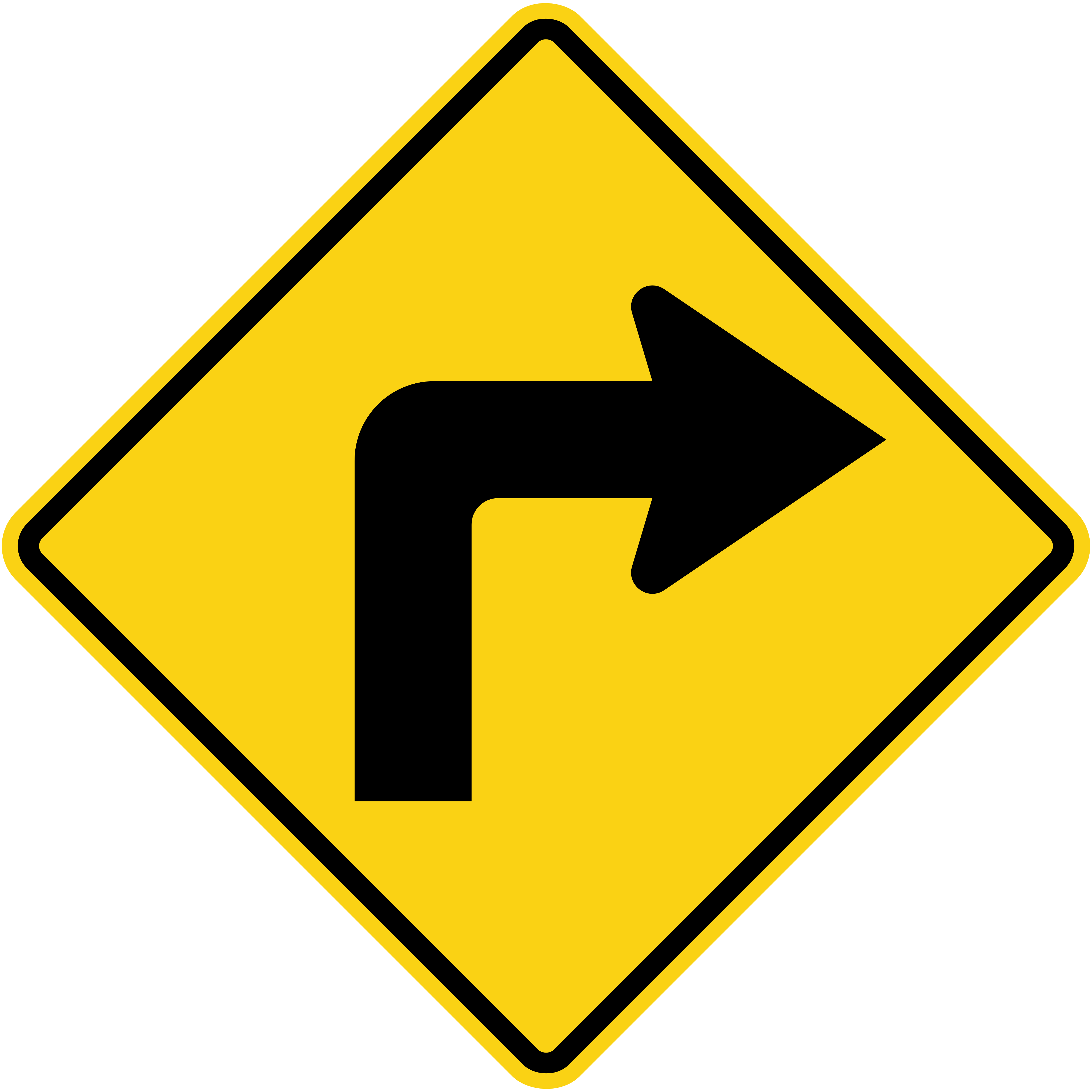
A sharp right bend ahead; slow down.
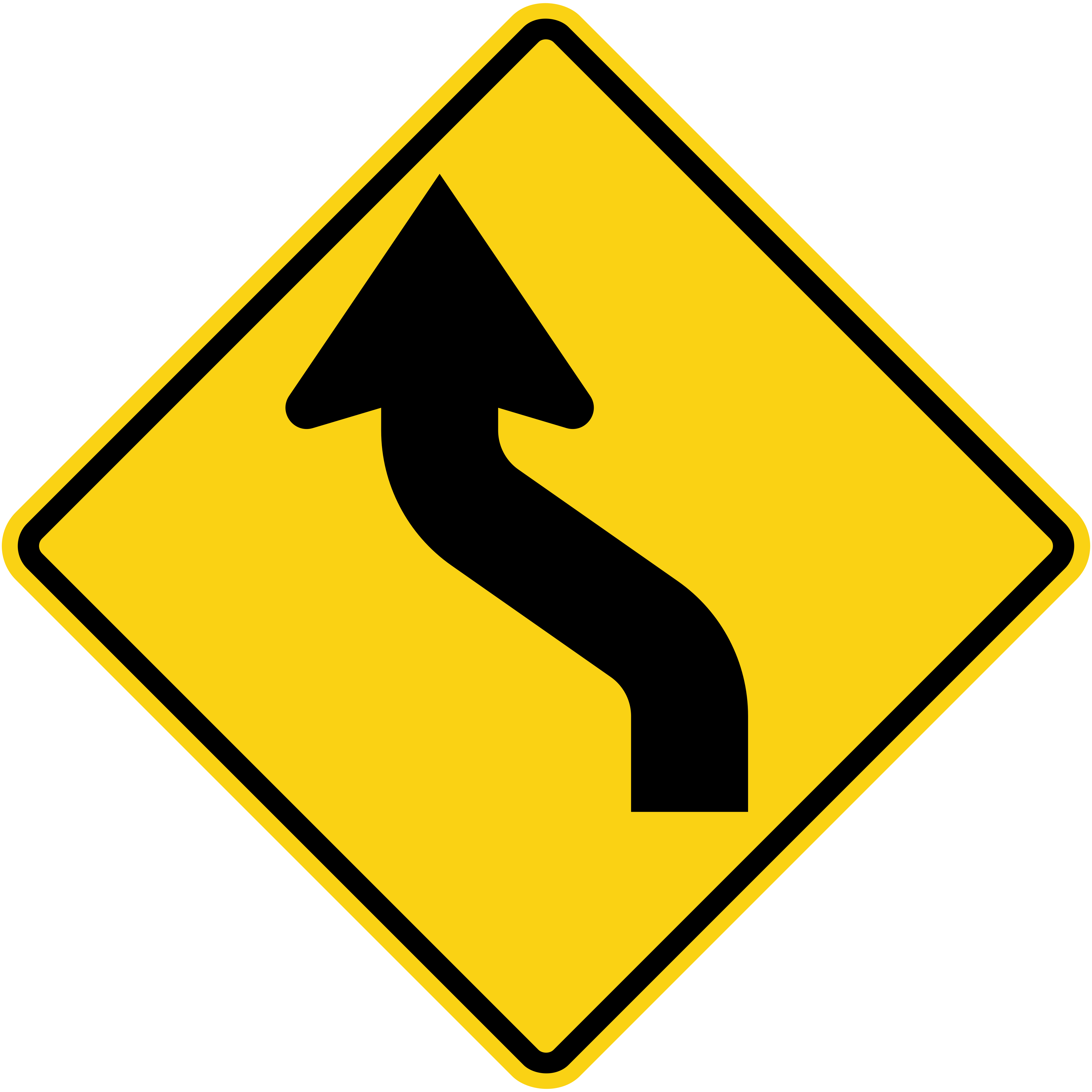
Two bends ahead, the first one to the left.
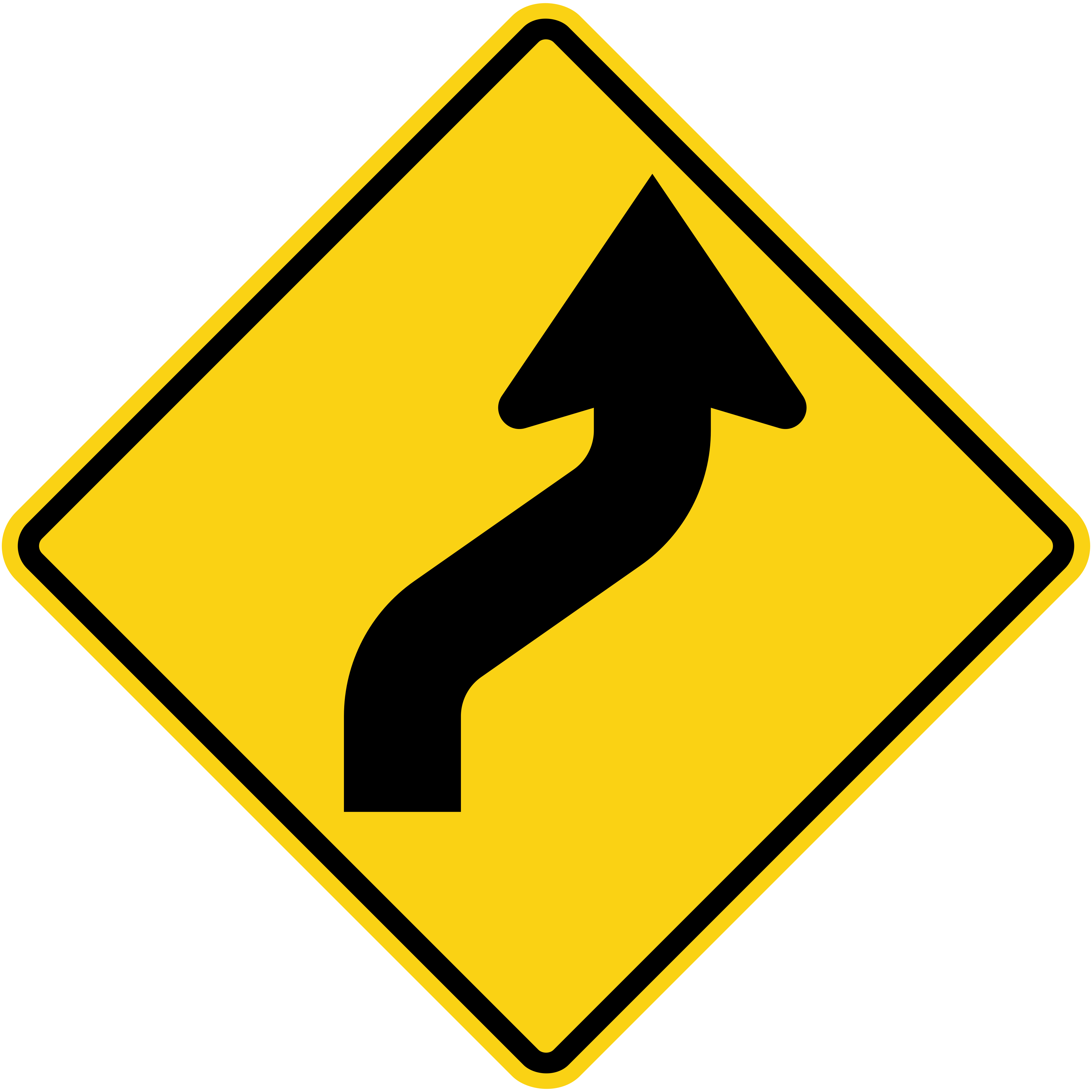
Two bends ahead, the first one to the right.
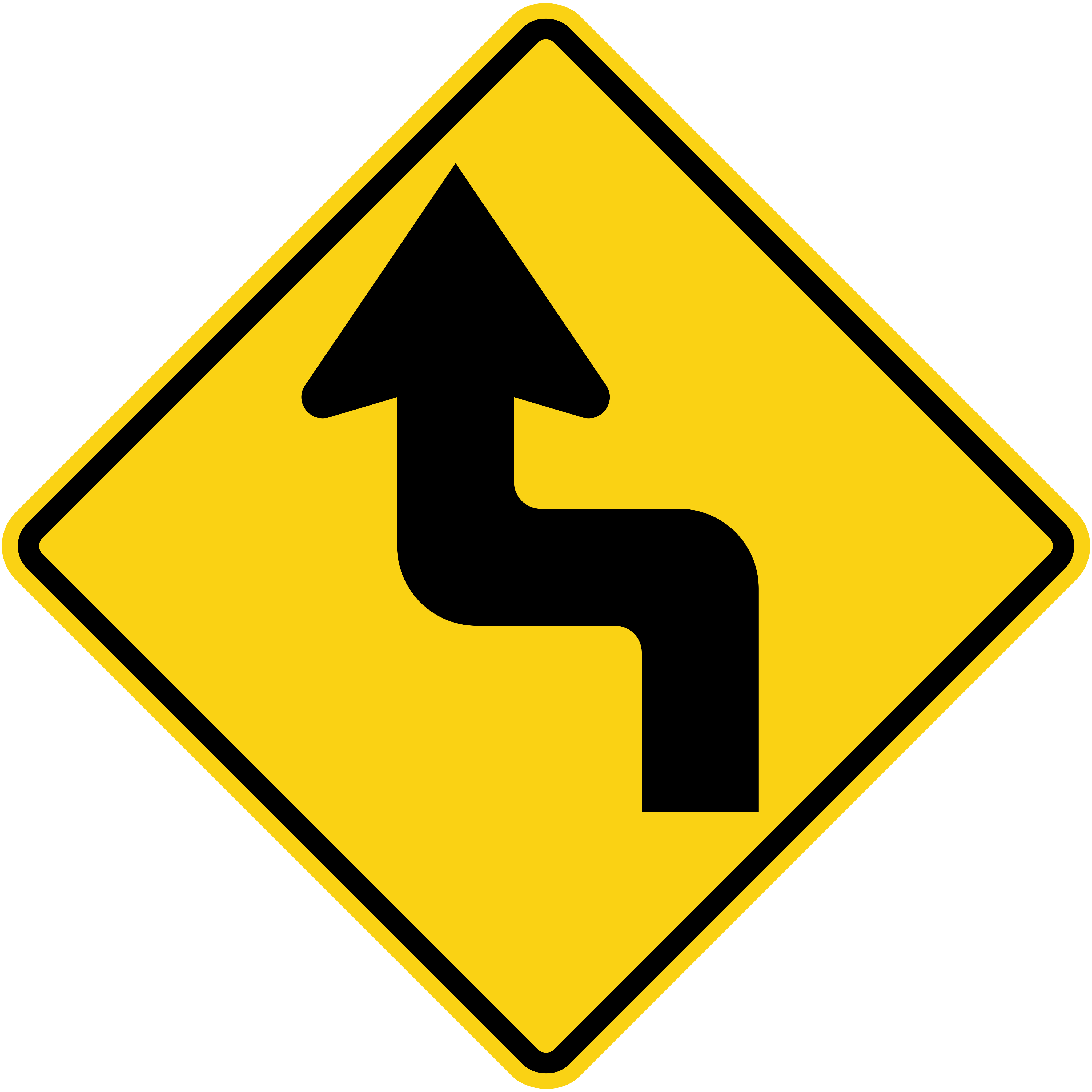
Two sharp bends ahead, the first one to the left.
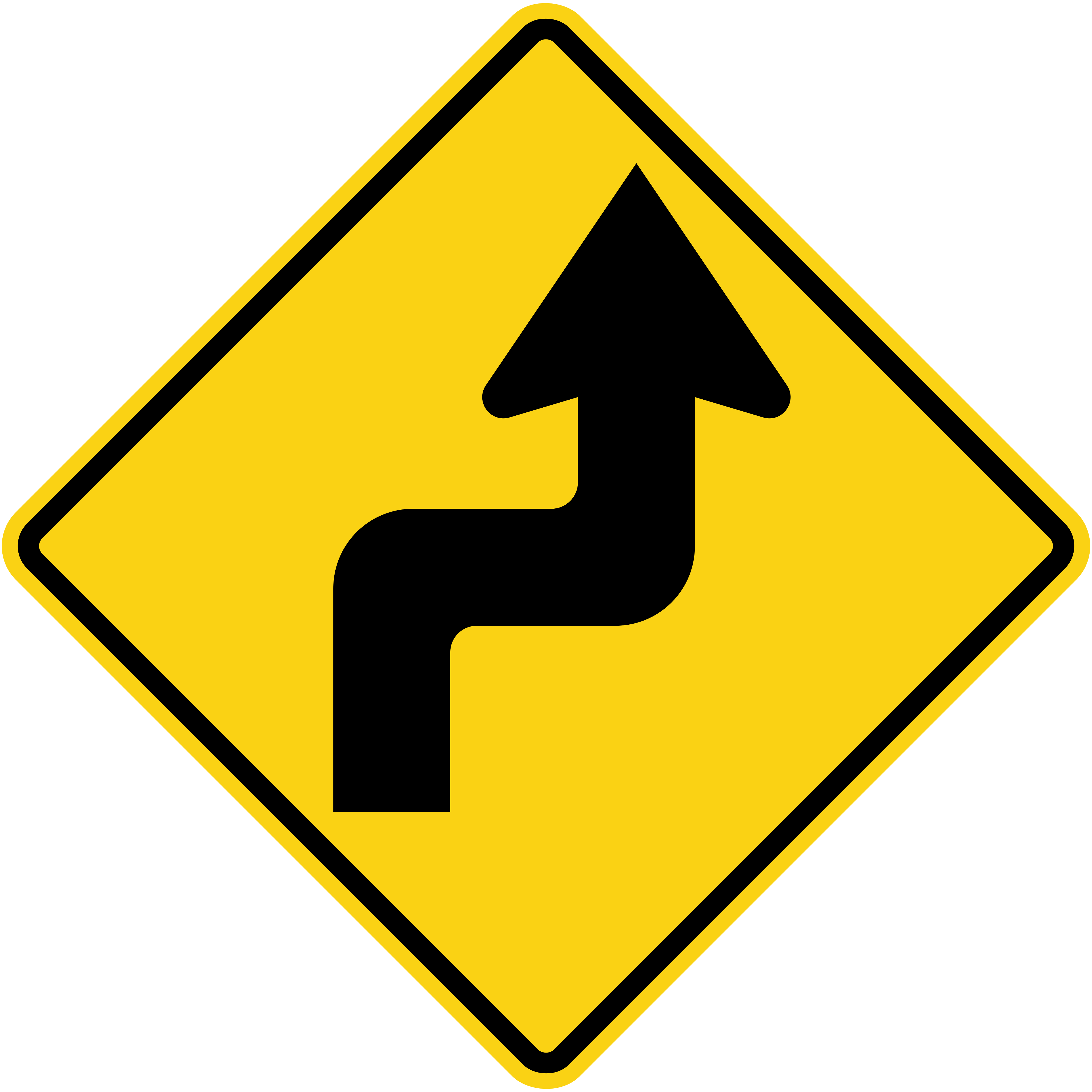
Two sharp bends ahead, the first one to the right.
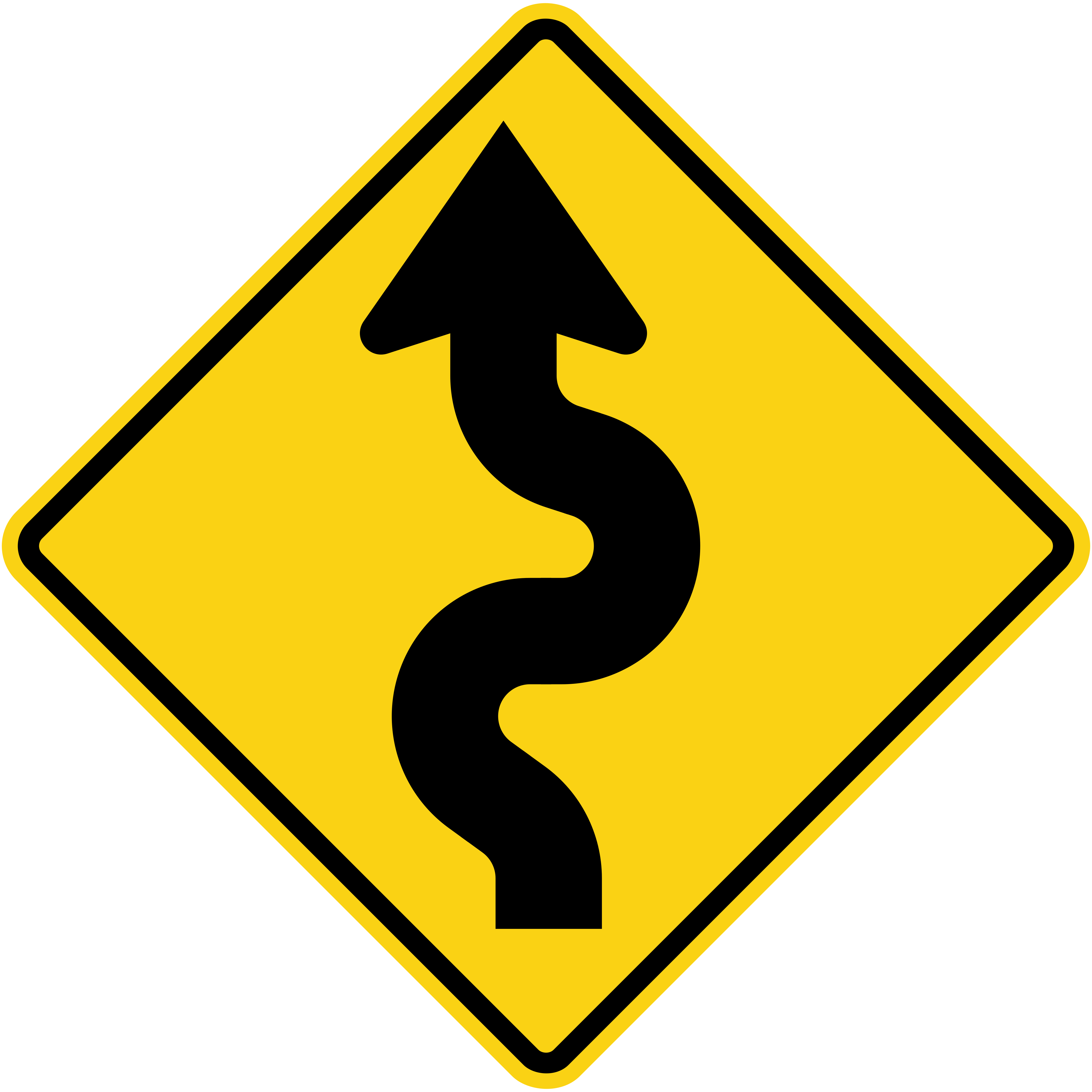
A series of bends ahead, starting to the left.
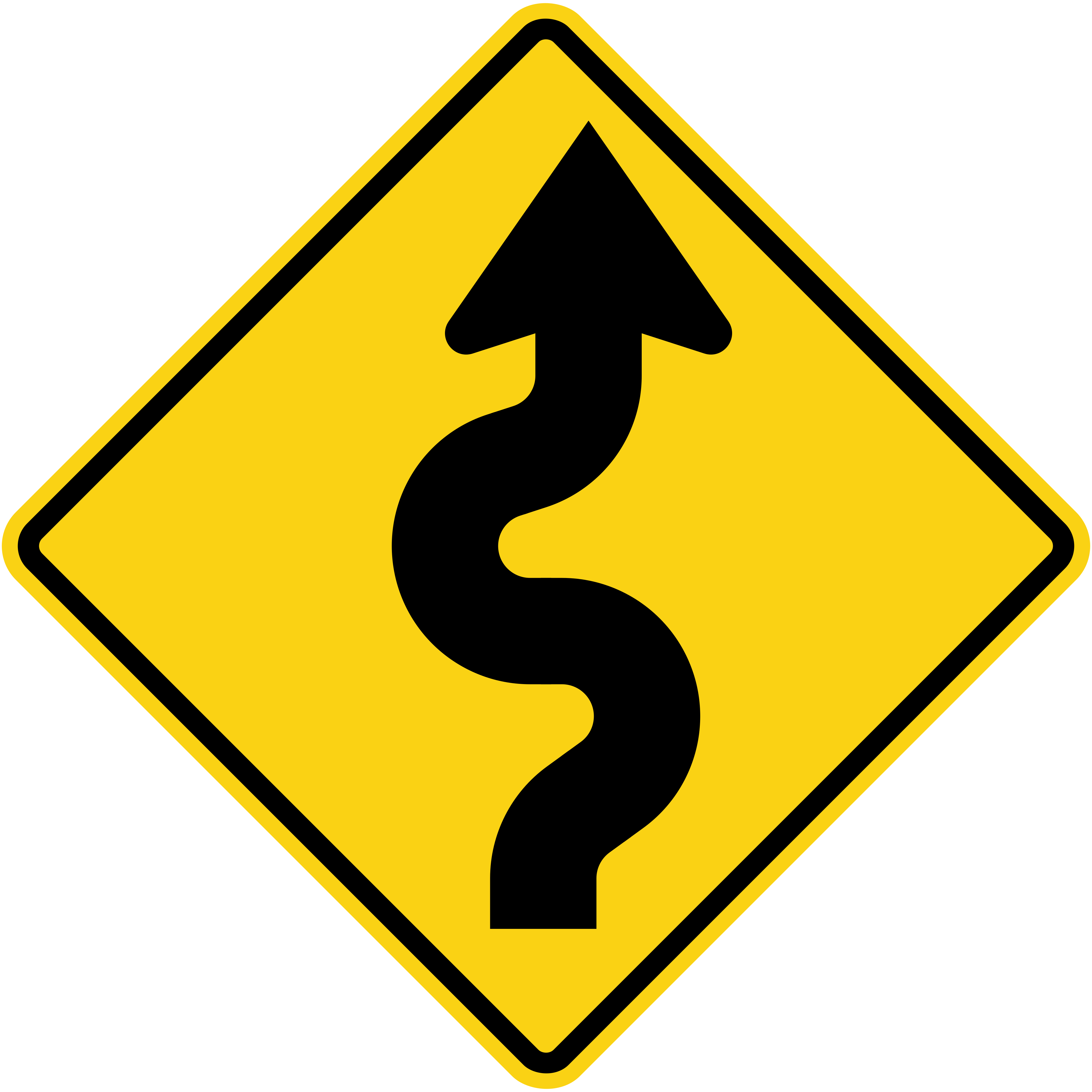
A series of bends ahead, starting to the right.
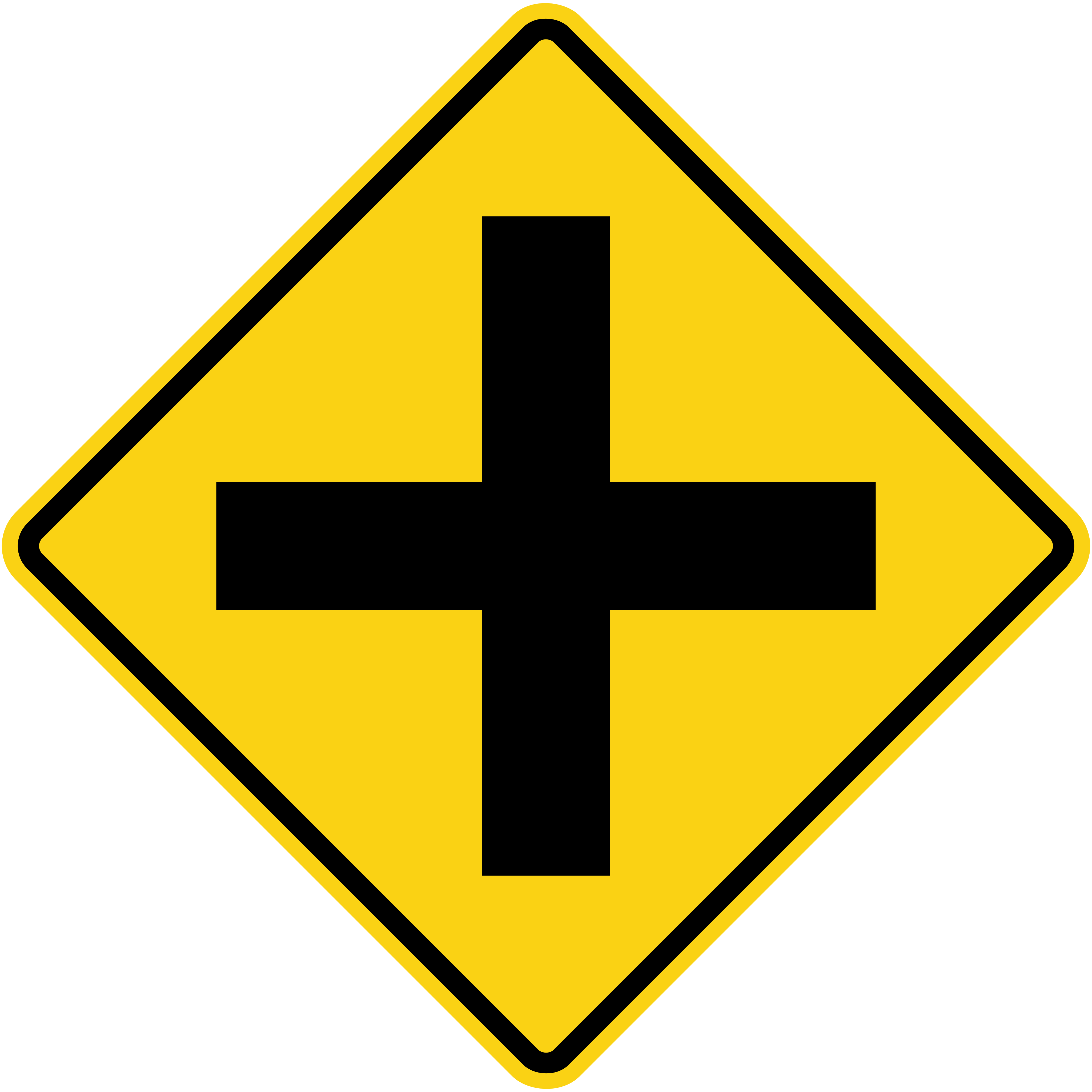
A four-way junction ahead.
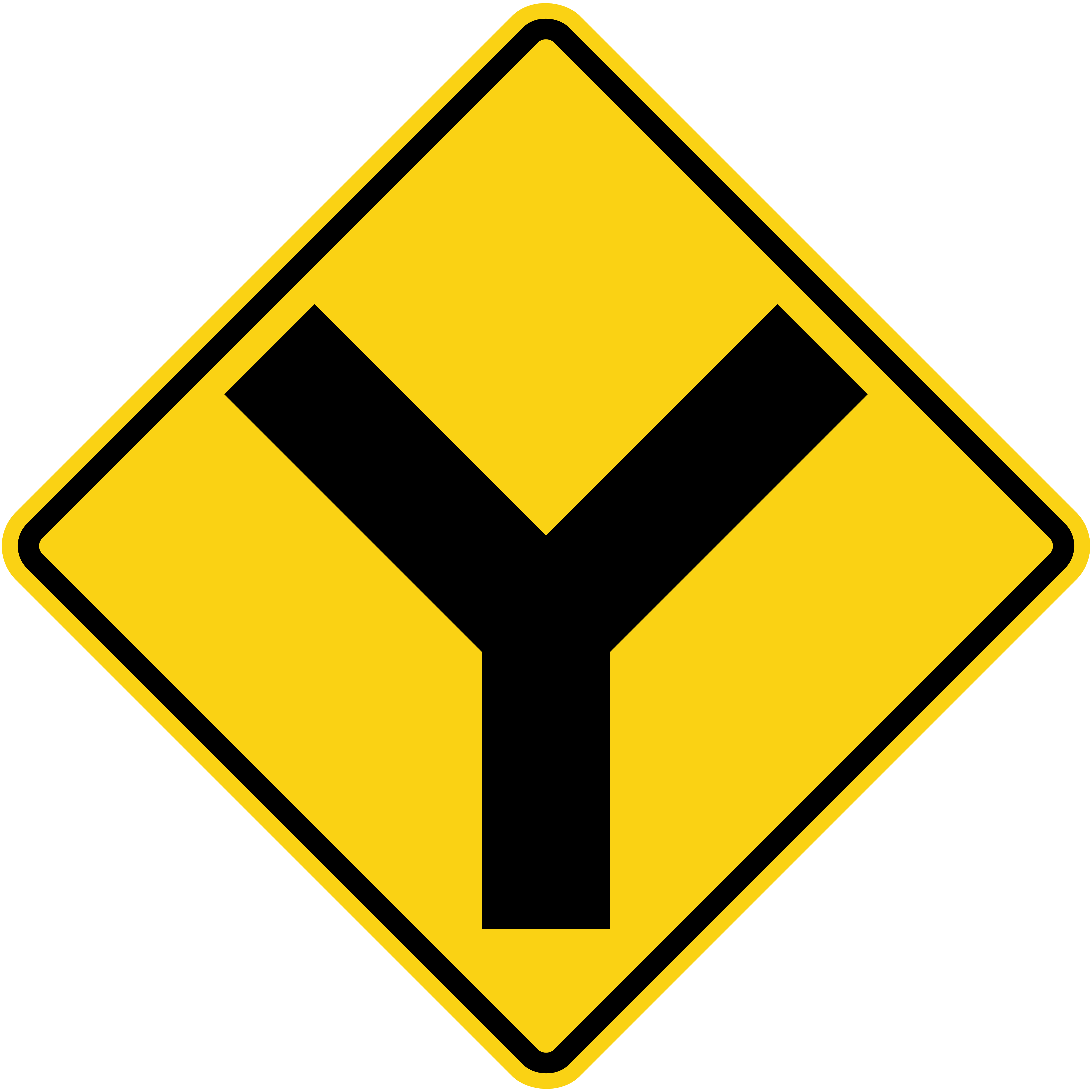
The road splits into two ahead.
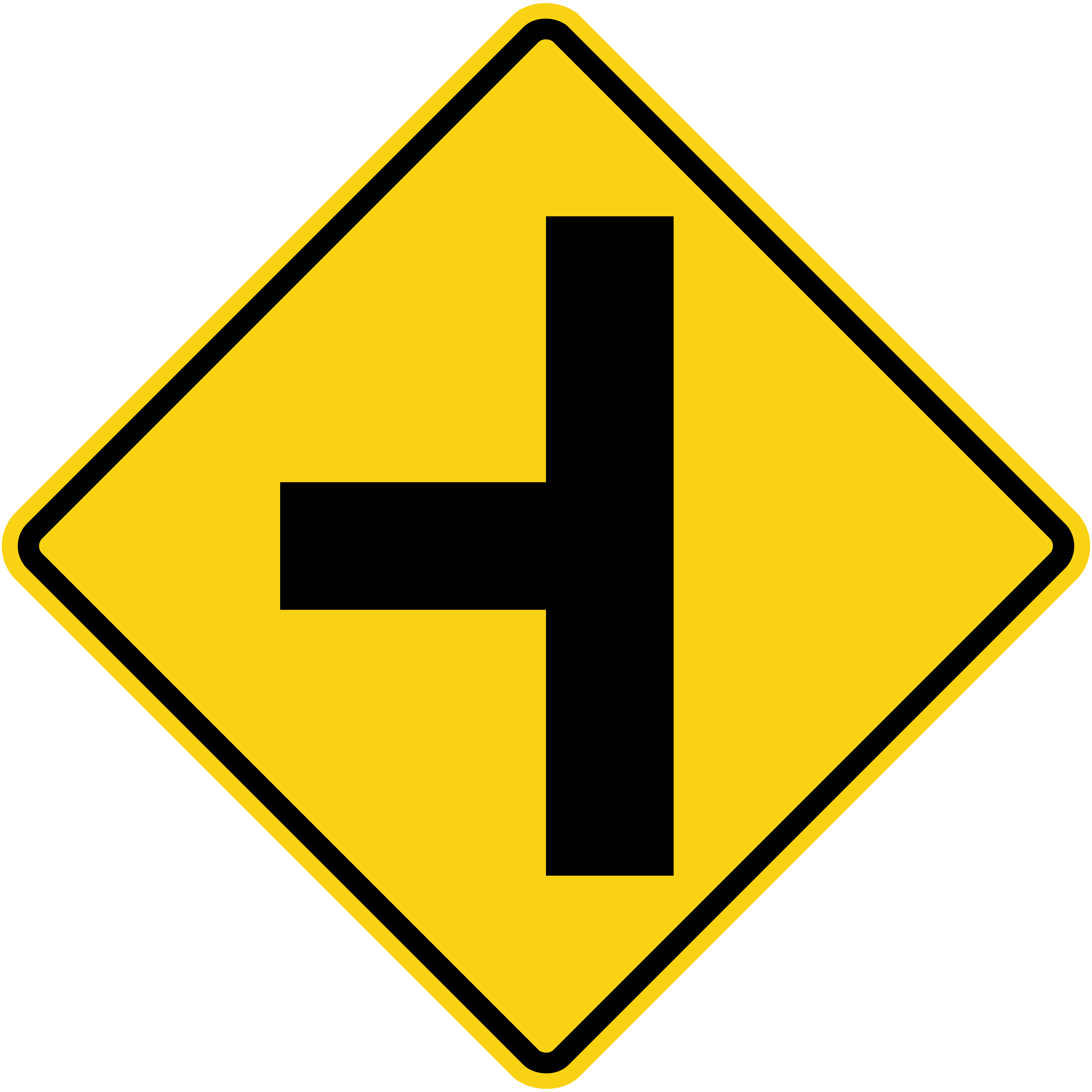
A side road joins from the left ahead.
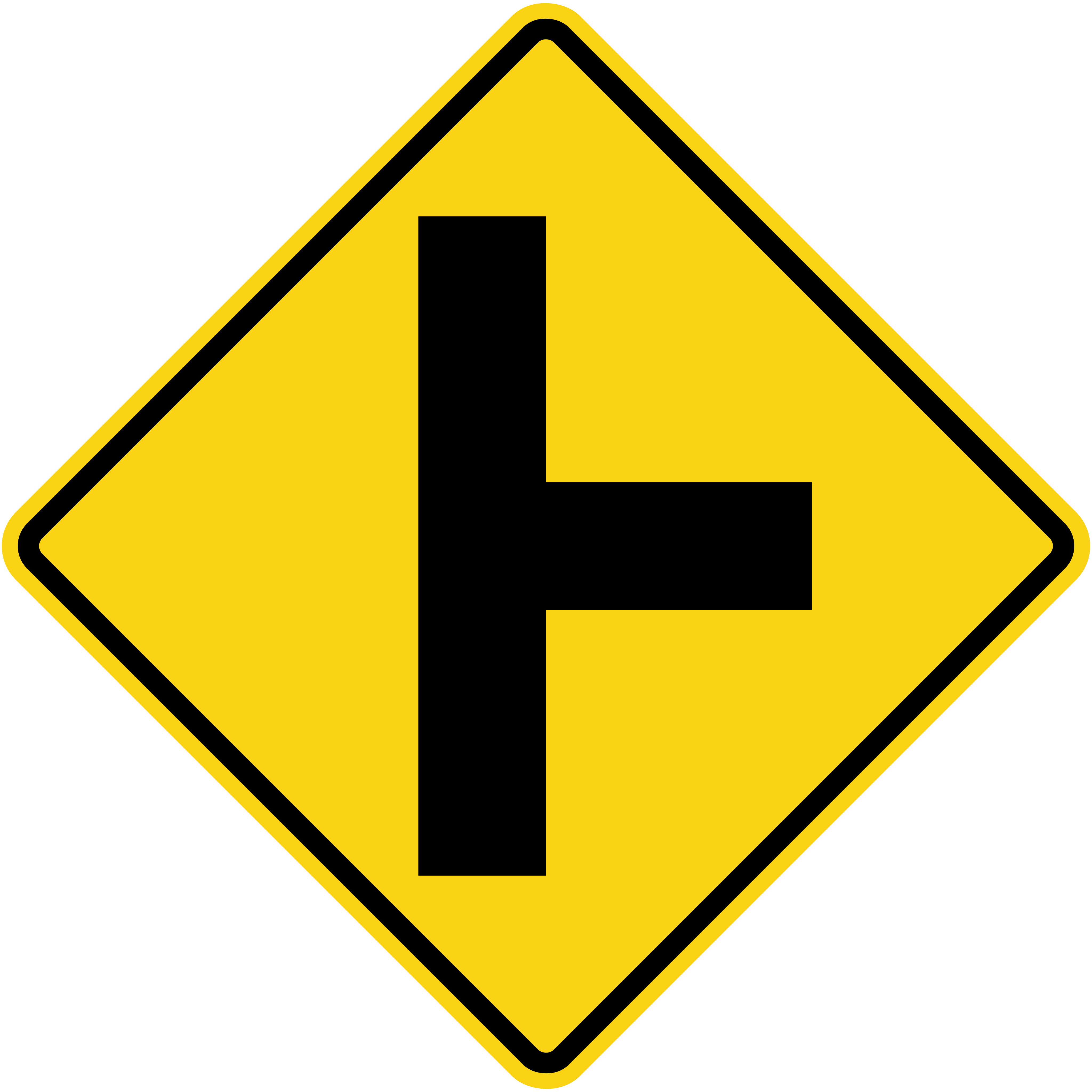
A side road joins from the right ahead.
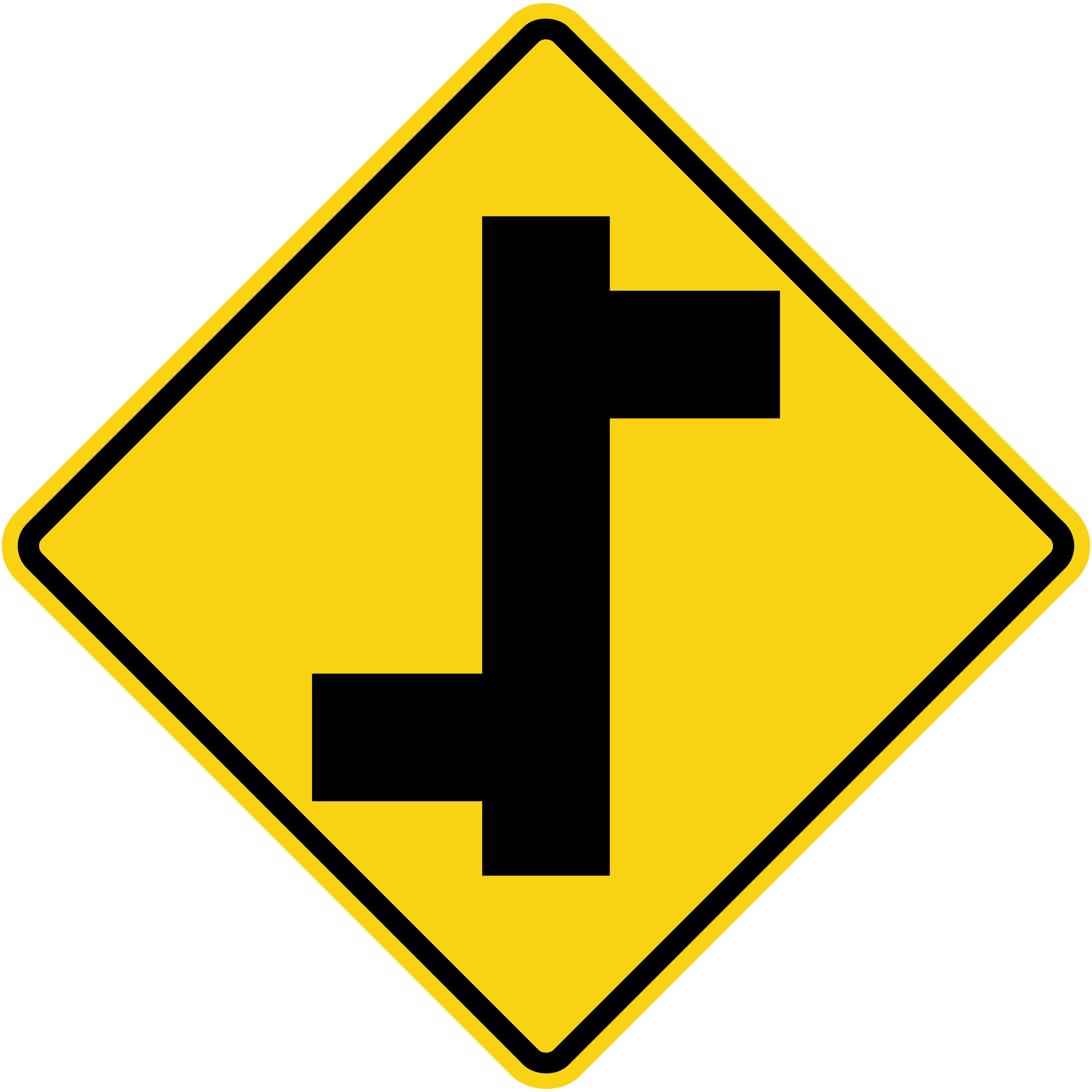
Side roads join from both sides at offset points ahead.
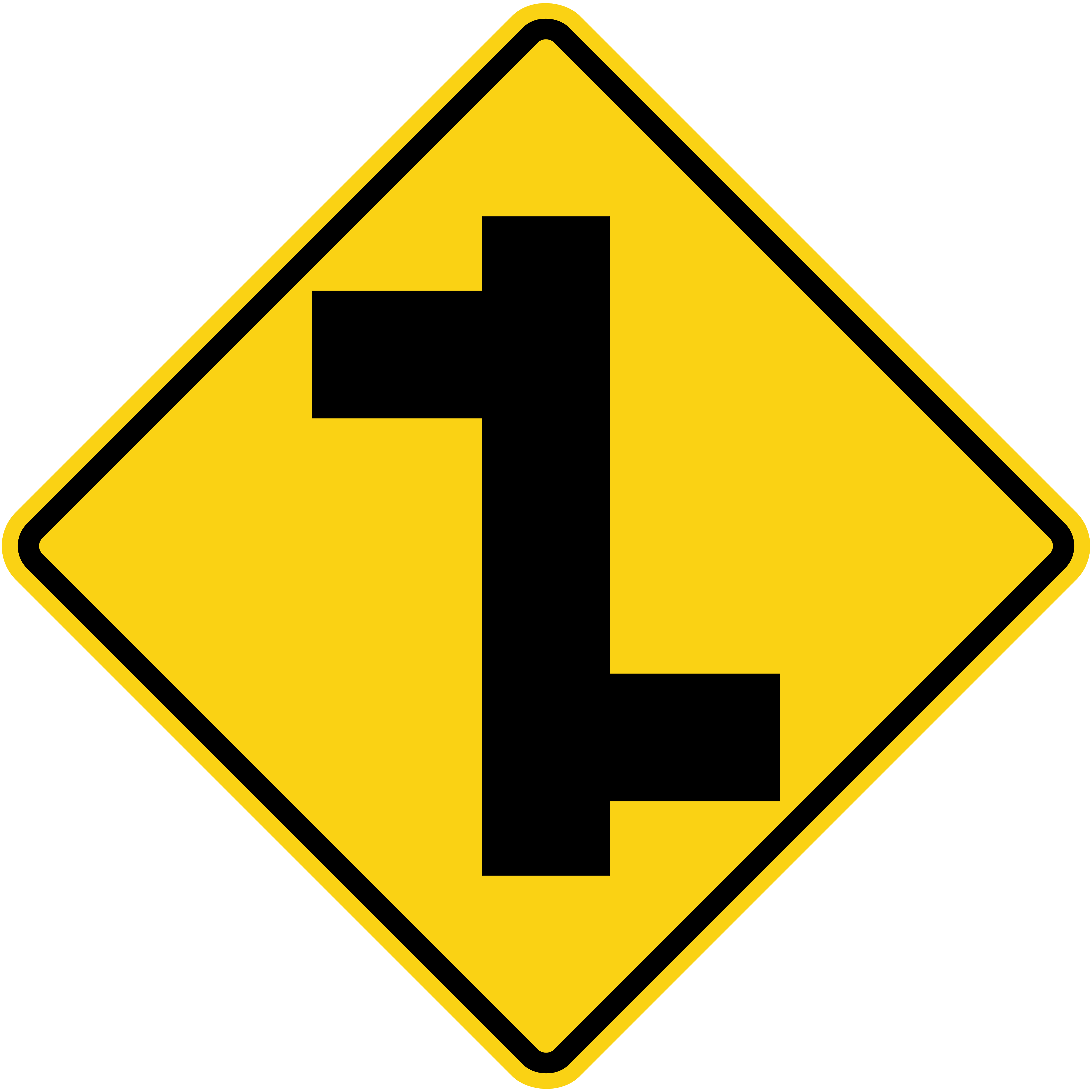
Side roads join from both sides at offset points ahead.
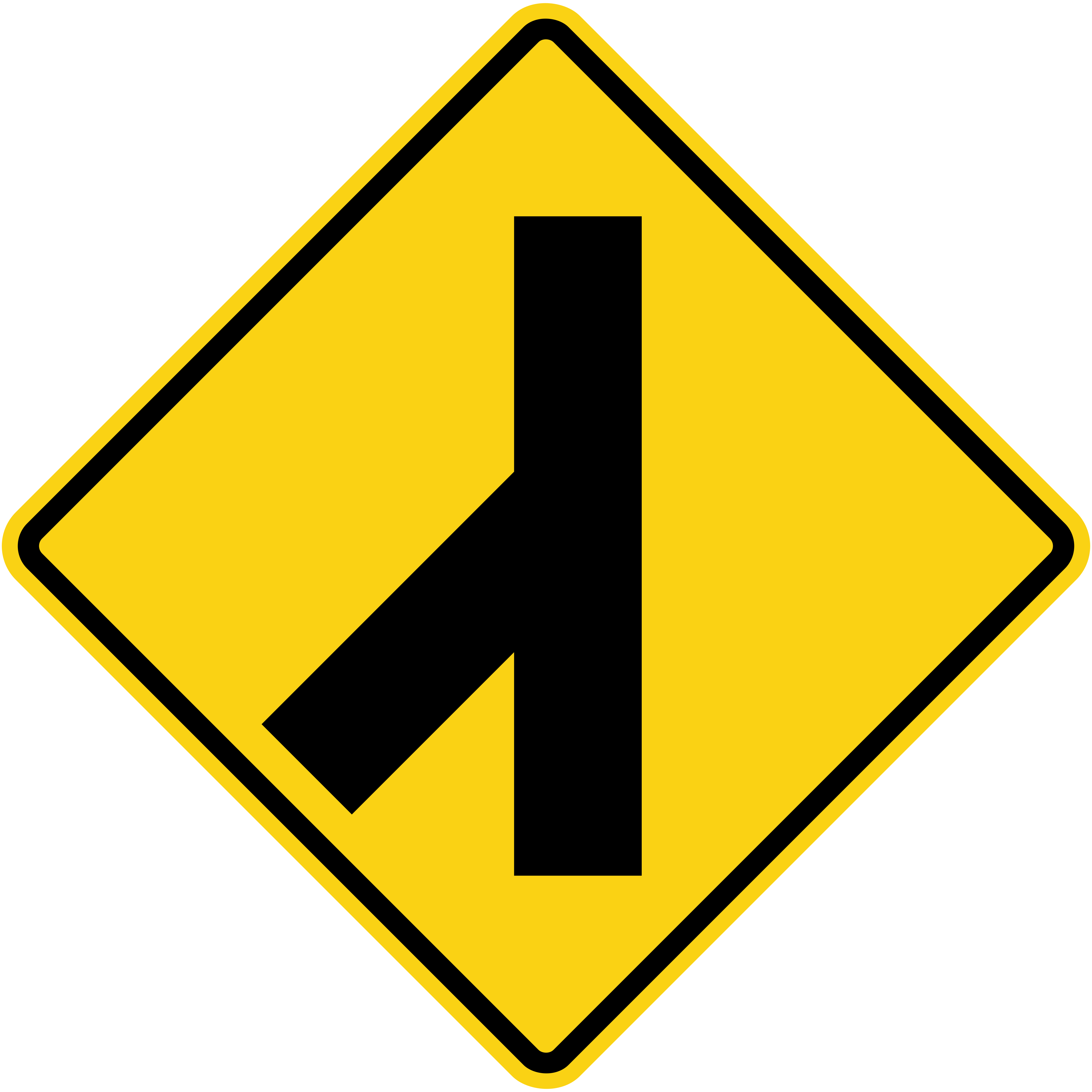
A side road joins at an angle from the left.
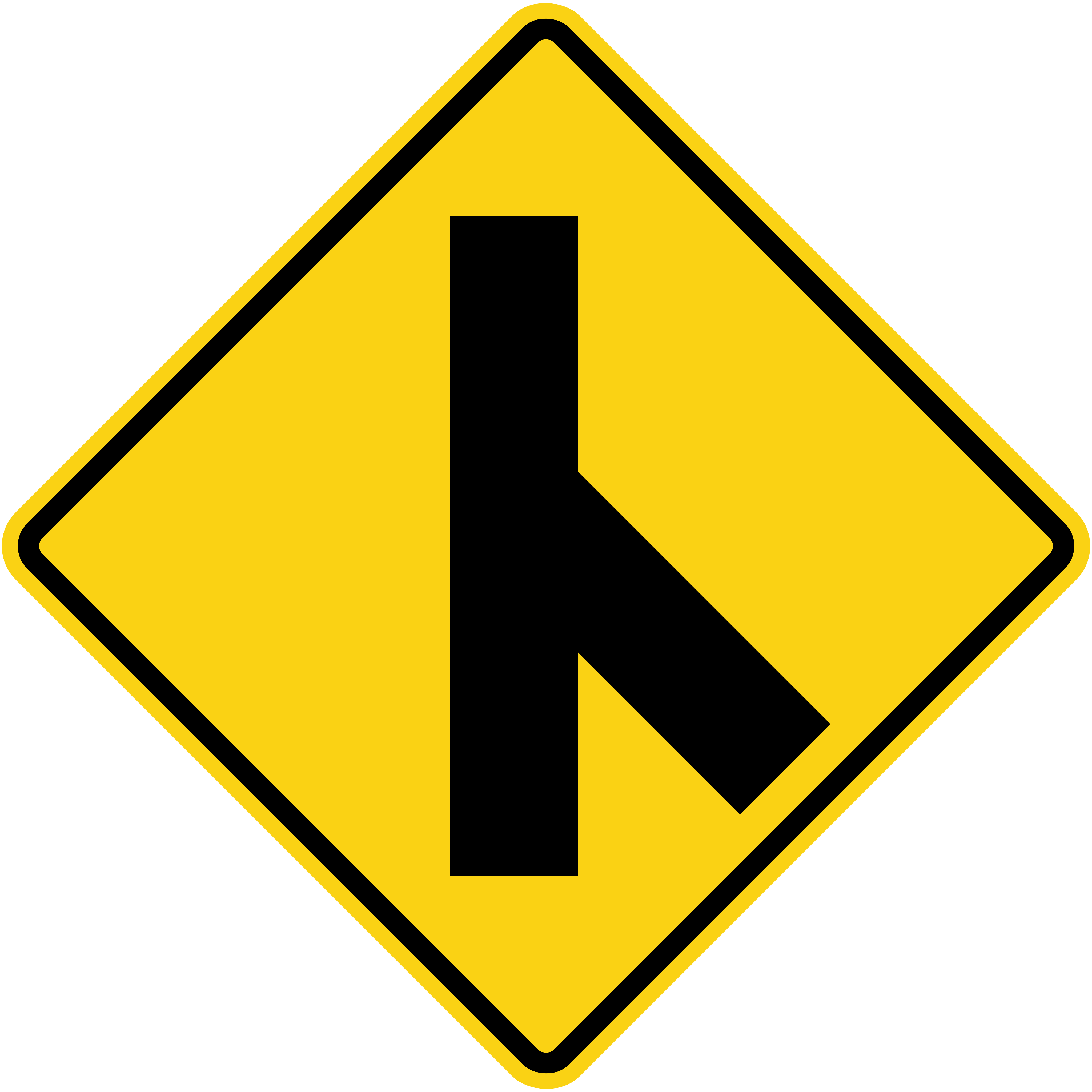
A side road joins at an angle from the right.
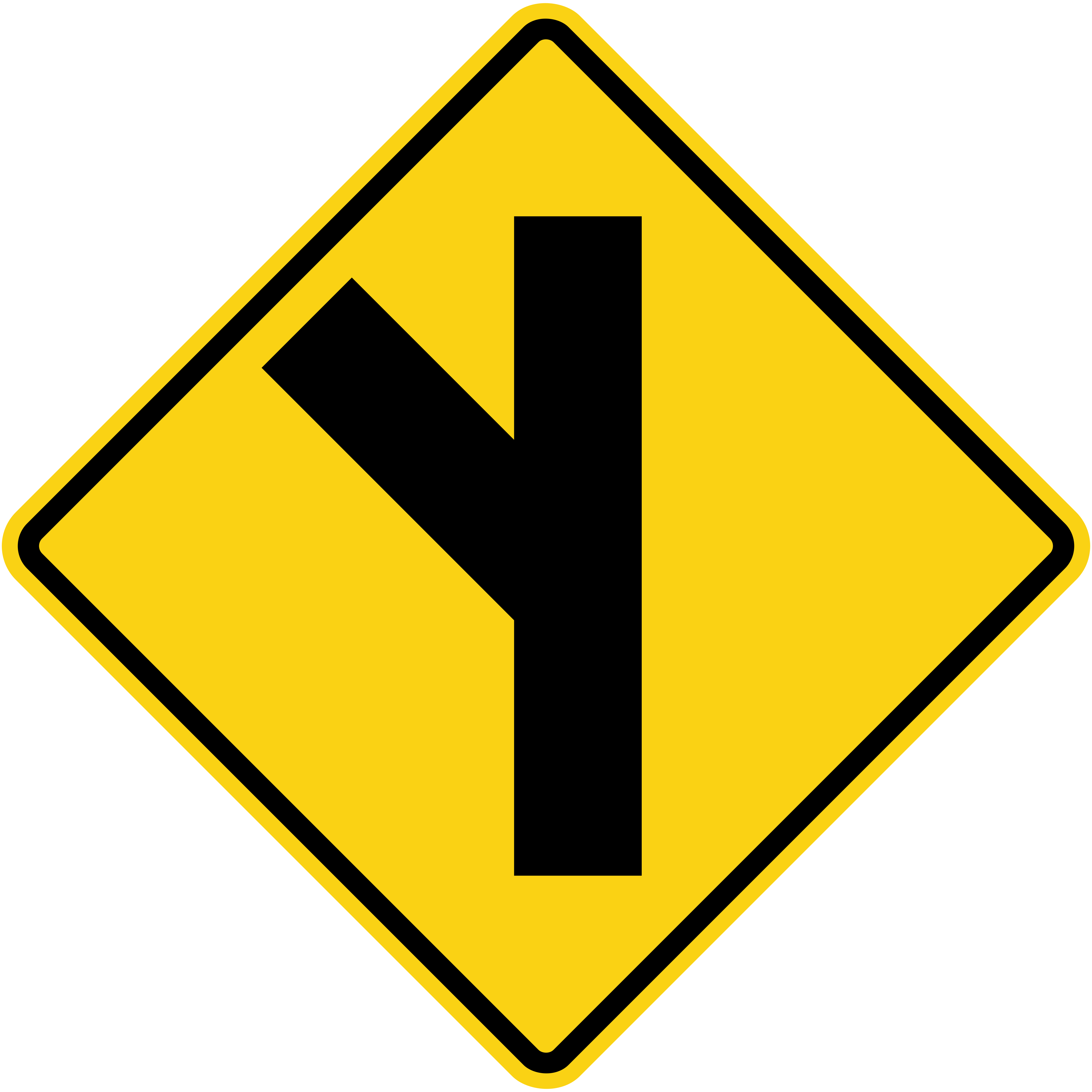
A side road joins at an angle from the left.
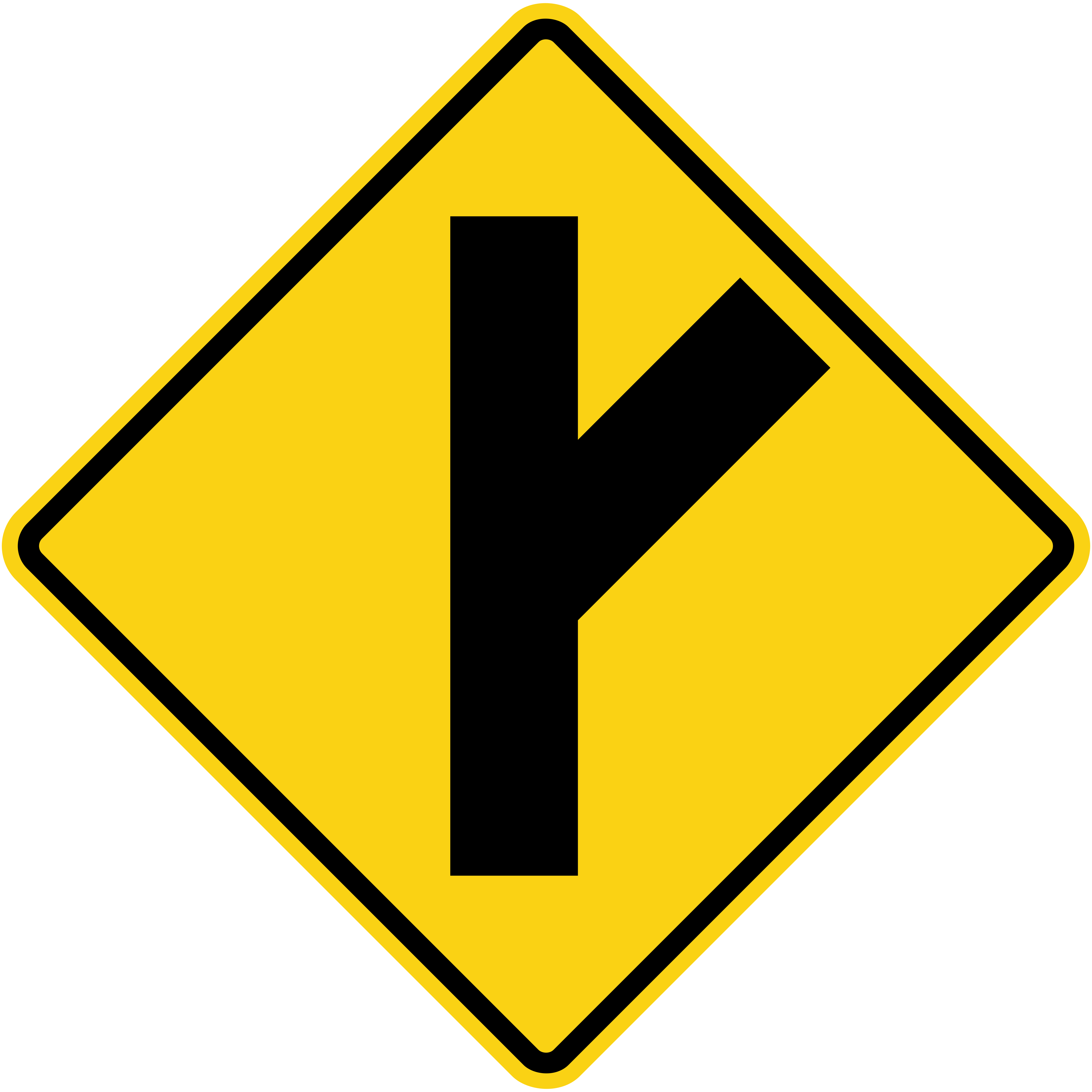
A side road joins at an angle from the right.
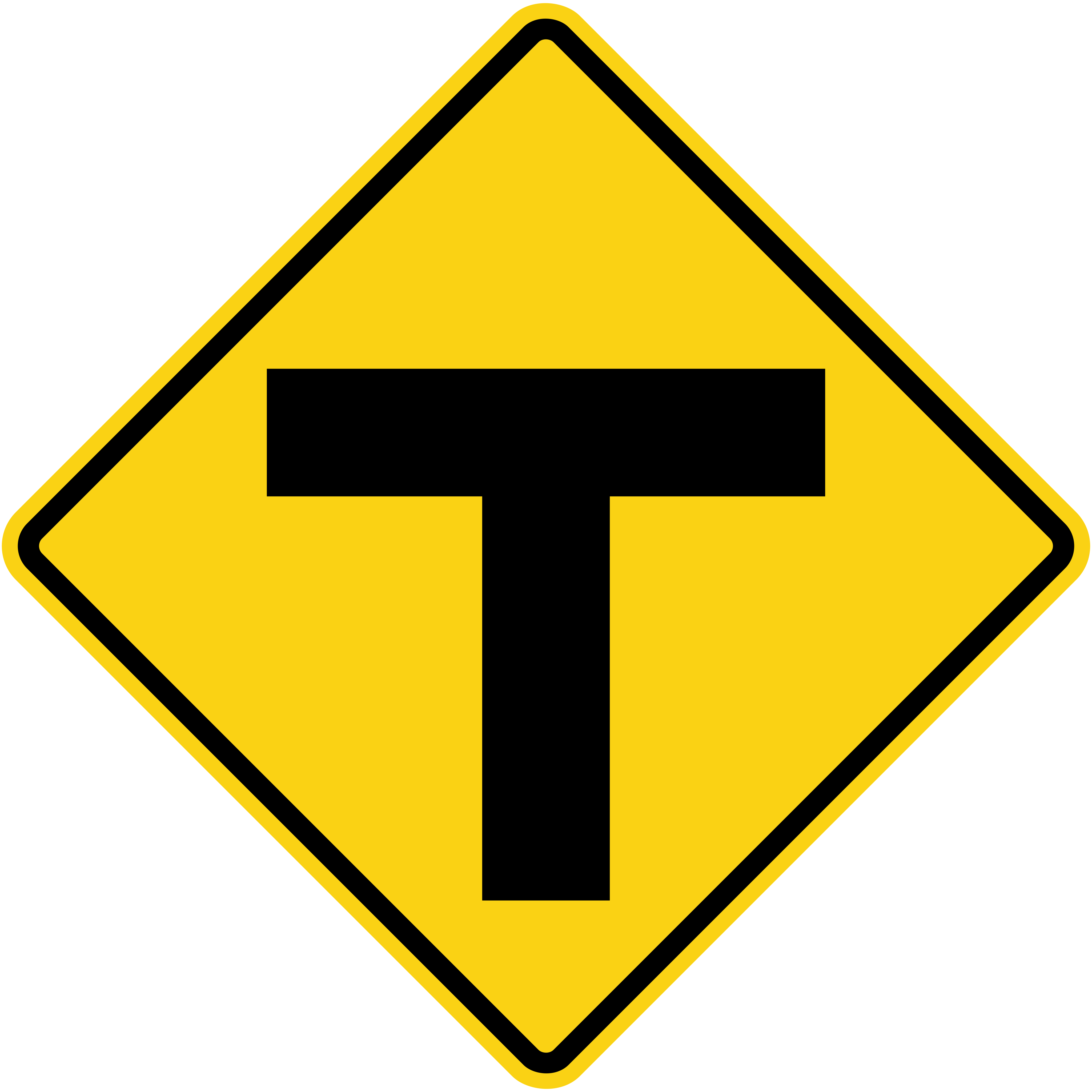
The road ends at a junction ahead; you must turn left or right.
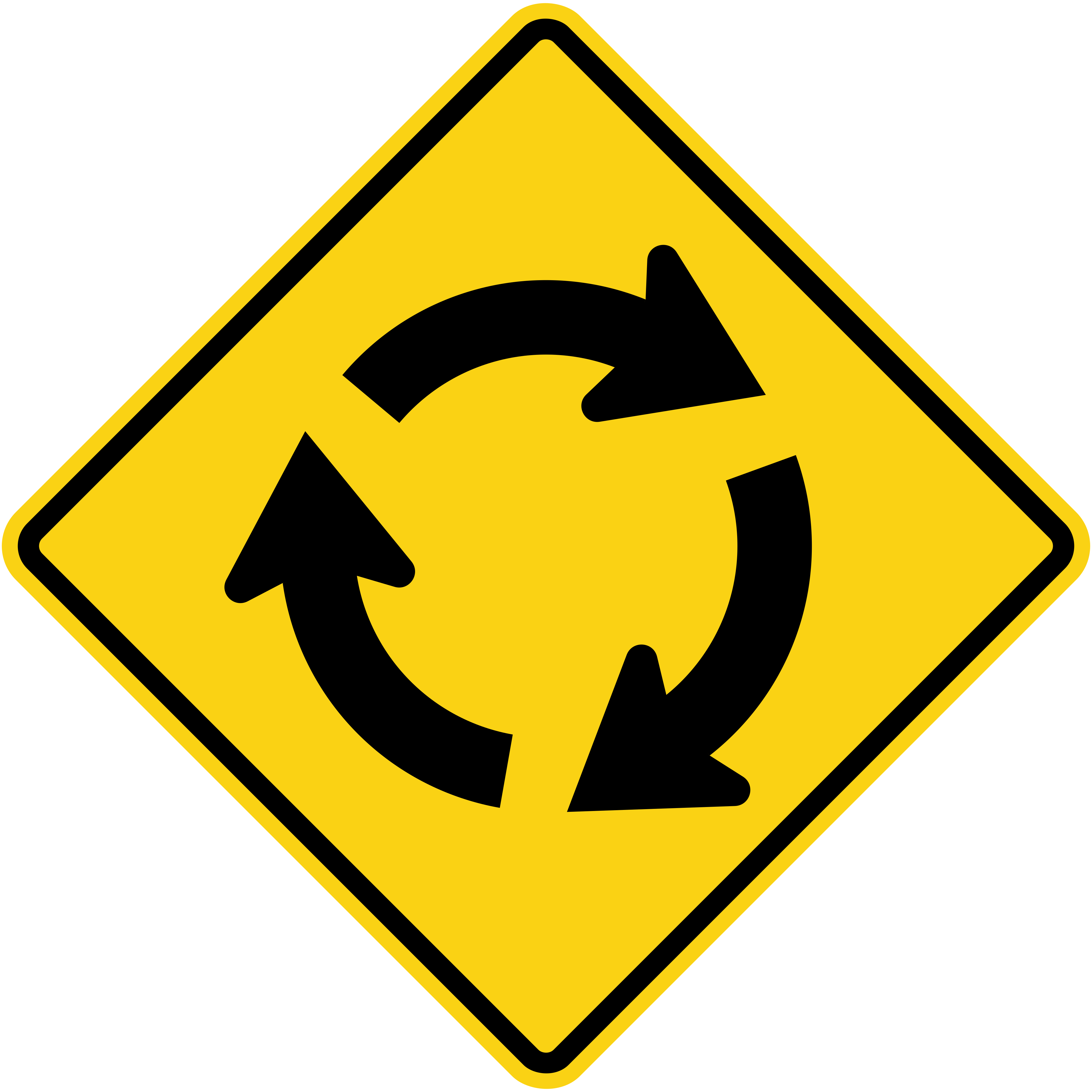
A roundabout ahead; slow down and give way to traffic from the right.
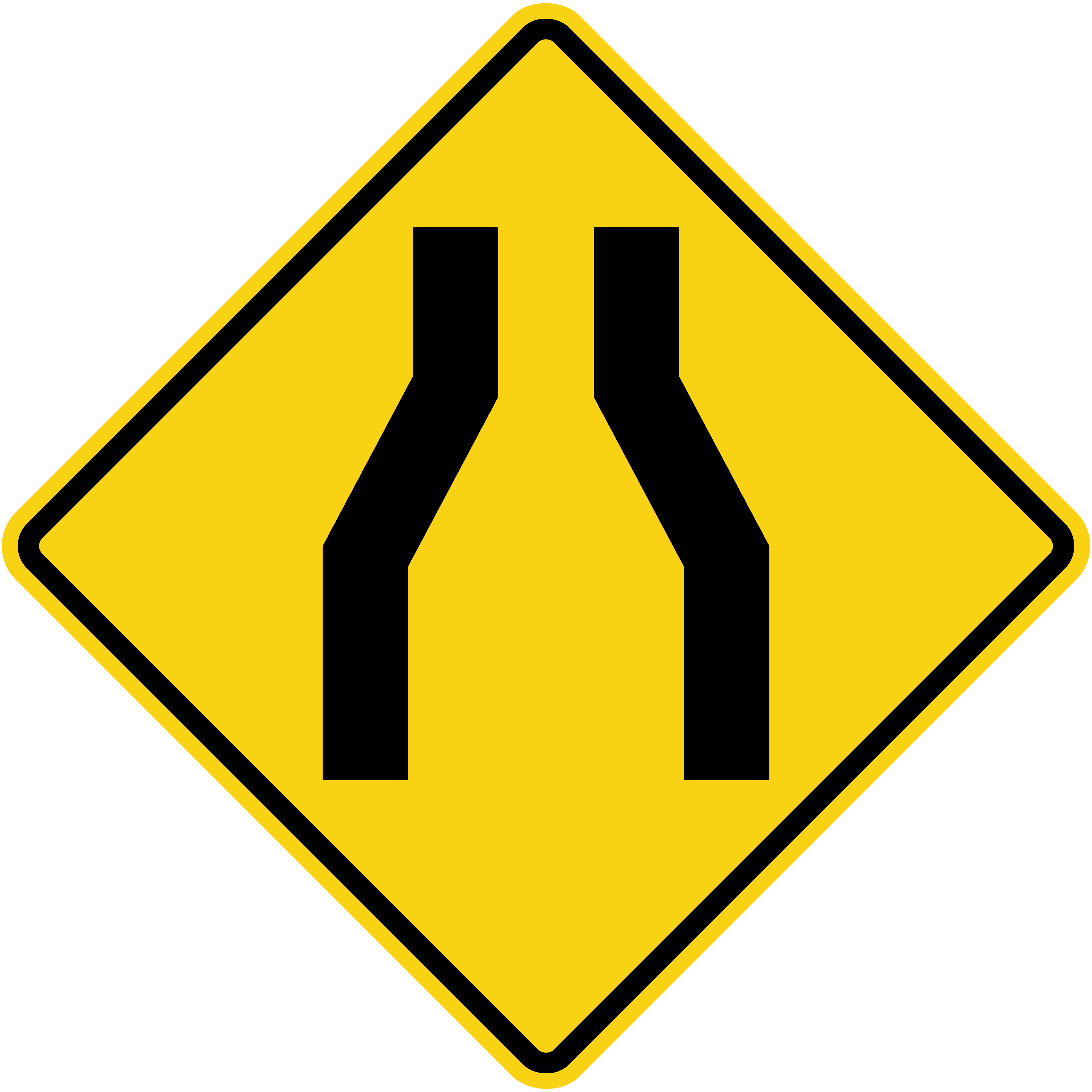
The road gets narrower on both sides ahead.
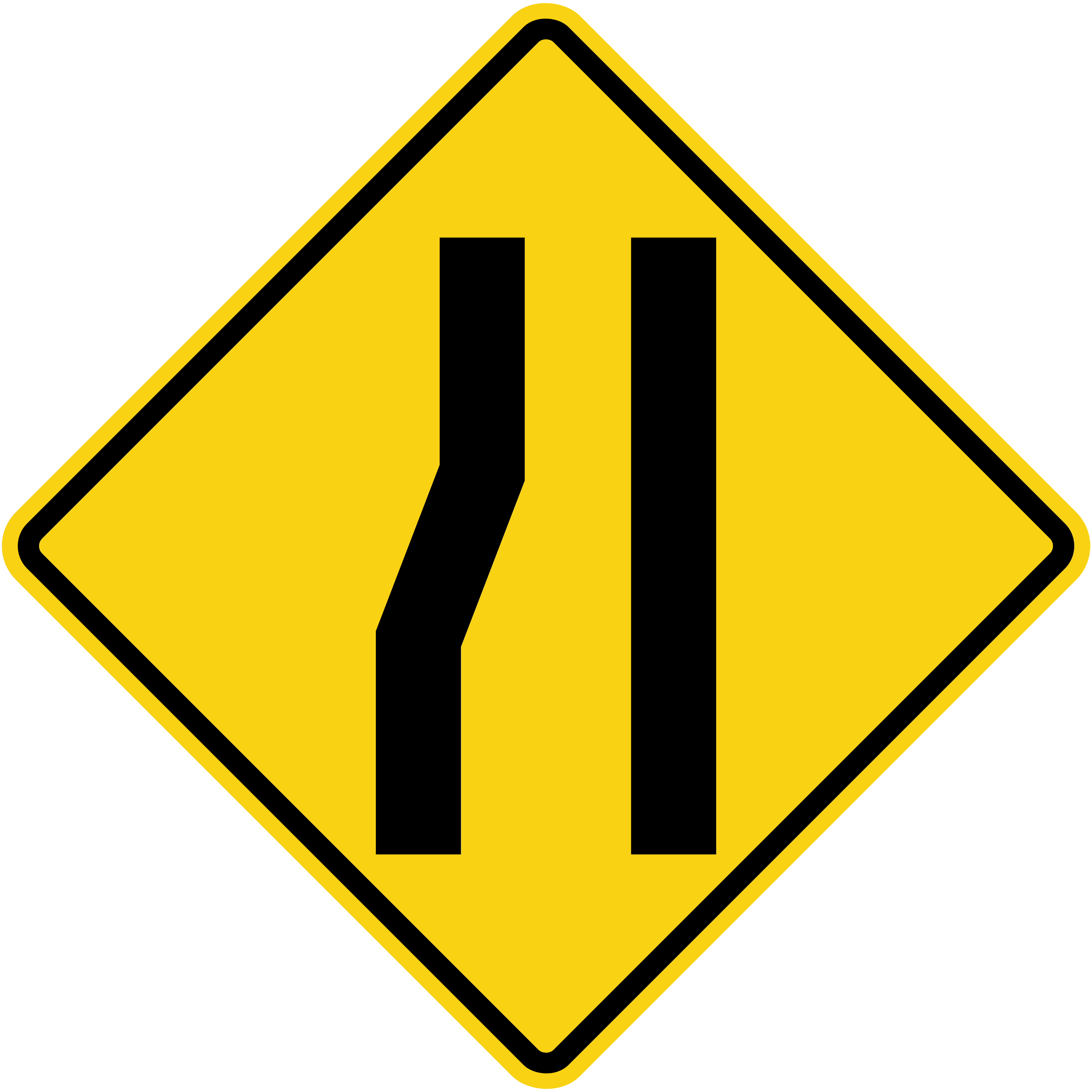
The road gets narrower on the left ahead.
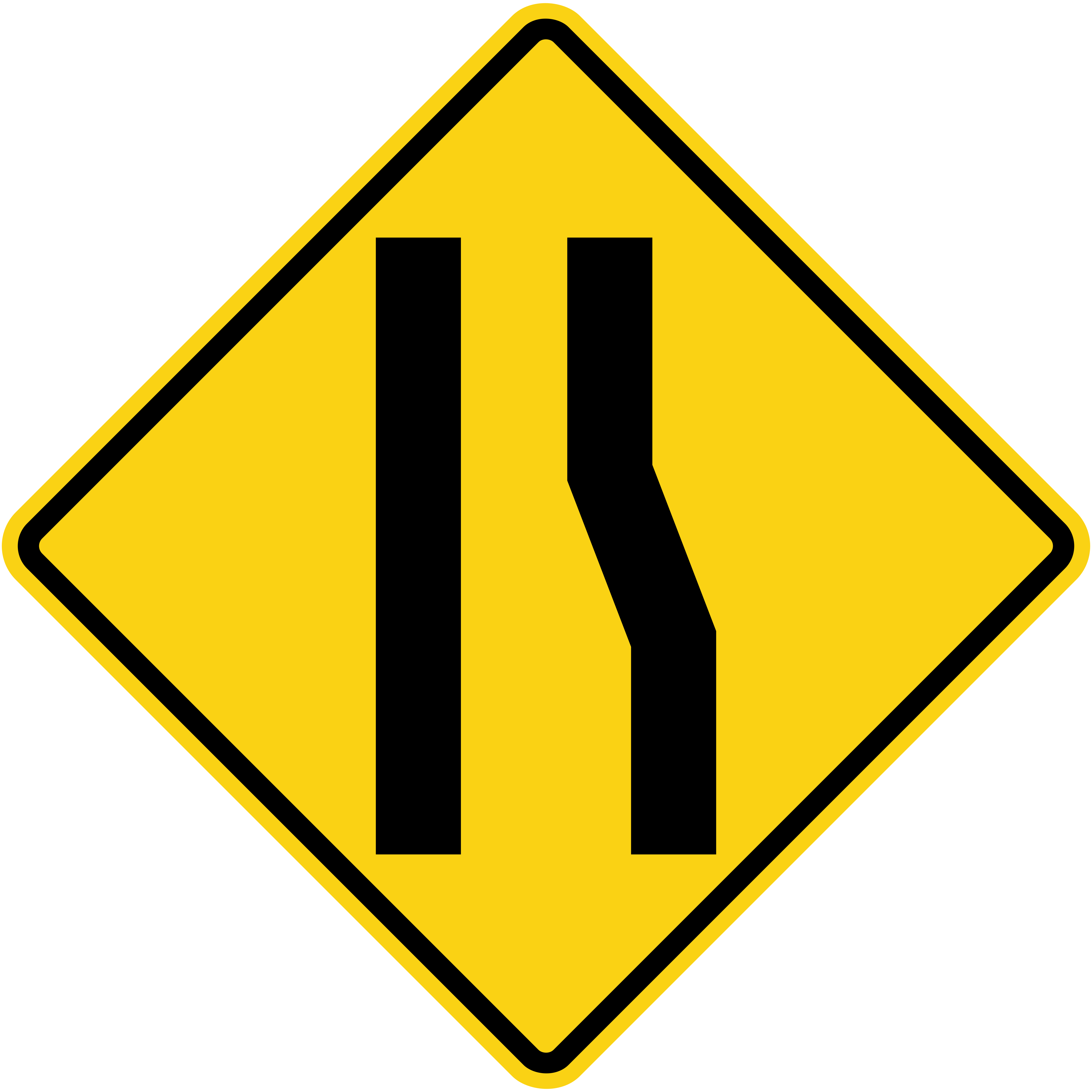
The road gets narrower on the right ahead.
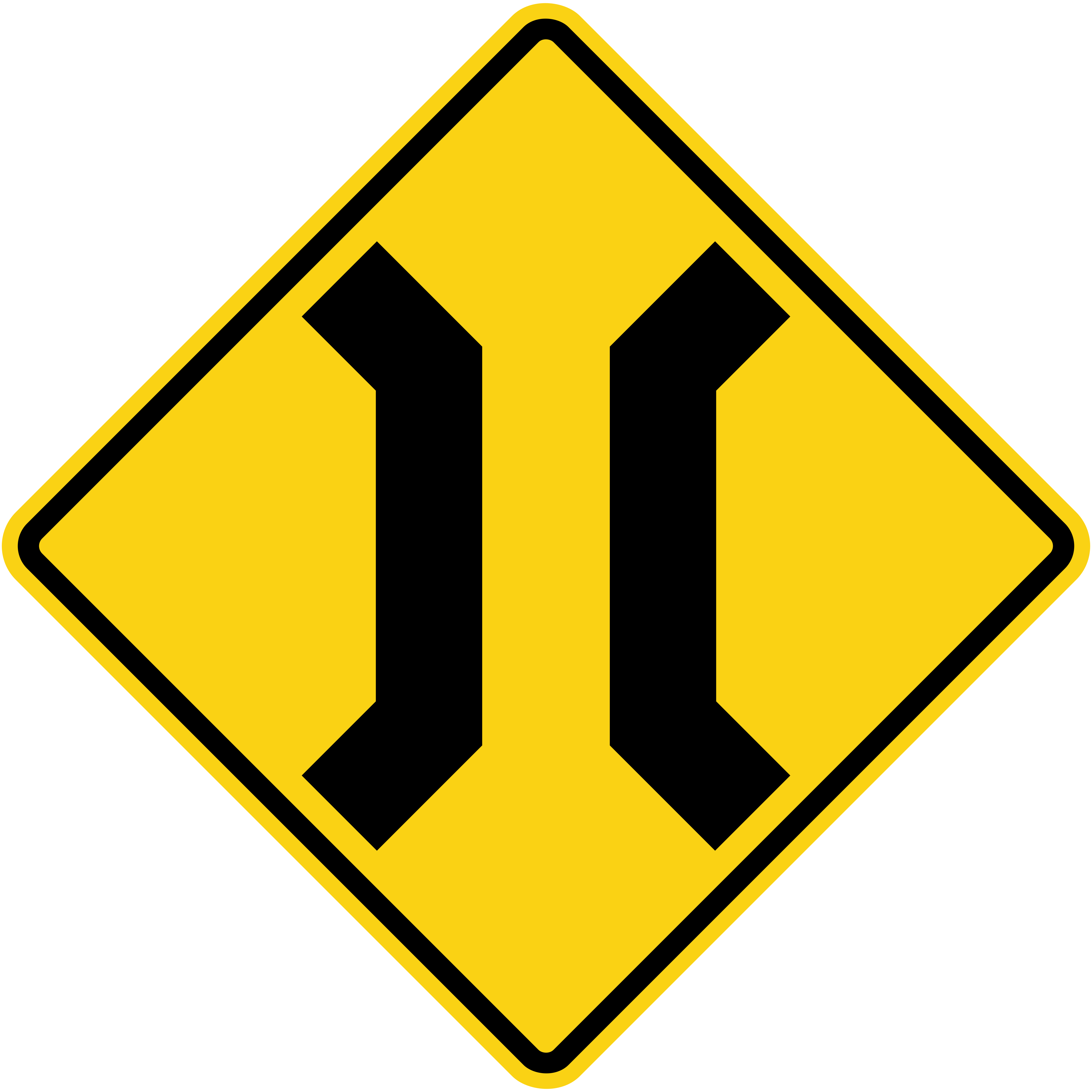
A narrow bridge ahead.
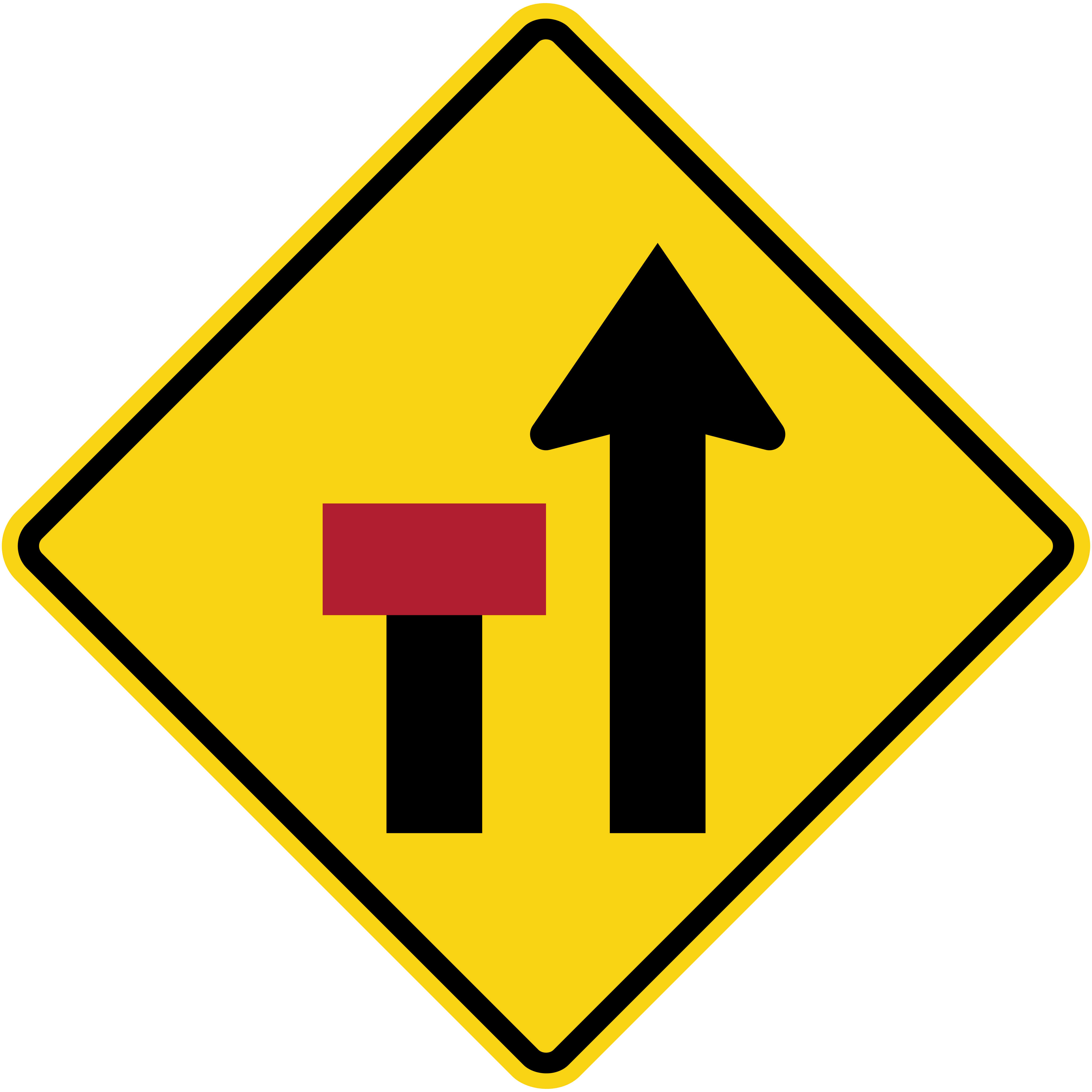
The left lane ends ahead; merge to the right.
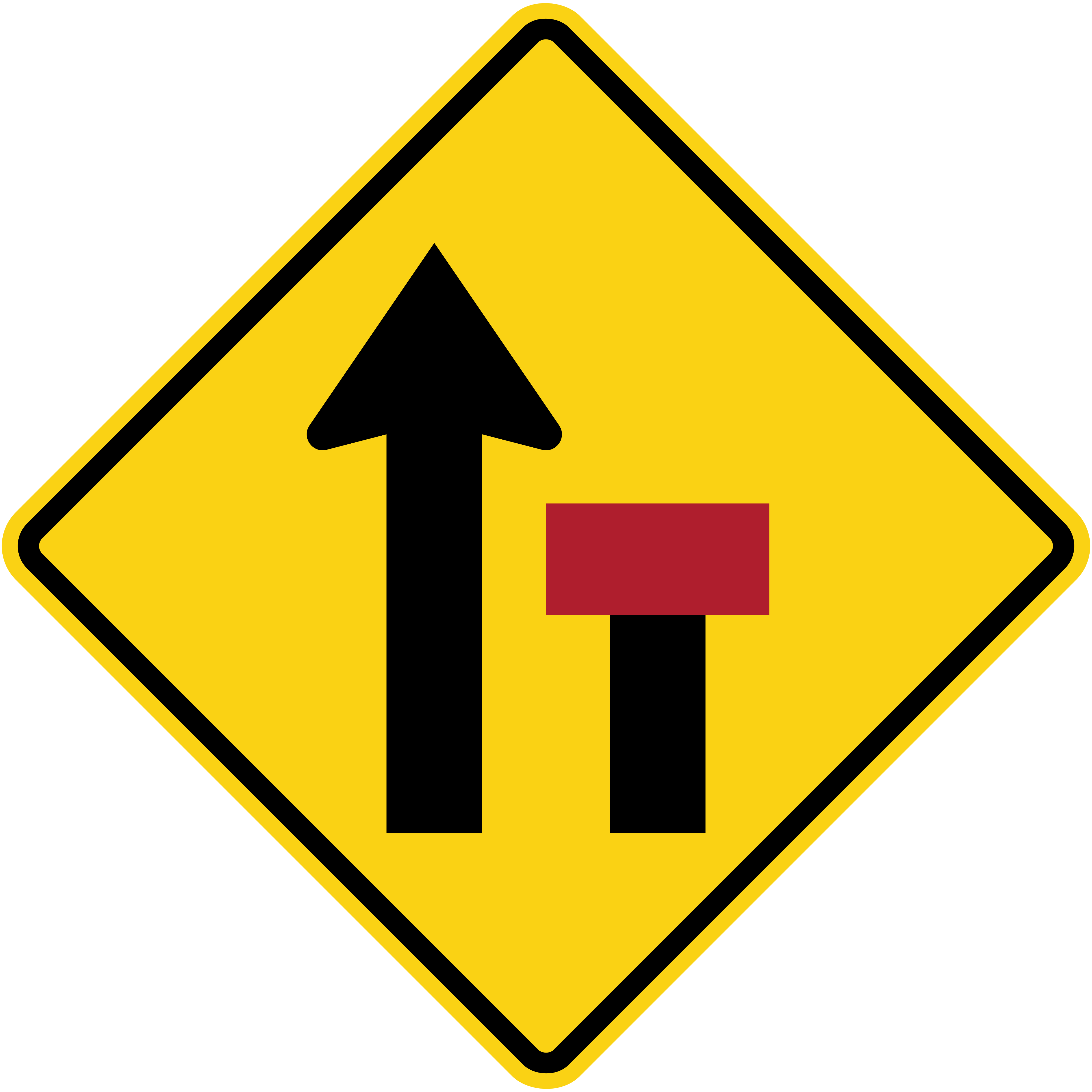
The right lane ends ahead; merge to the left.
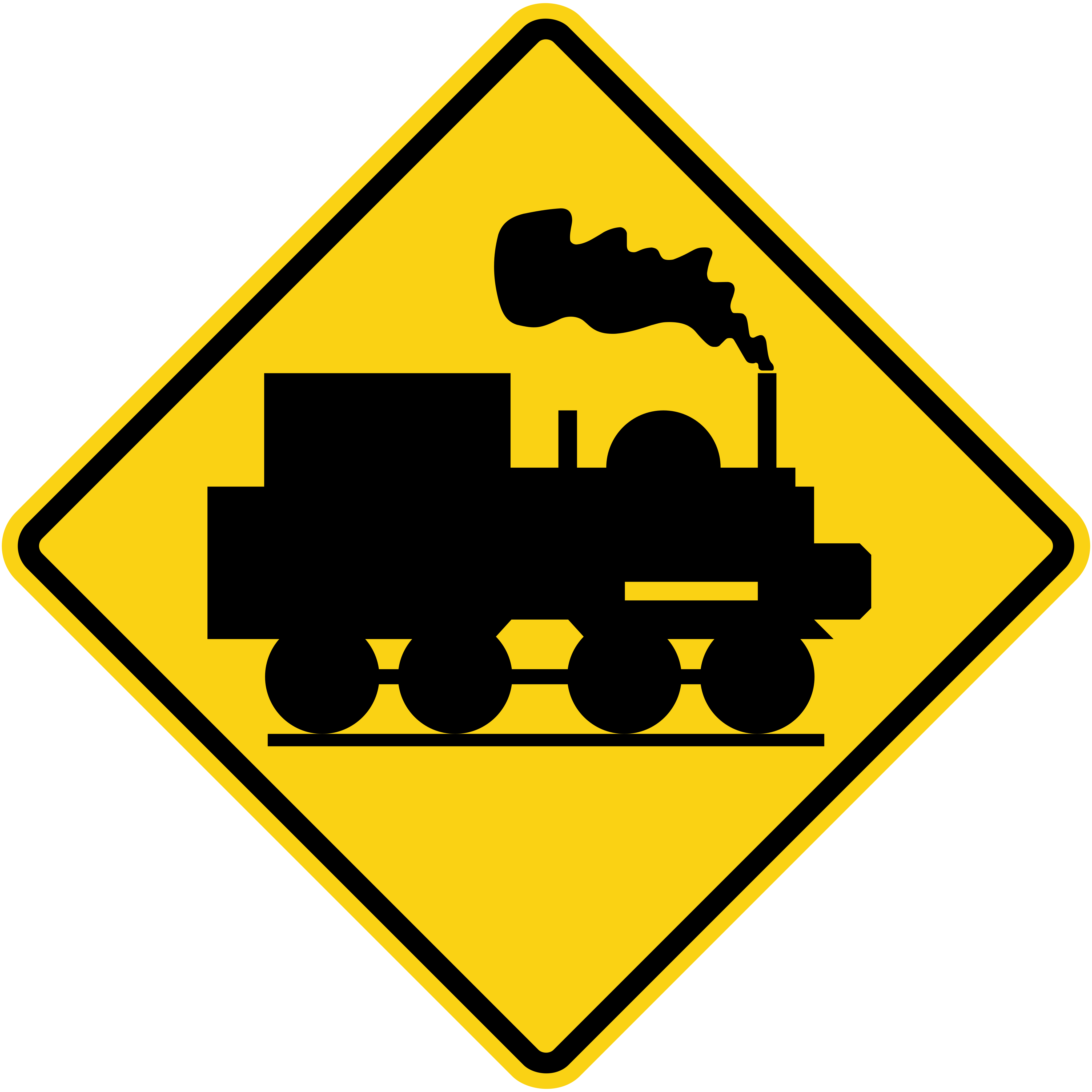
A railway crossing without gates ahead; stop at least 5 m from the tracks and check.
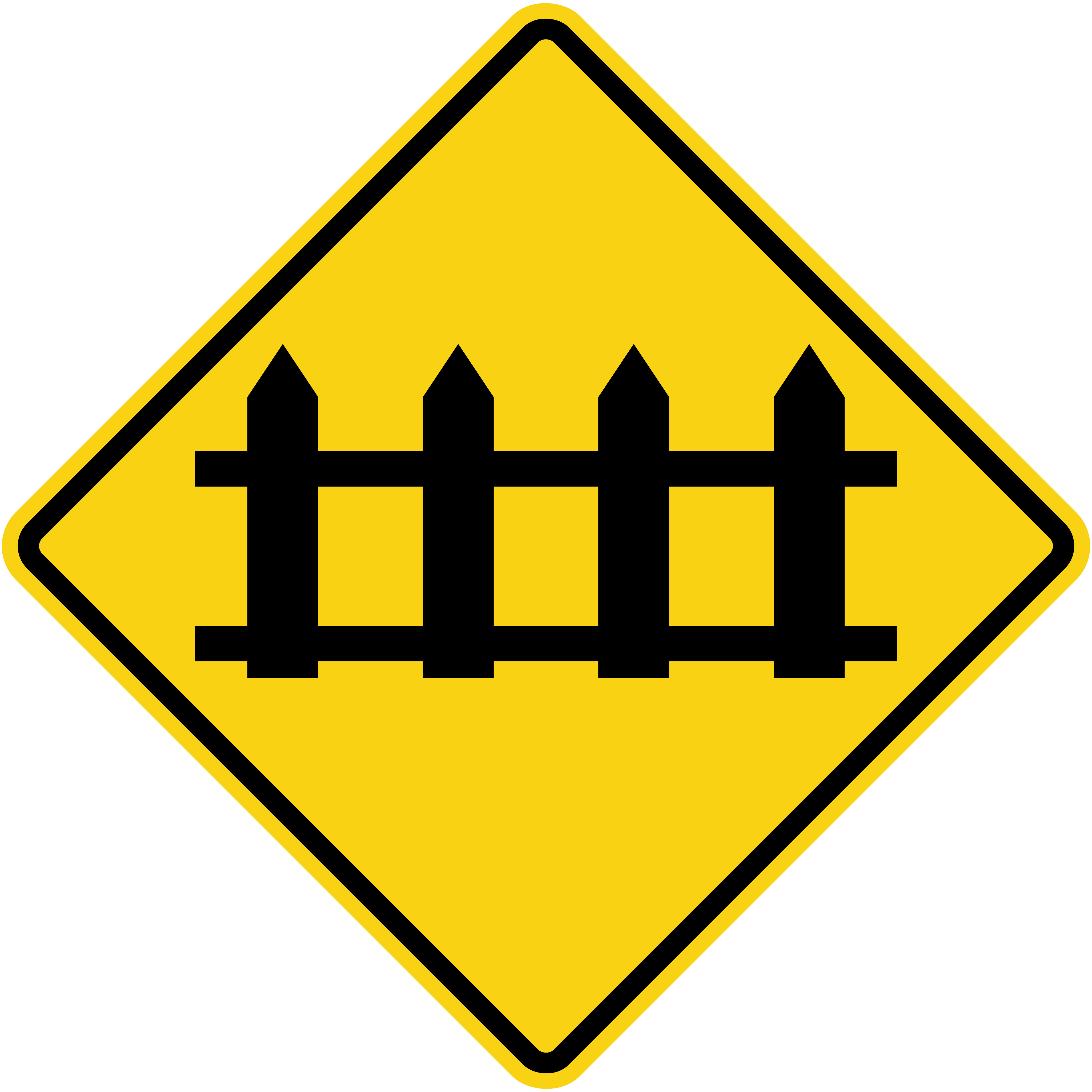
A railway crossing with gates ahead.
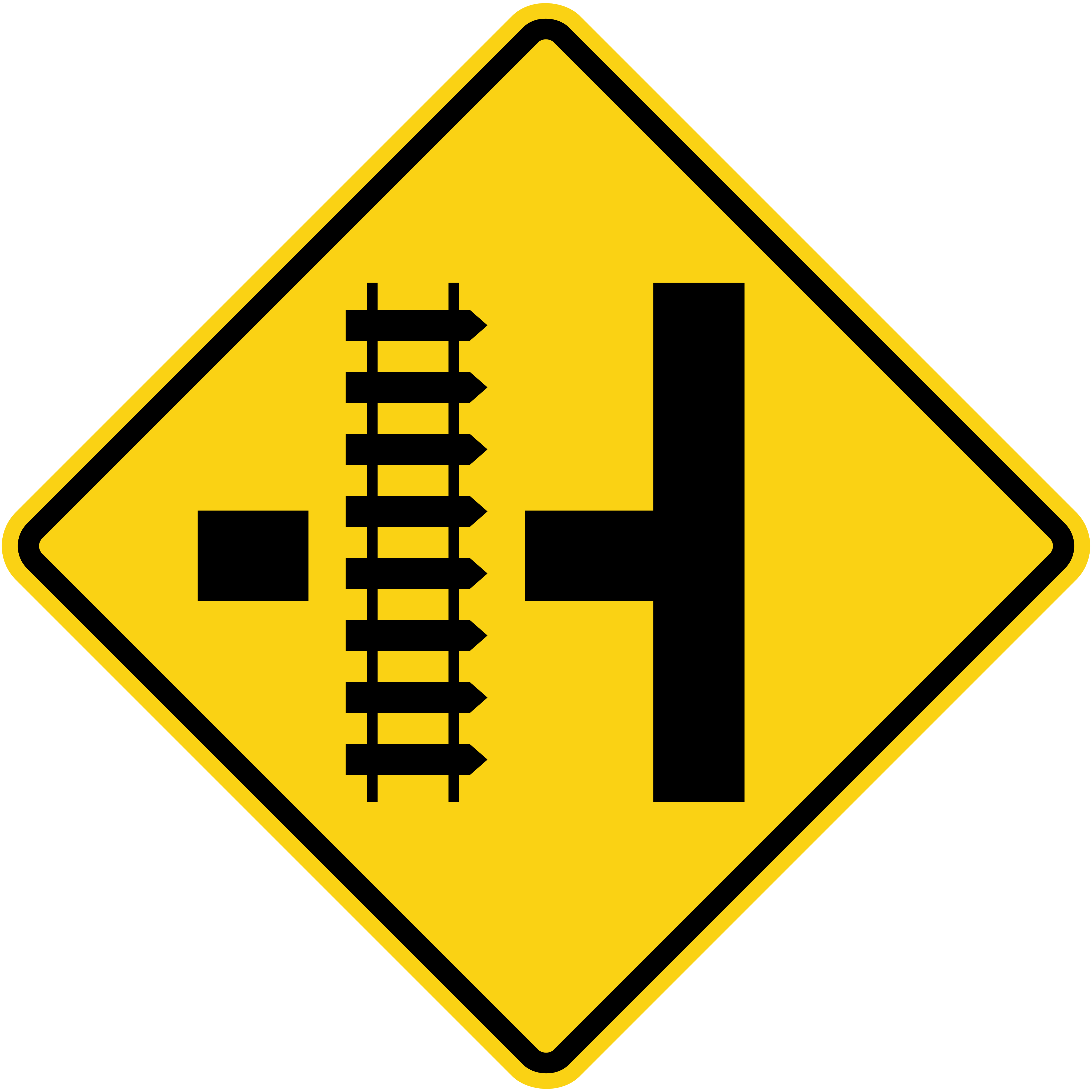
A side road just ahead crosses a railway.
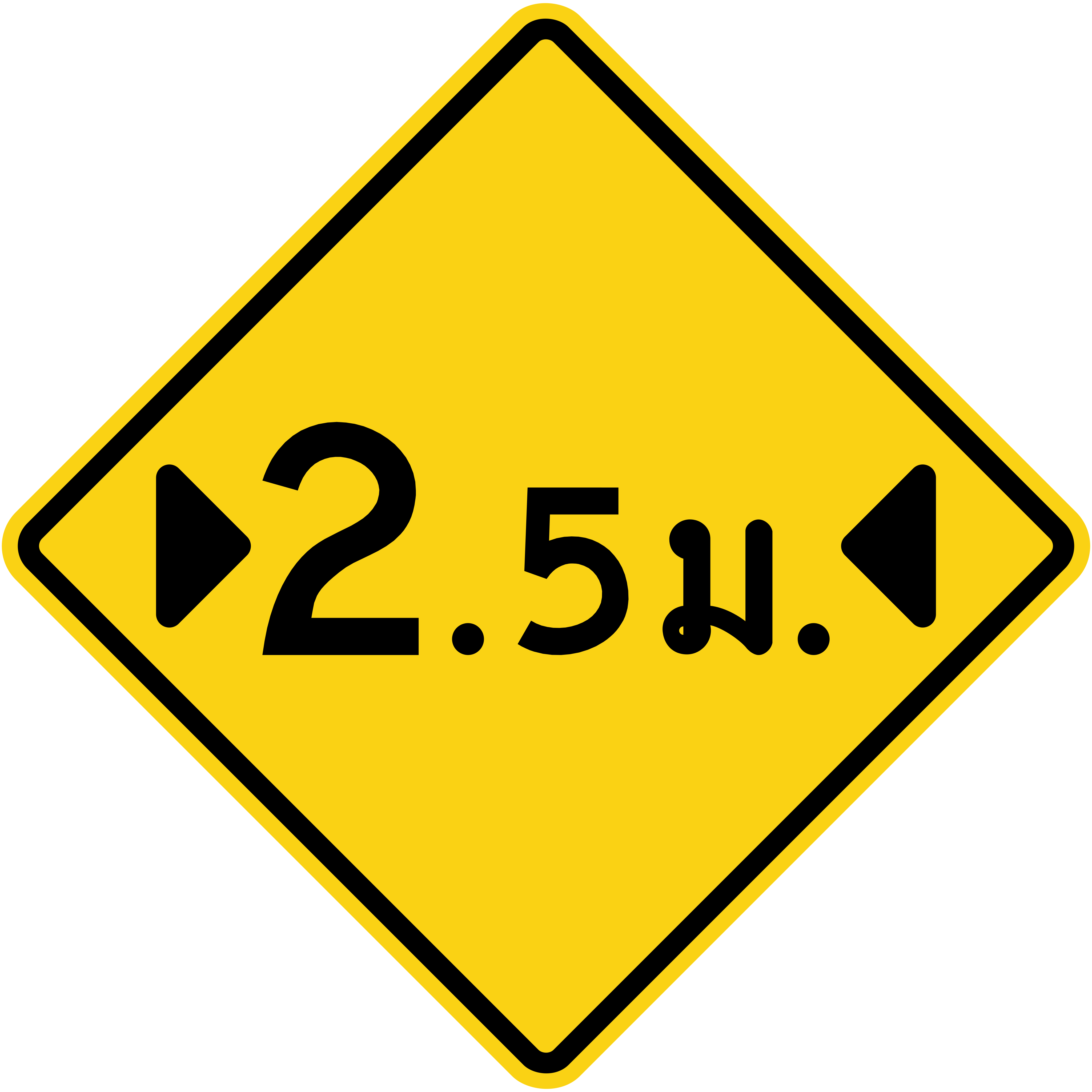
The road ahead is limited to the width shown.
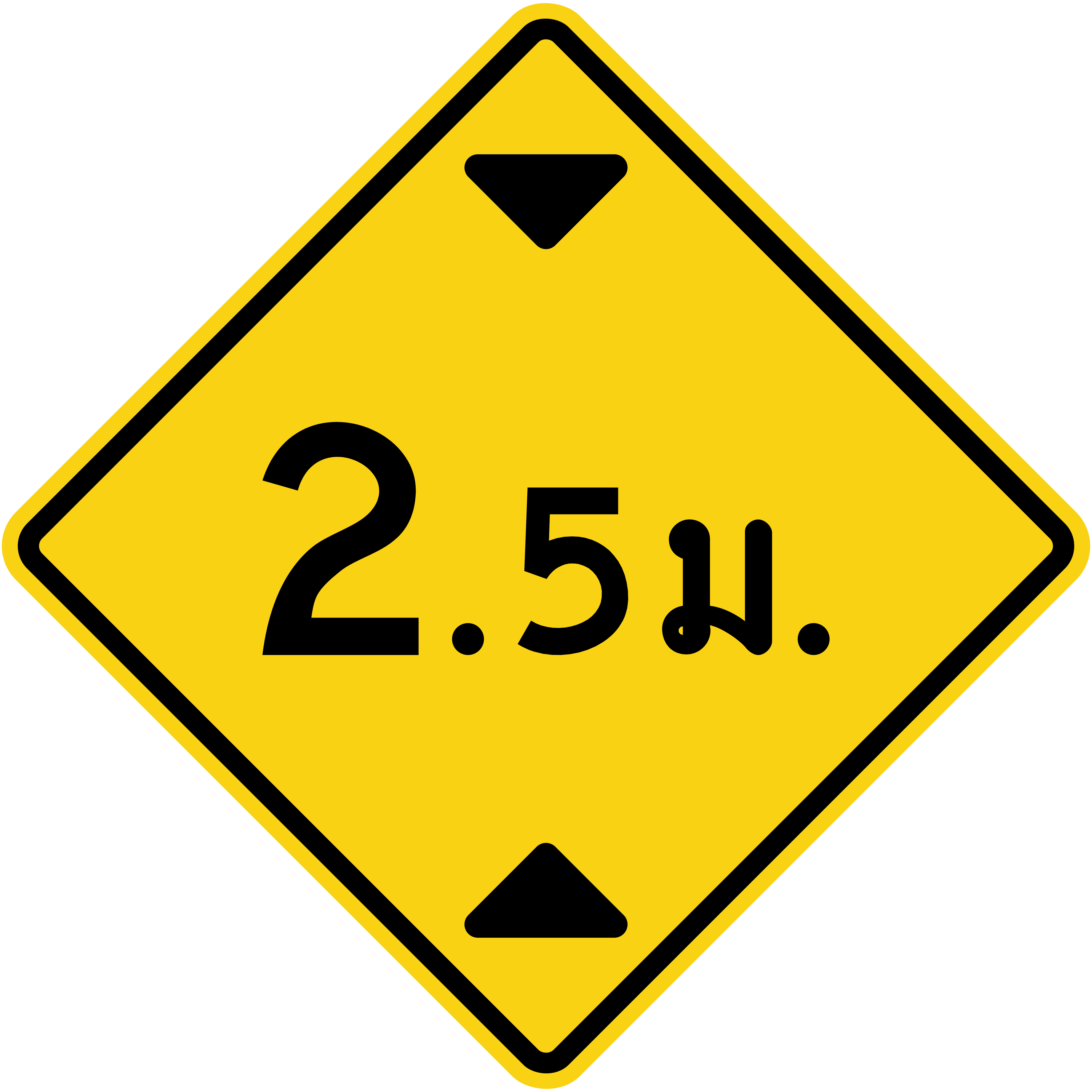
Low clearance ahead, limited to the height shown.
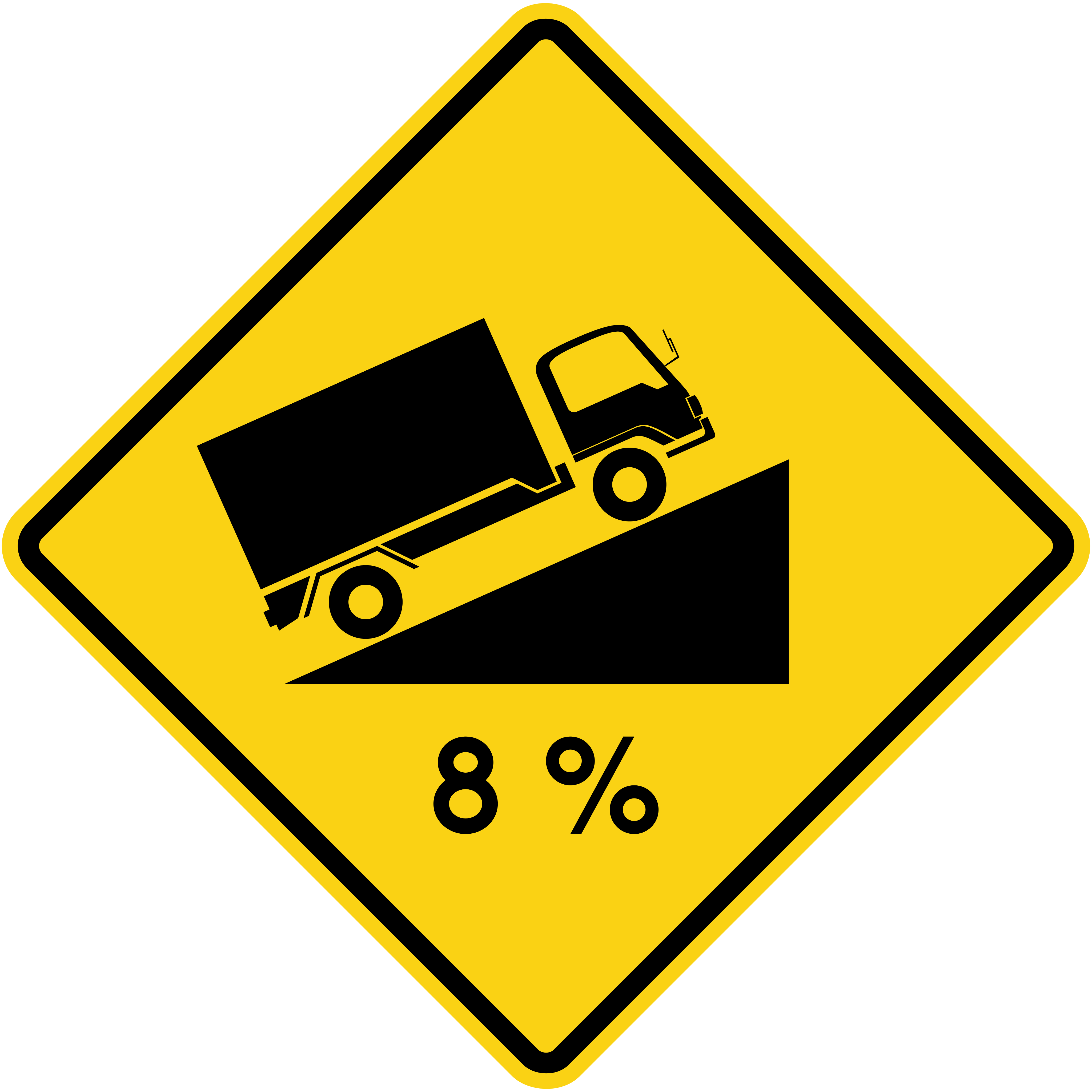
A steep uphill section ahead.
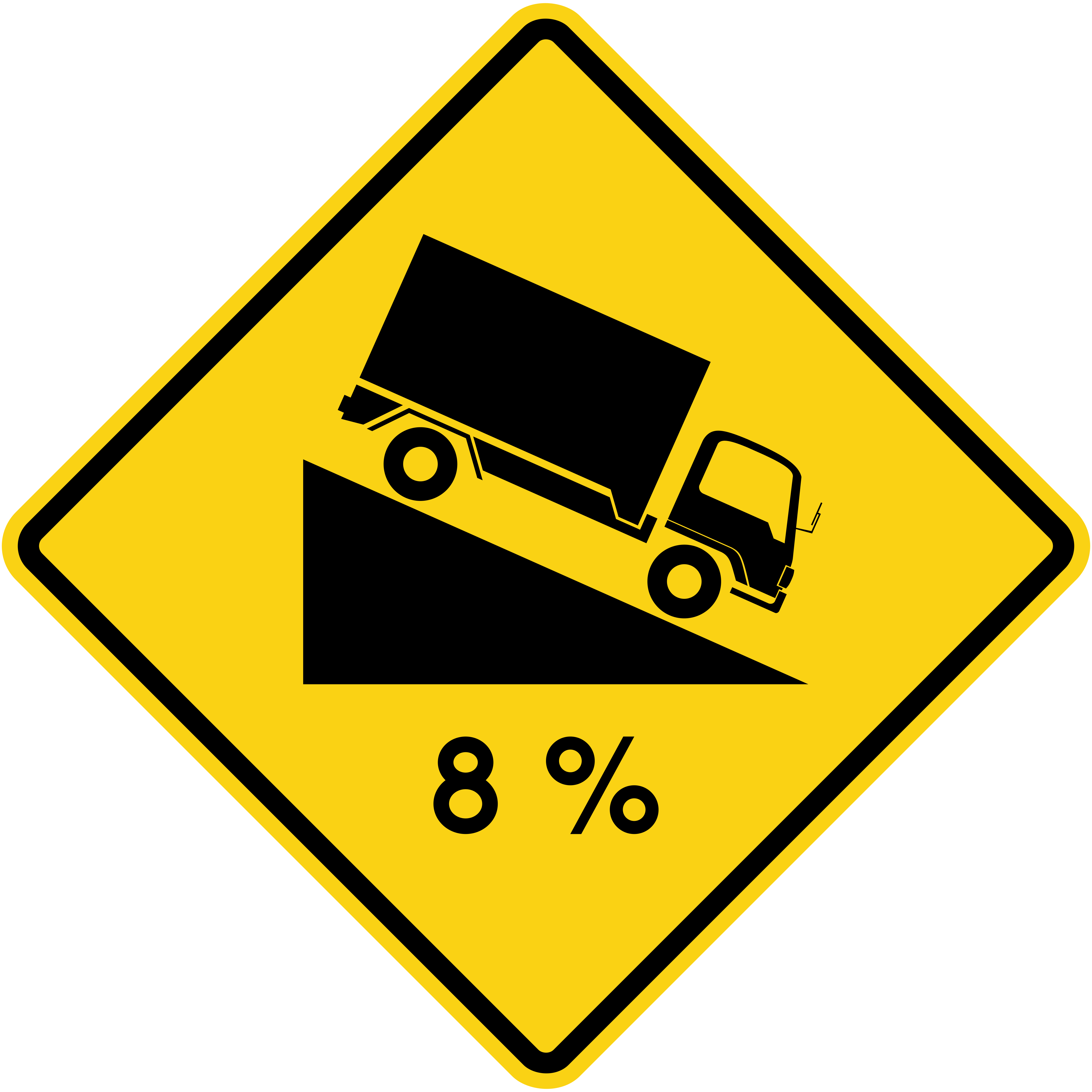
A steep downhill section ahead; use a low gear.
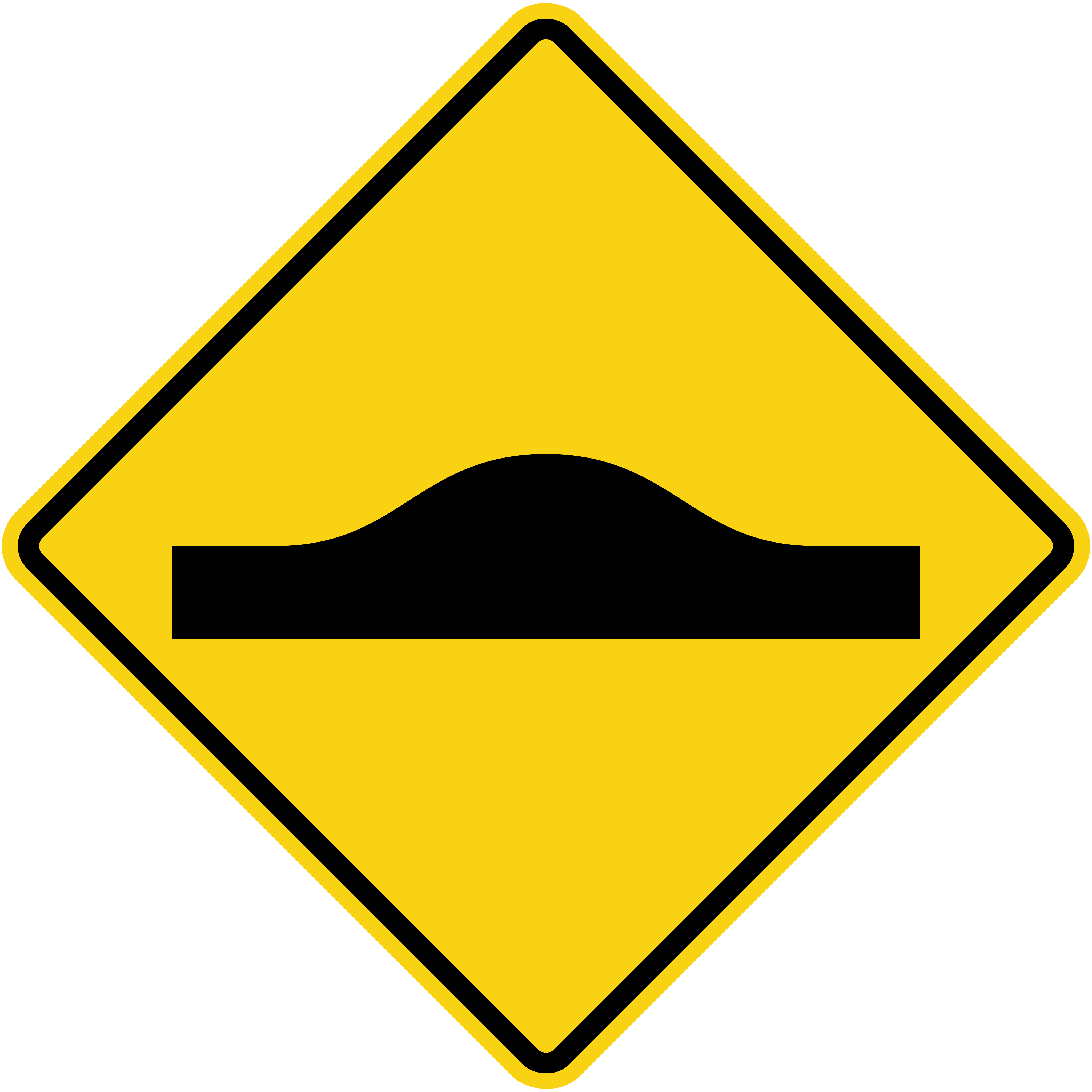
A hump in the road ahead; slow down.
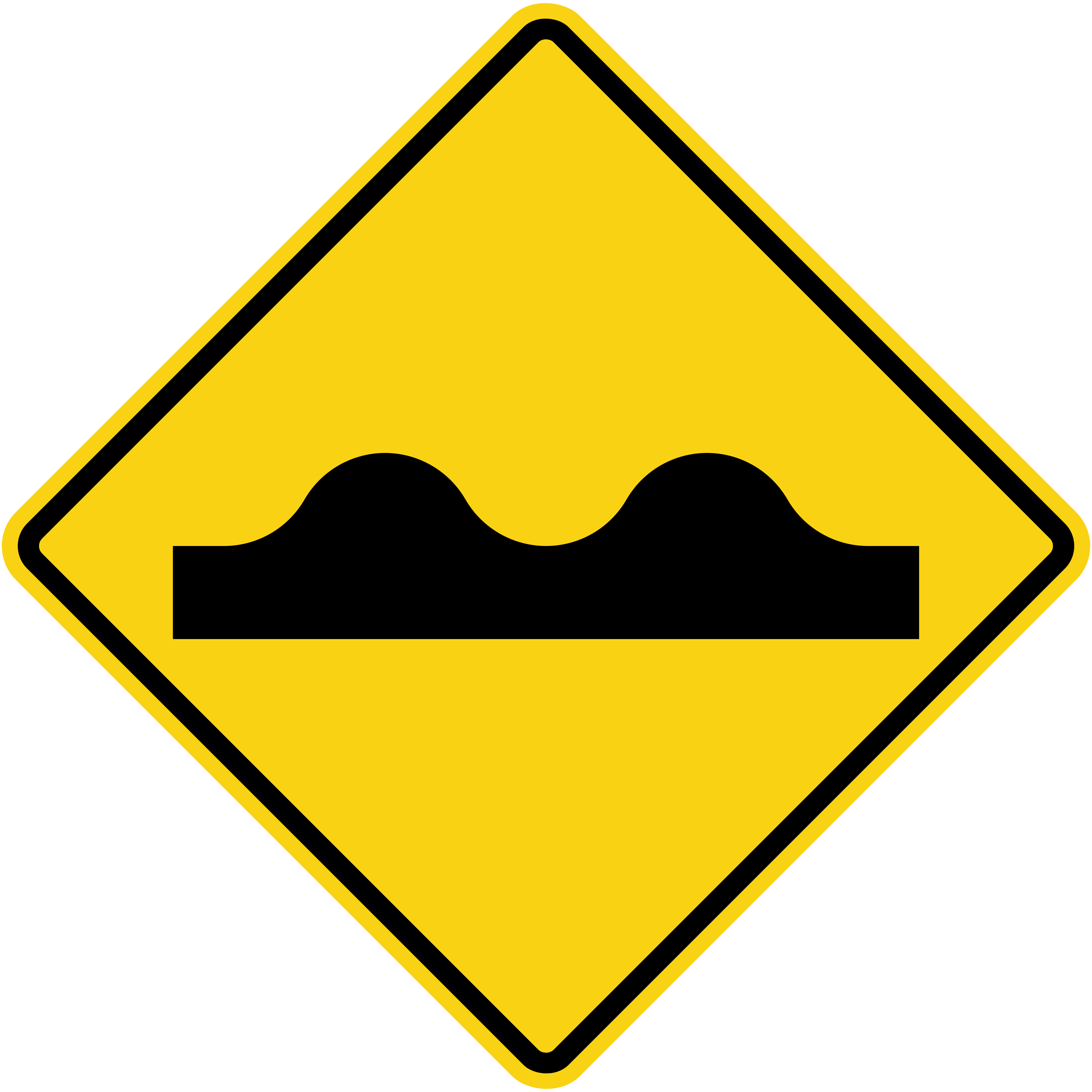
An uneven road surface ahead.
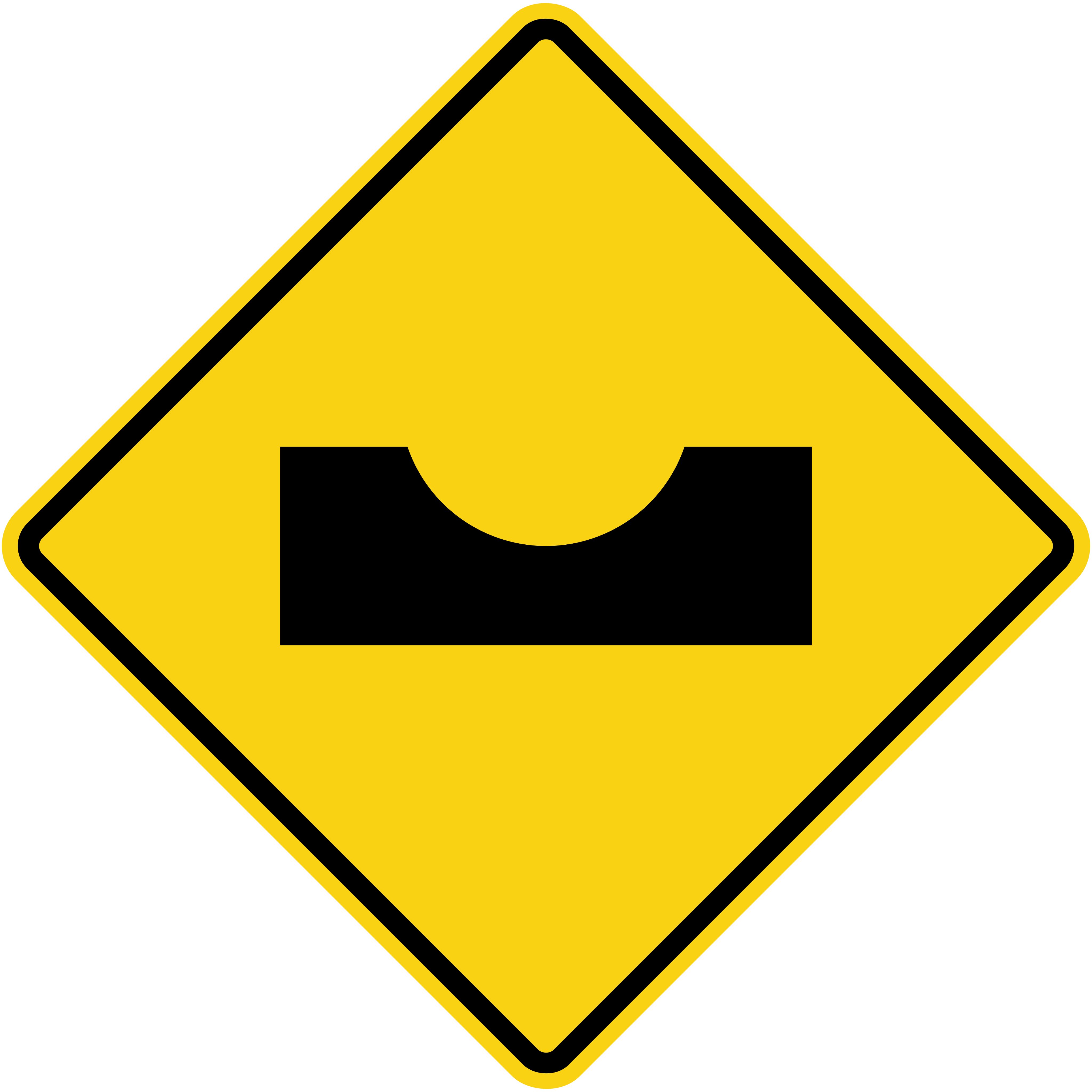
A dip in the road ahead.
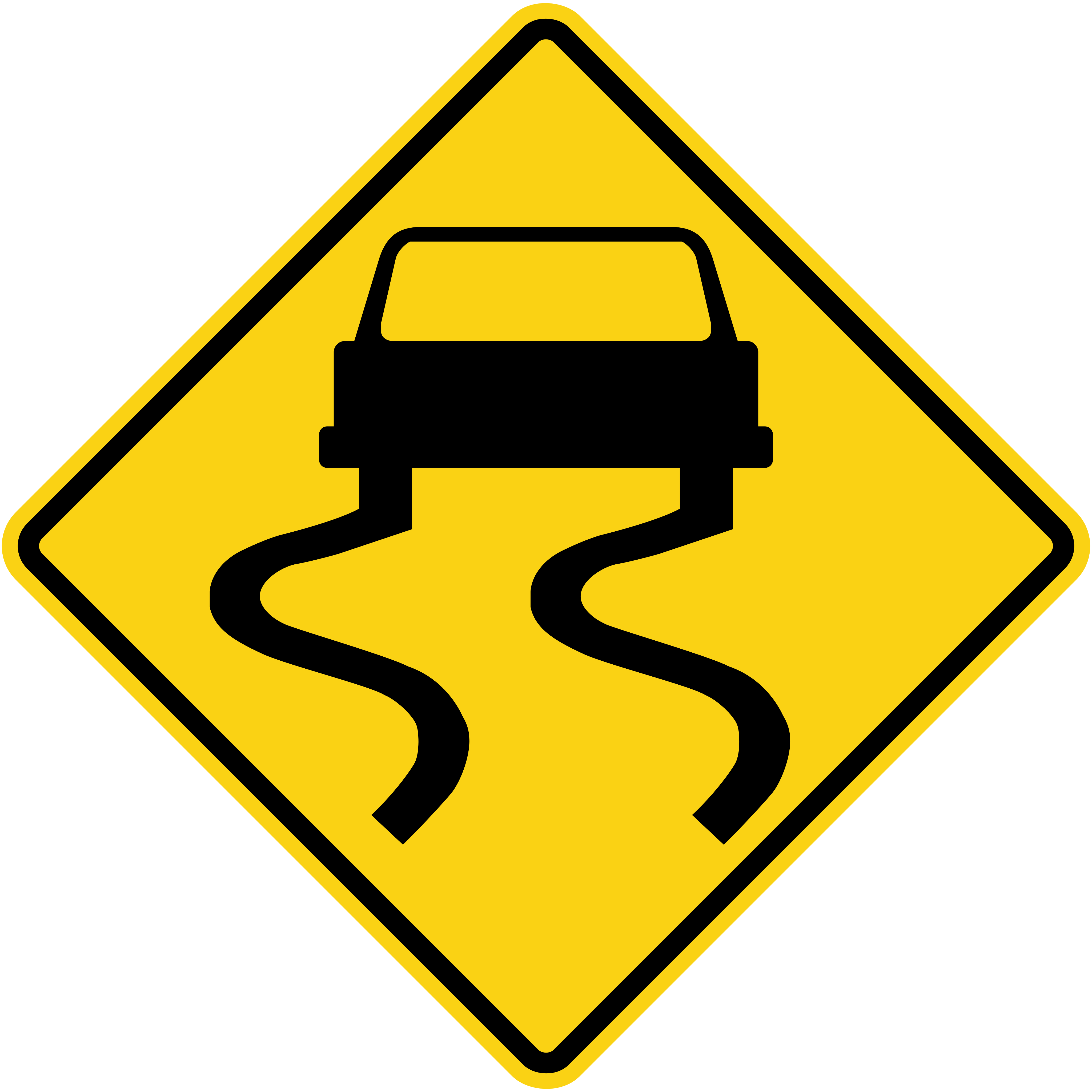
The road may be slippery, especially when wet.
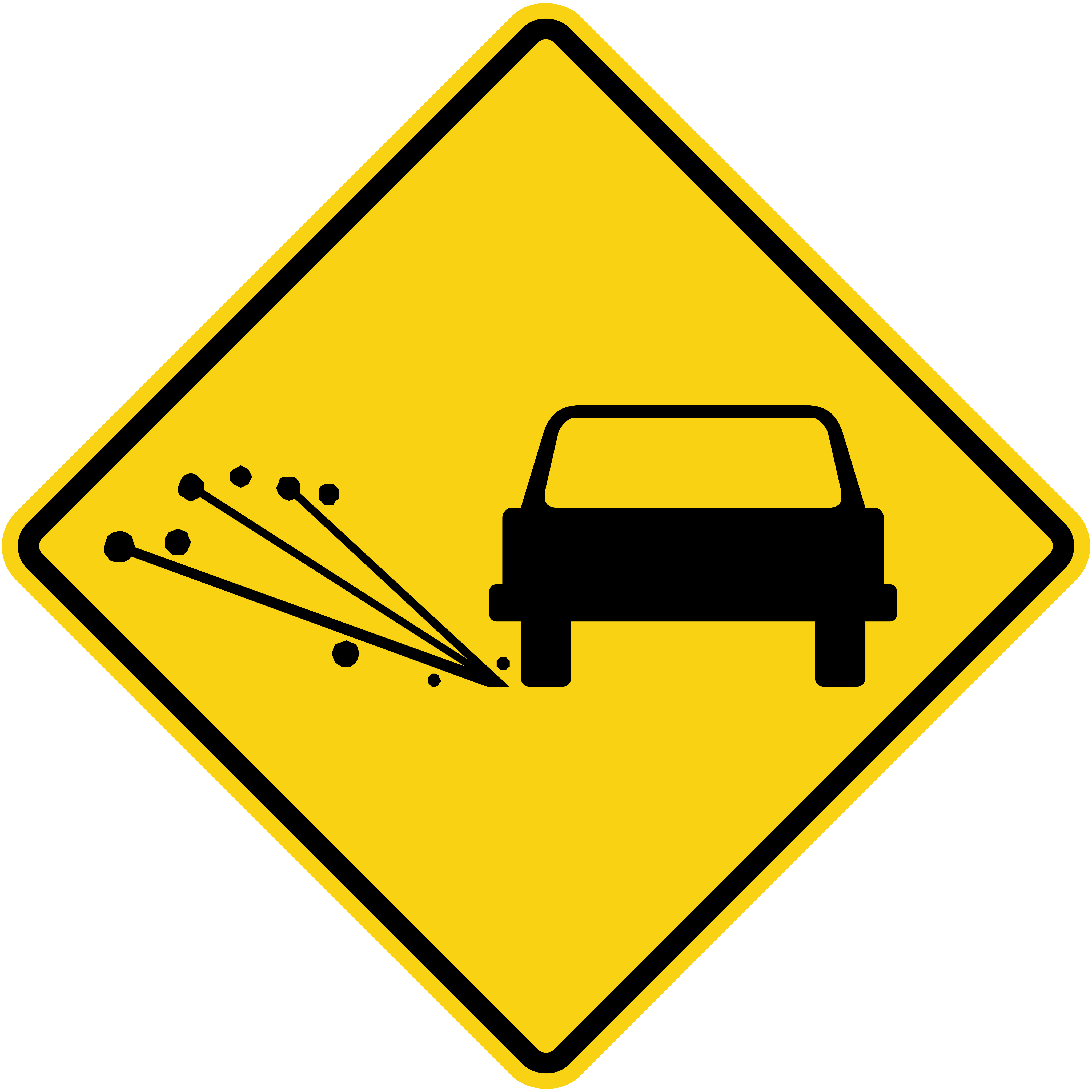
Loose stones on the road may be thrown up.
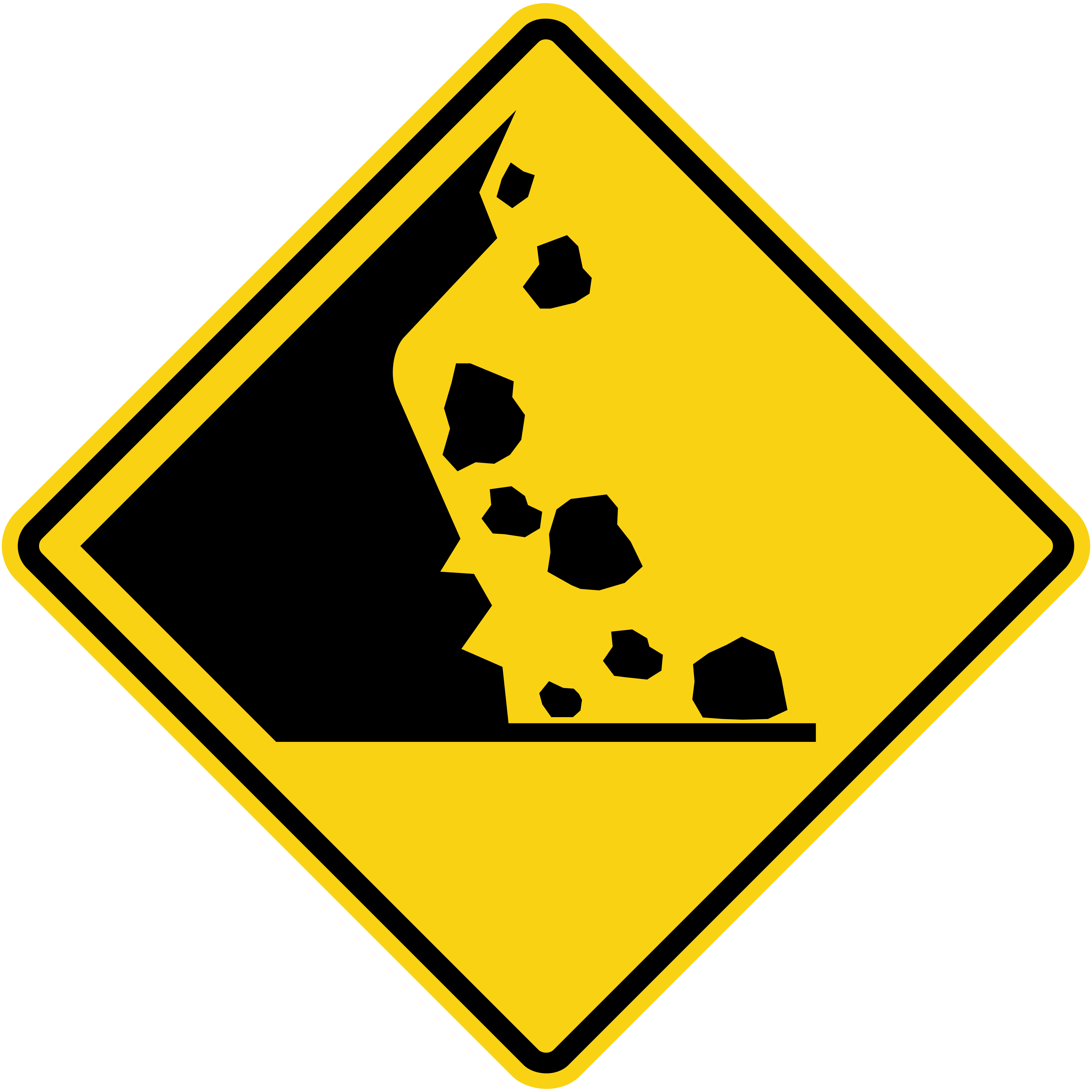
Rocks may fall onto the road ahead.
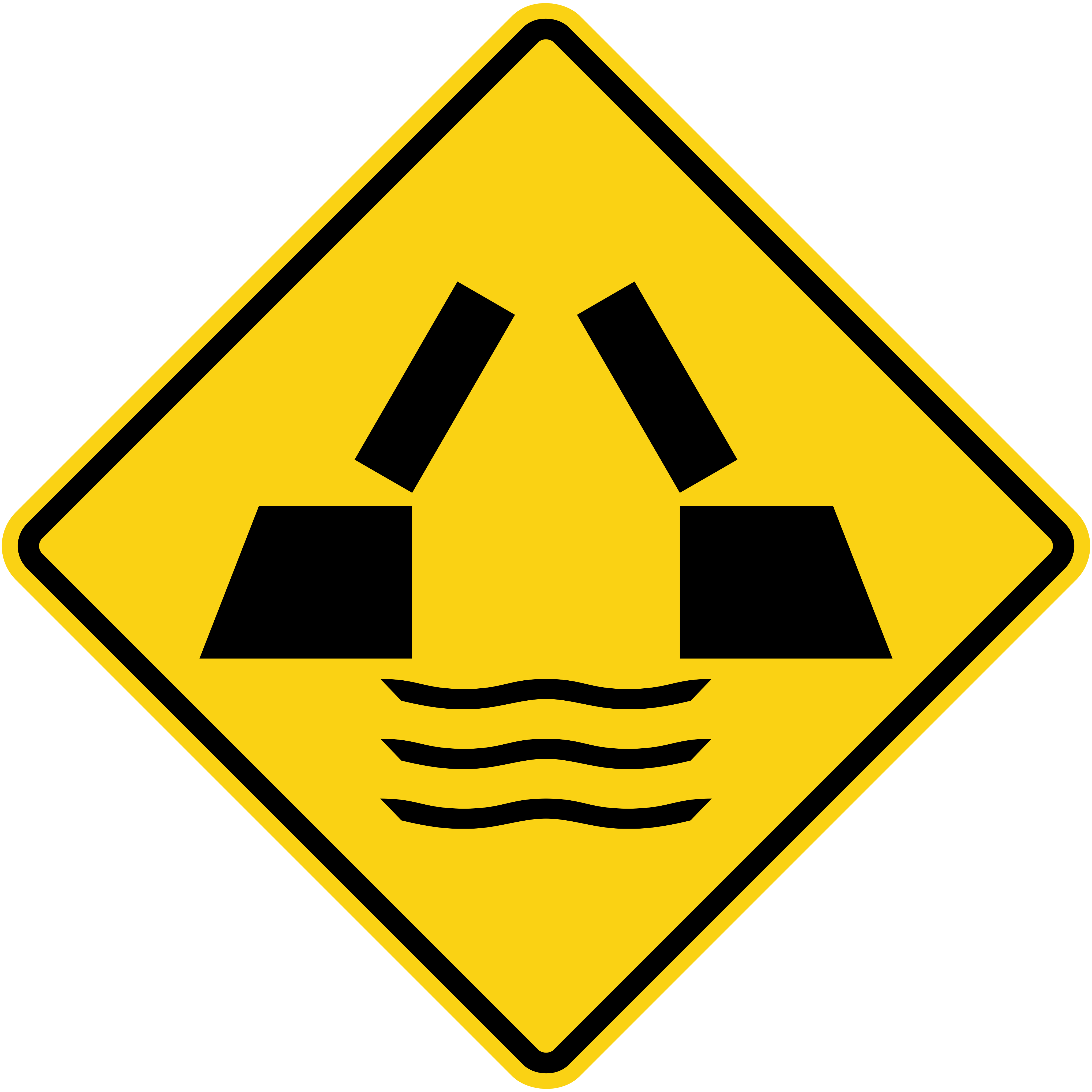
A bridge that opens for boats ahead.
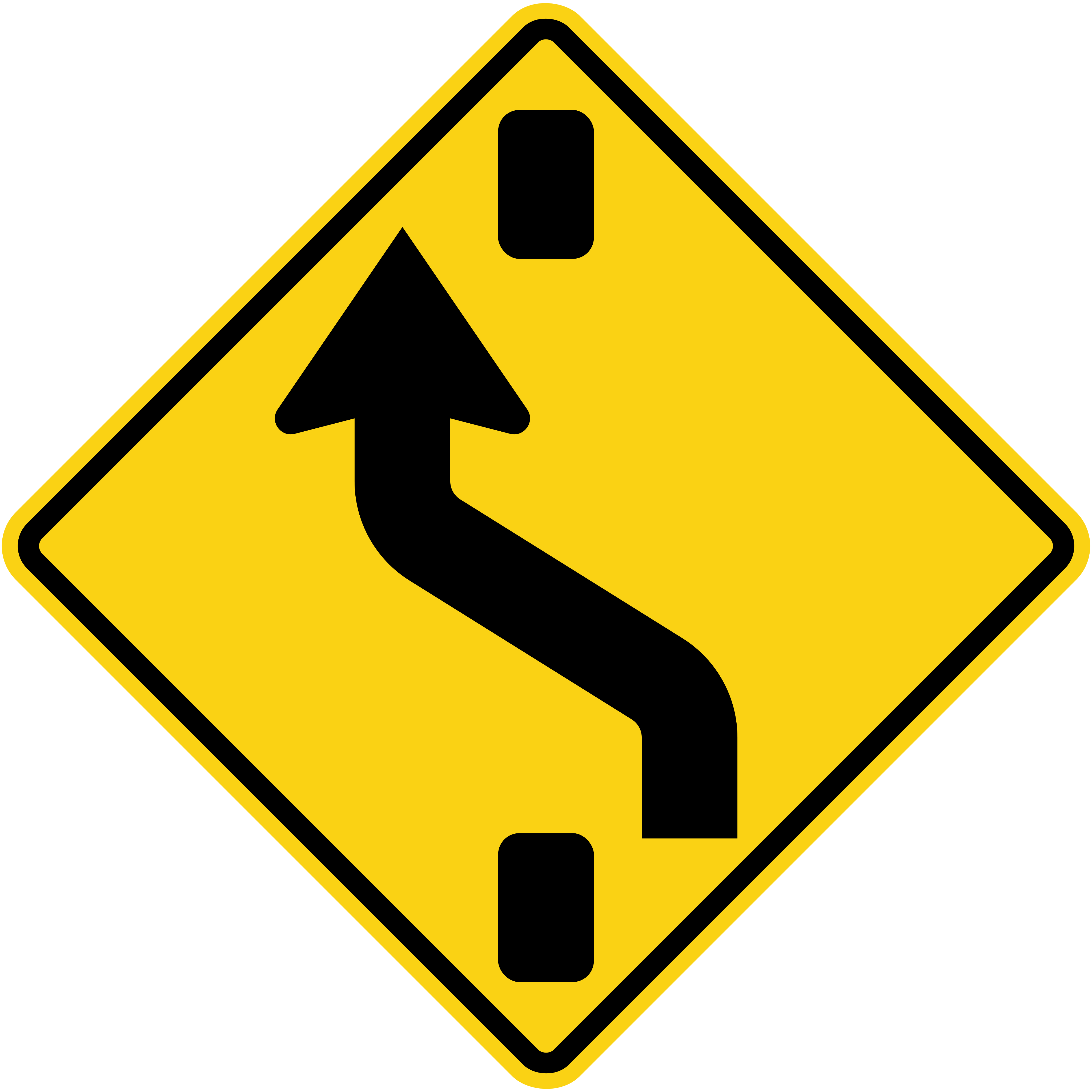
Traffic is diverted to the left carriageway ahead.
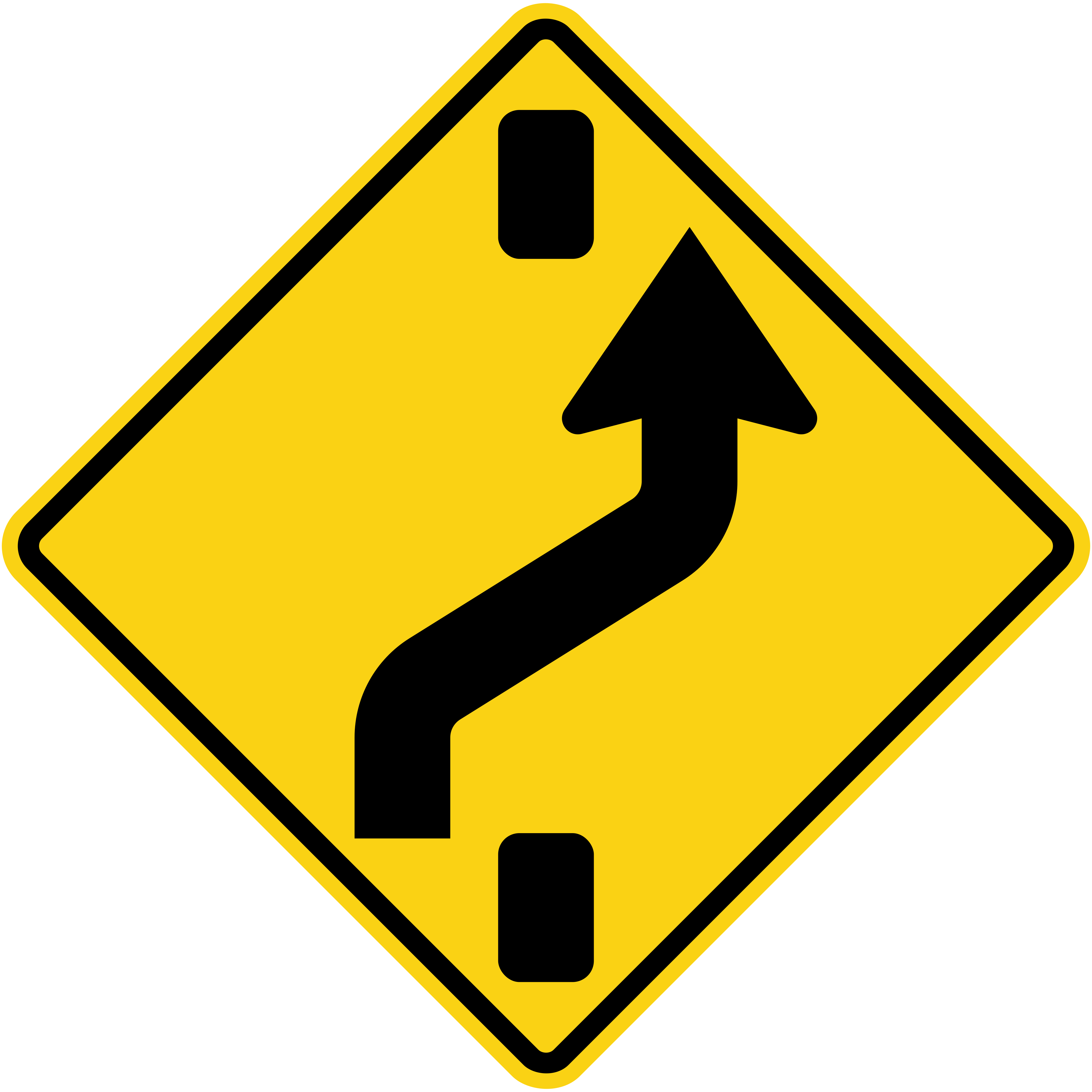
Traffic is diverted to the right carriageway ahead.
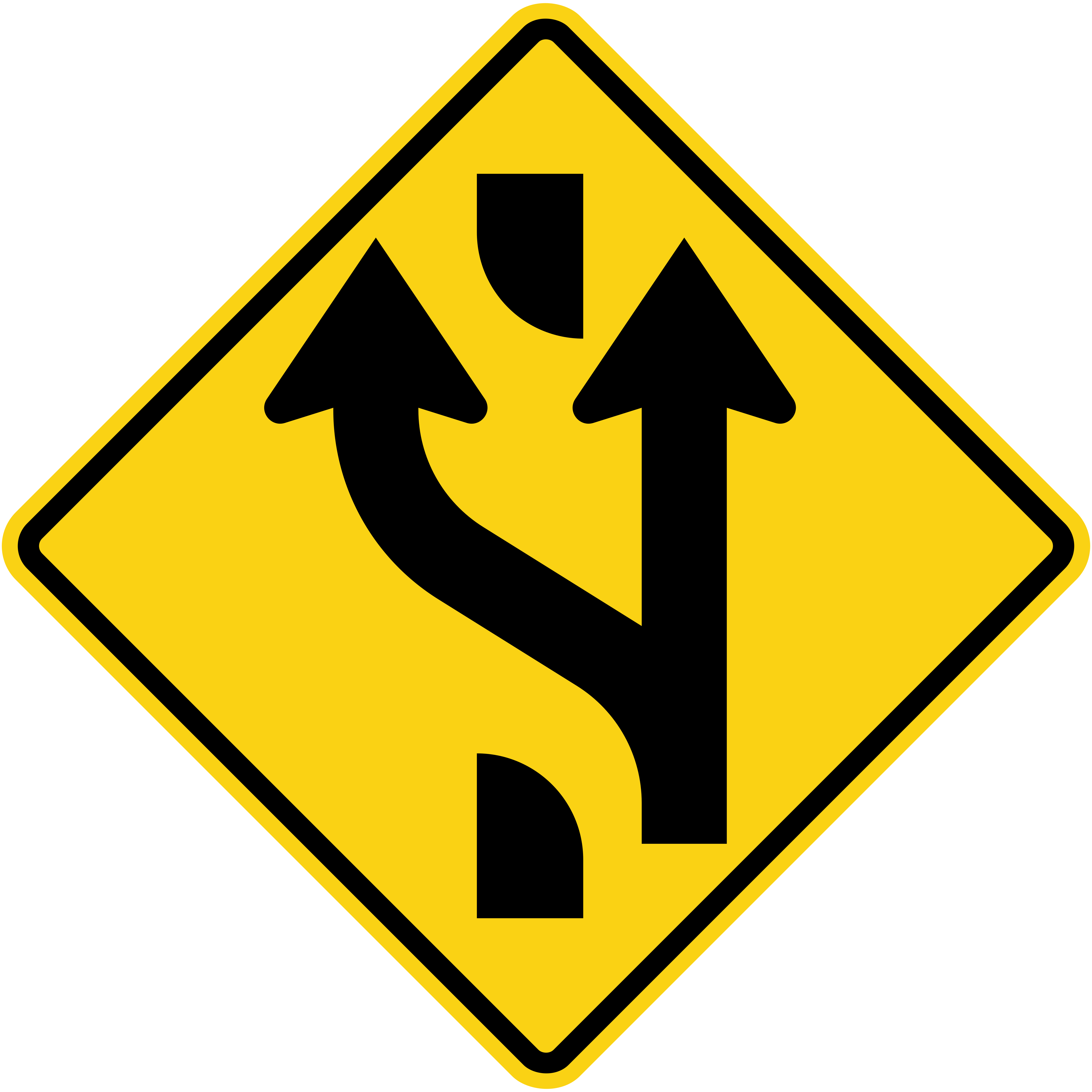
An extra lane begins ahead.
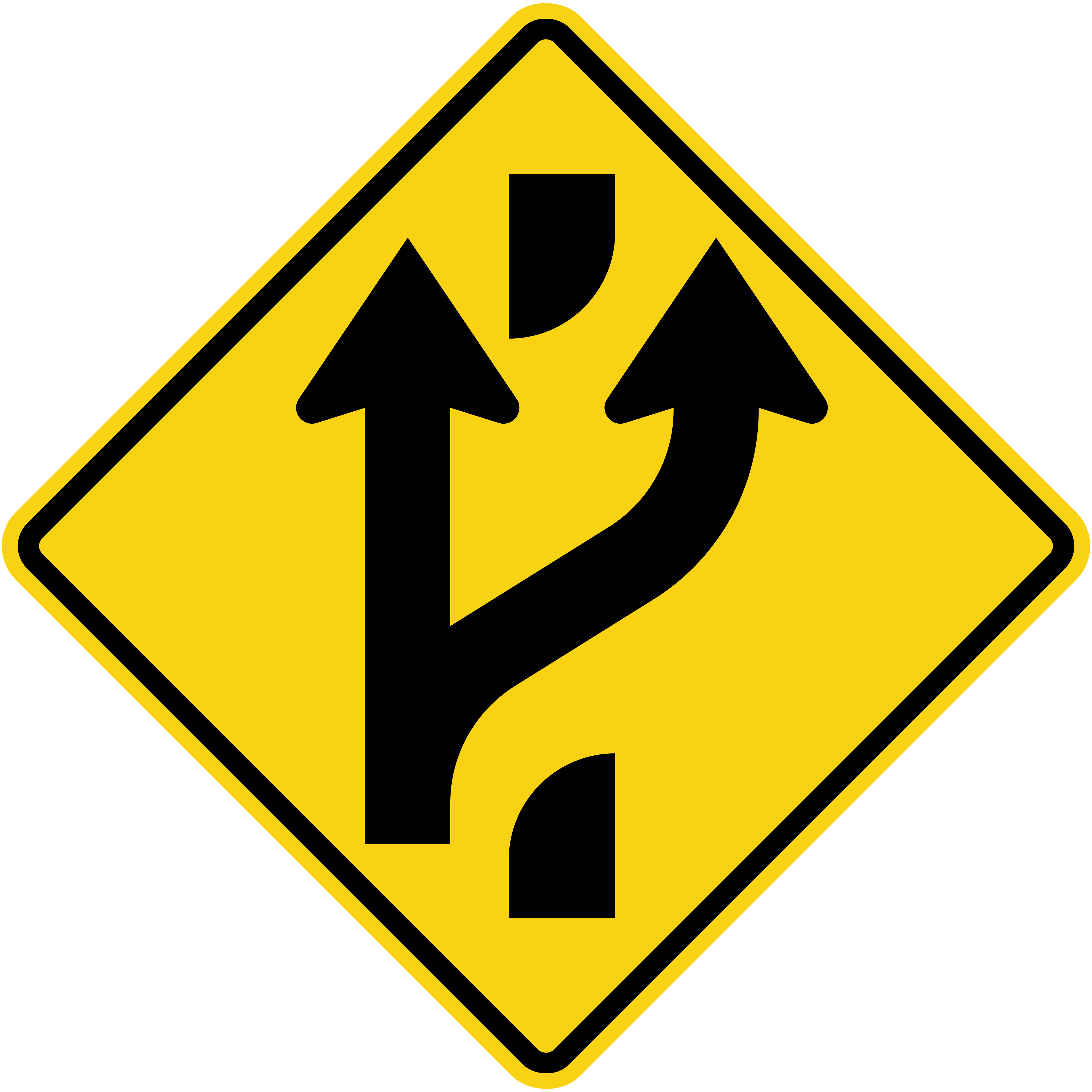
An extra lane begins ahead.
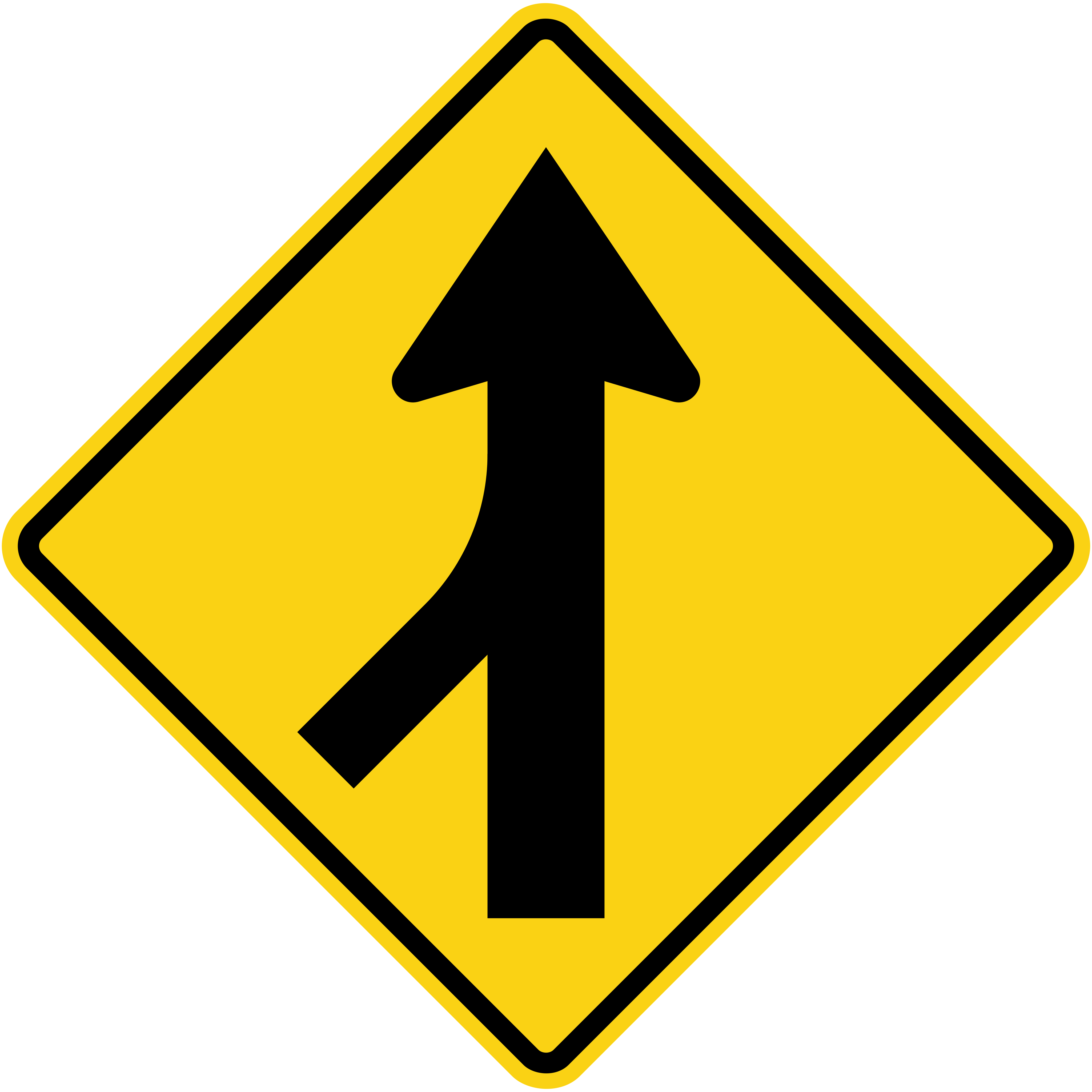
Traffic joins from the left ahead.
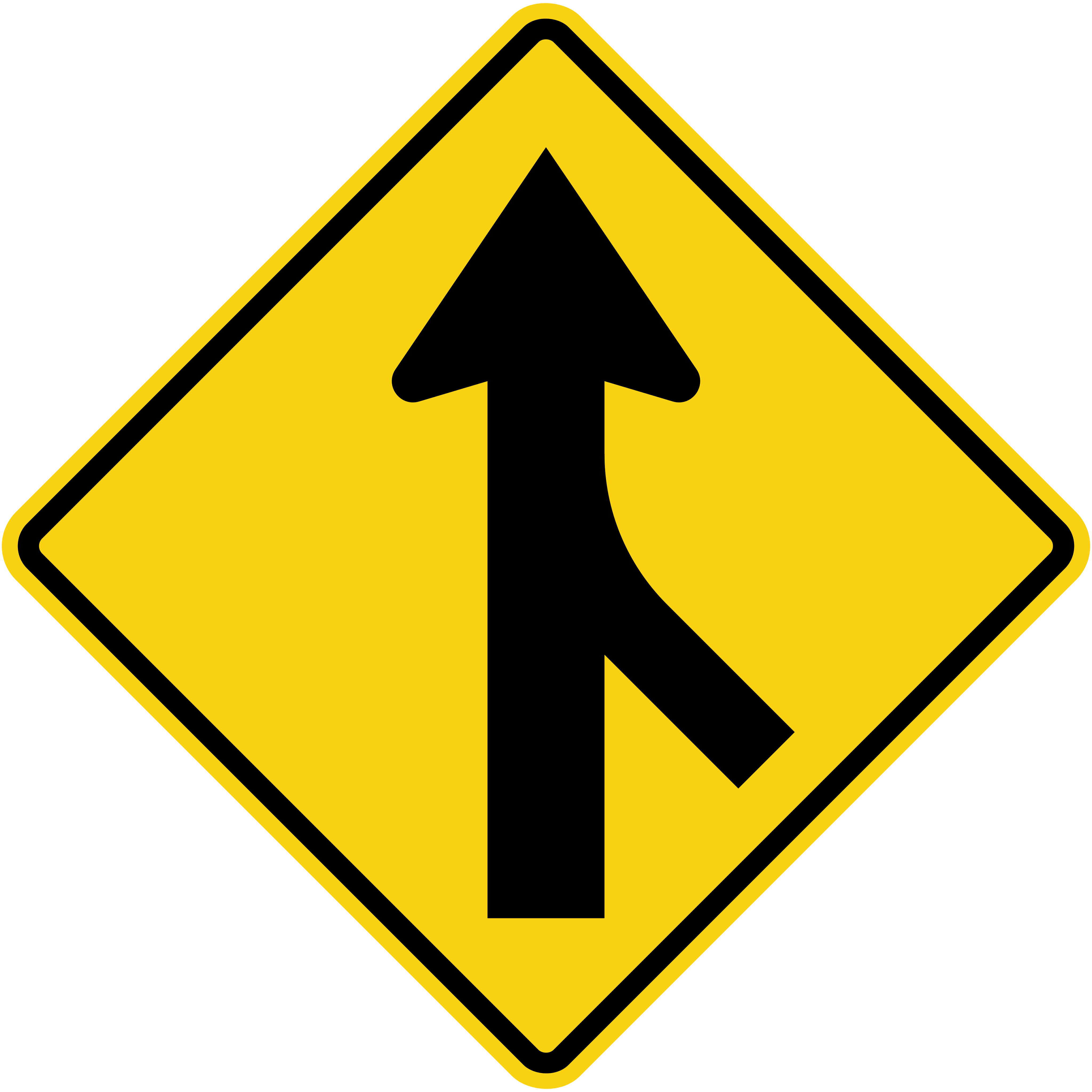
Traffic joins from the right ahead.
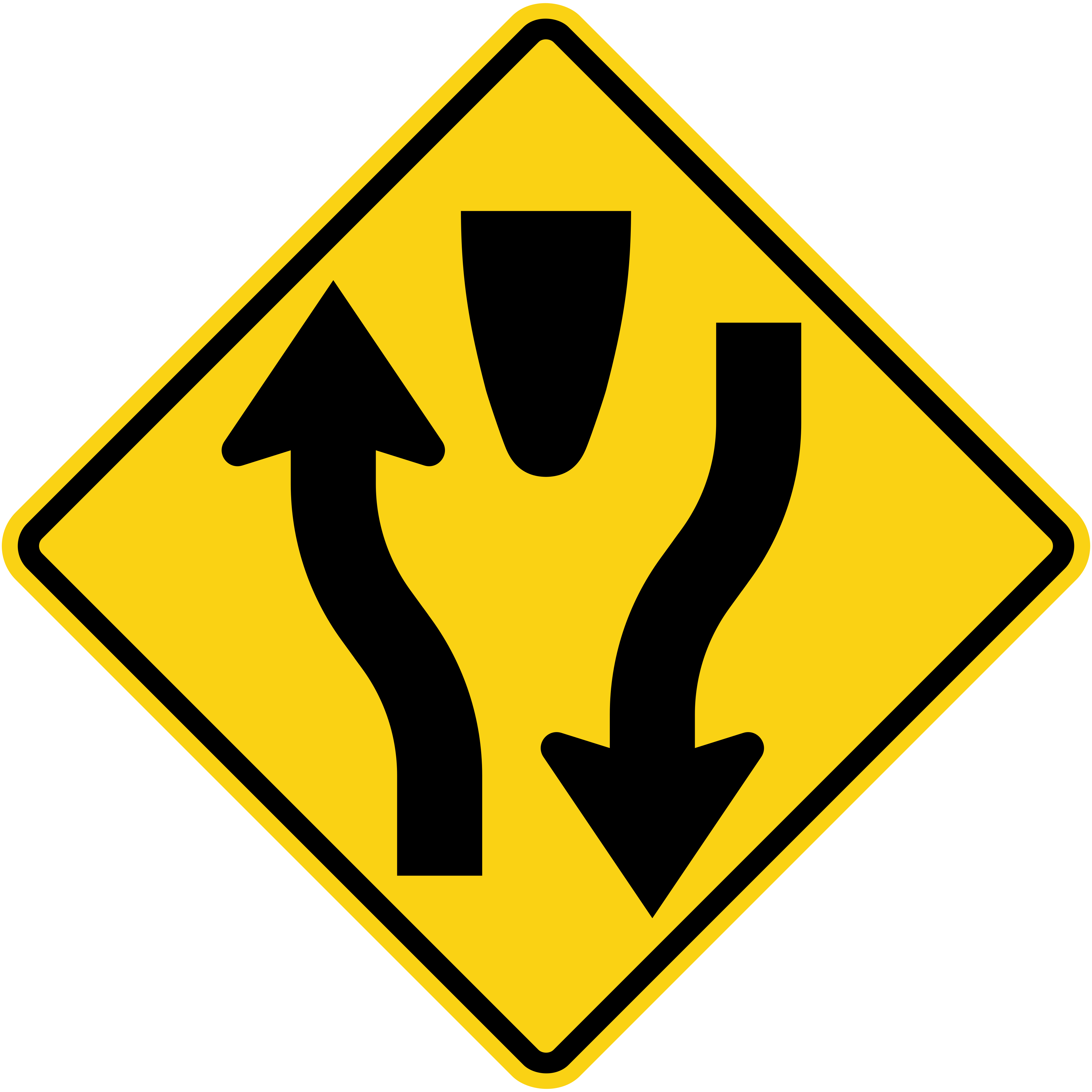
A central divider starts ahead; keep left.
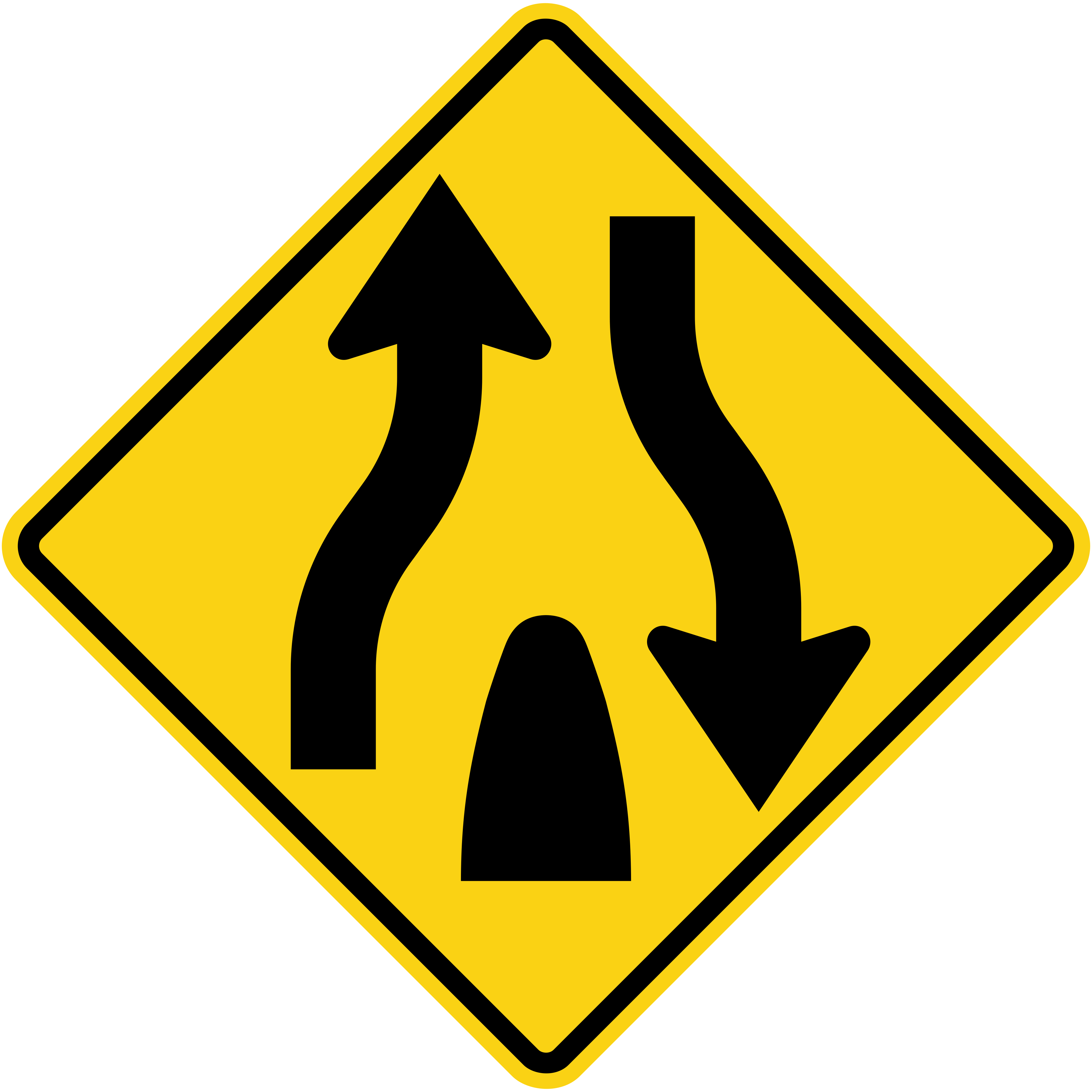
The central divider ends; two-way traffic ahead.
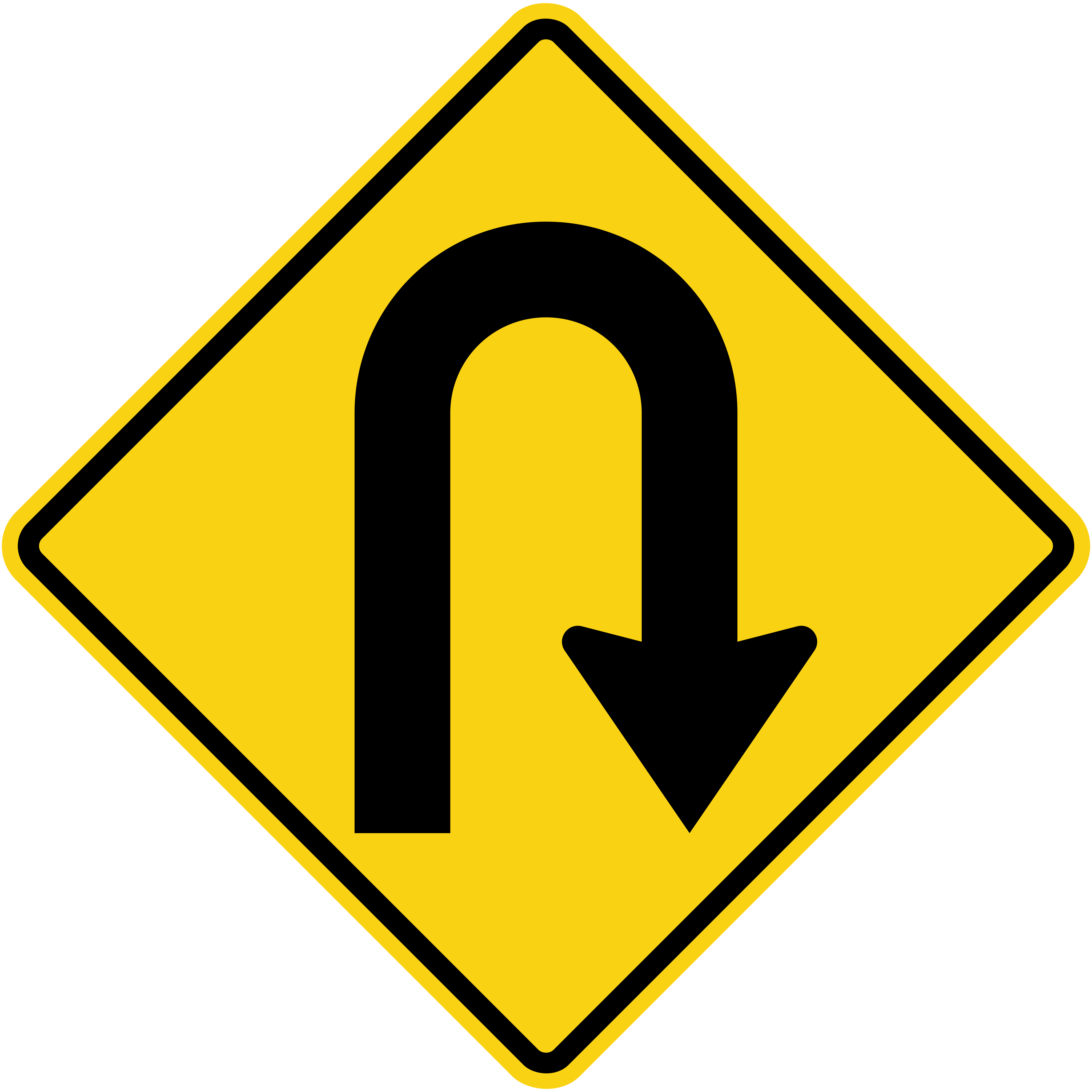
A U-turn point on the right ahead.
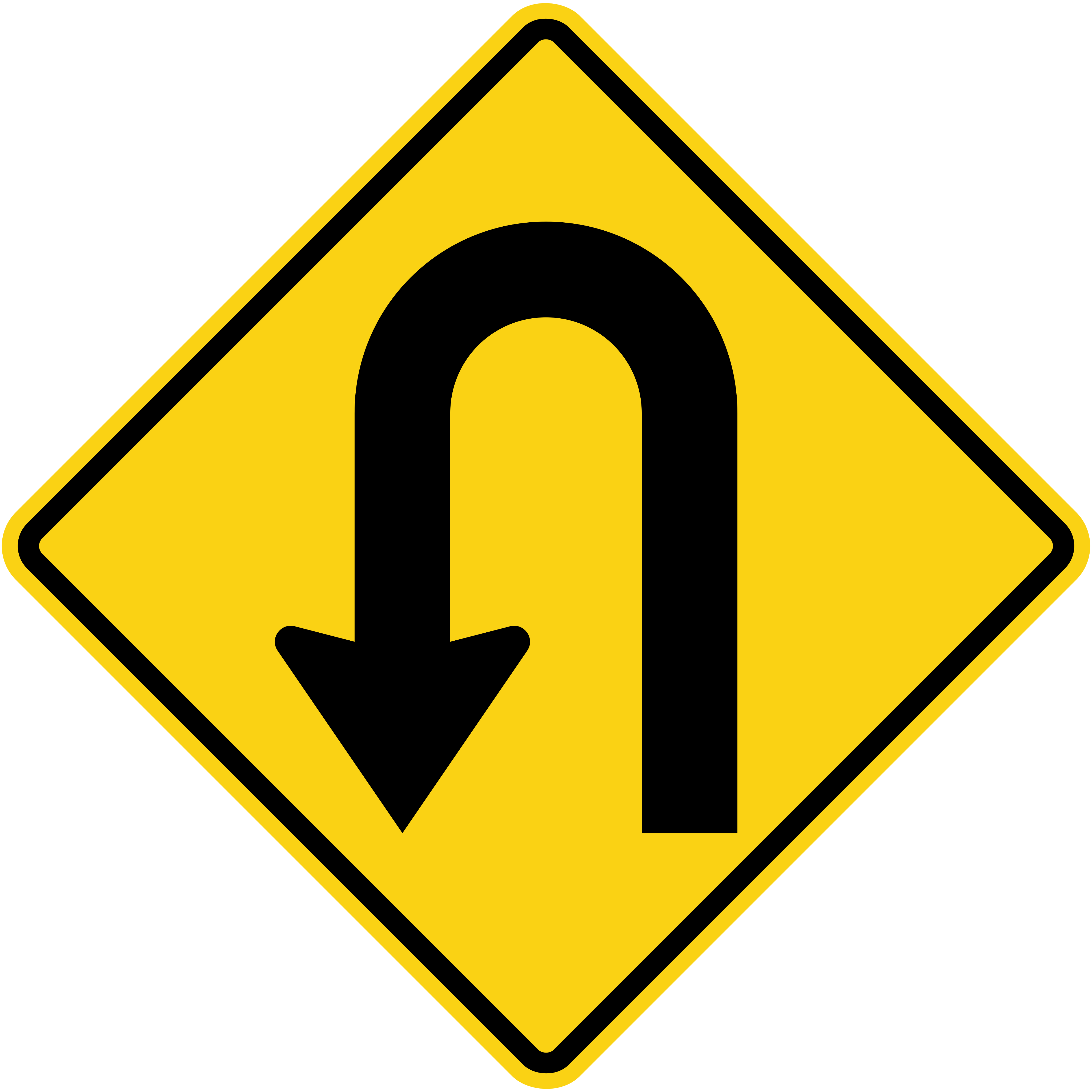
A U-turn point on the left ahead.
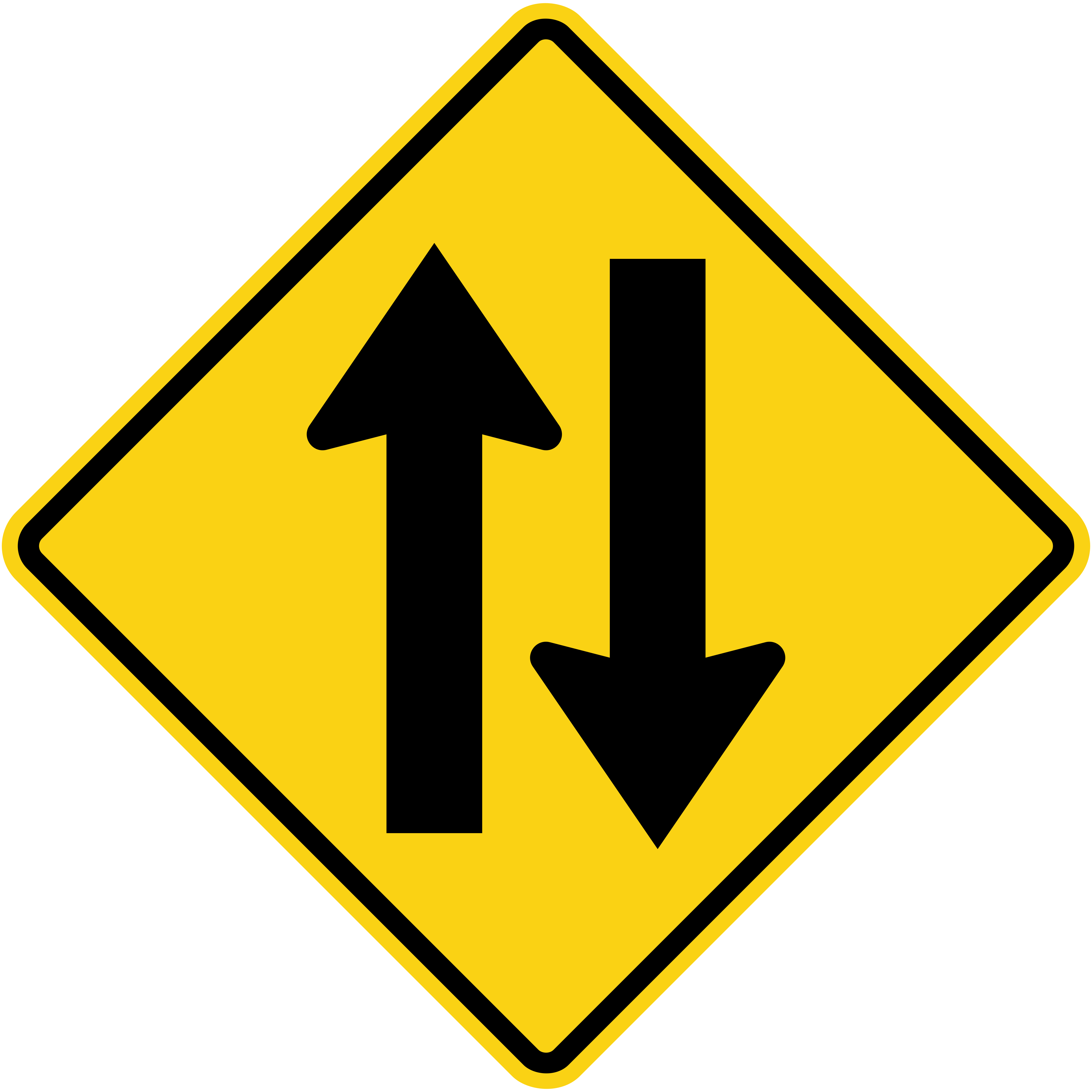
Two-way traffic ahead; keep left.
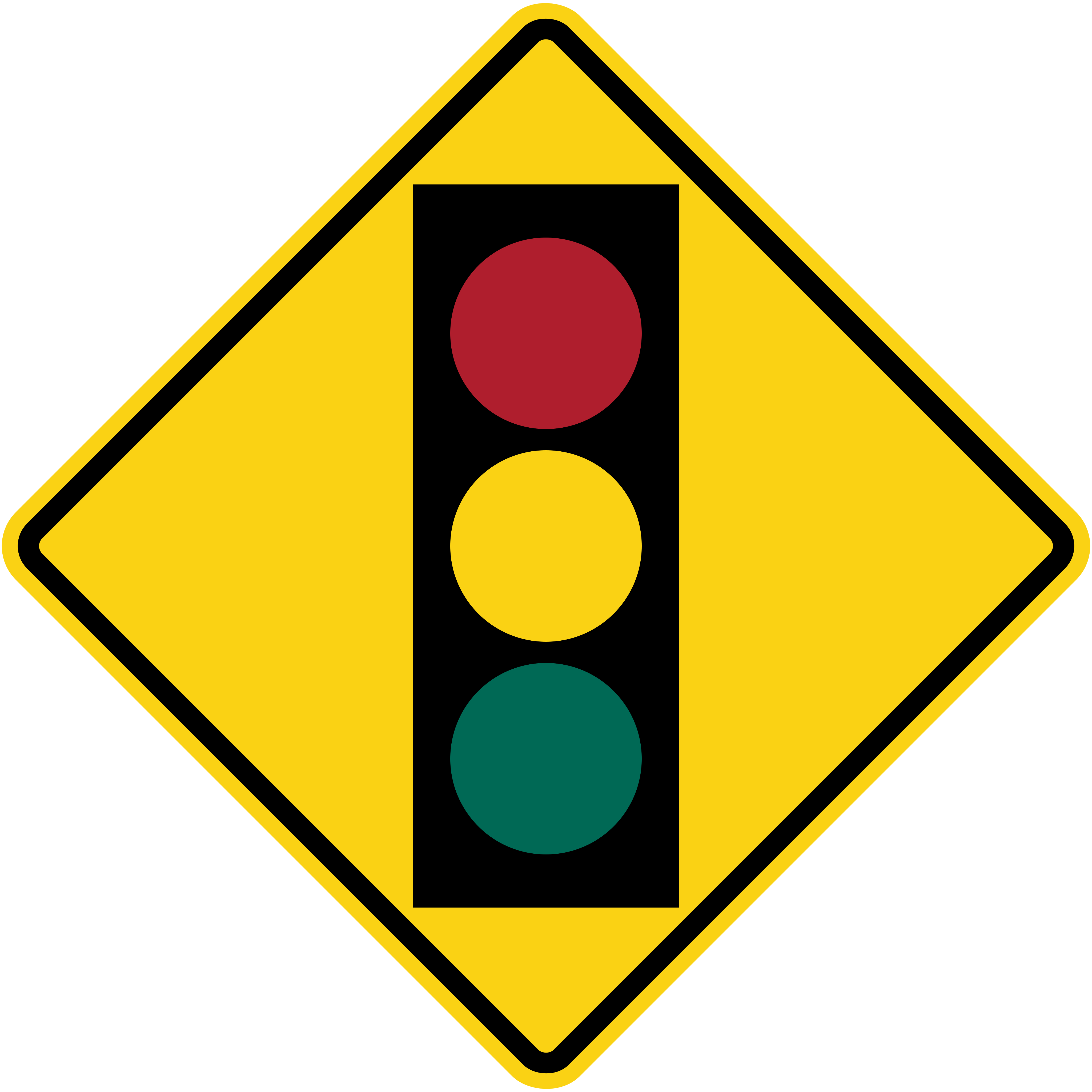
Traffic signals ahead; be ready to stop.
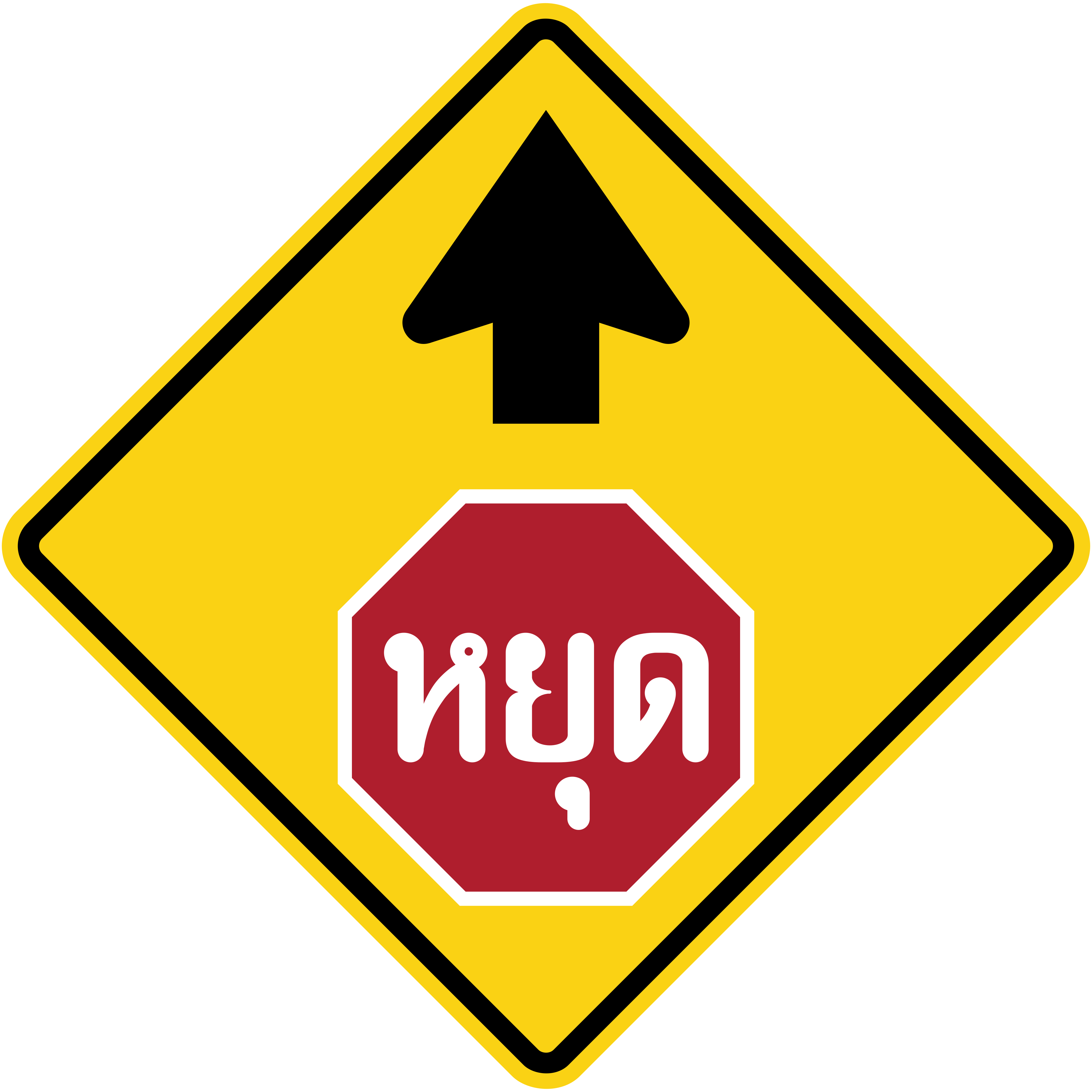
You will have to stop at the junction ahead.
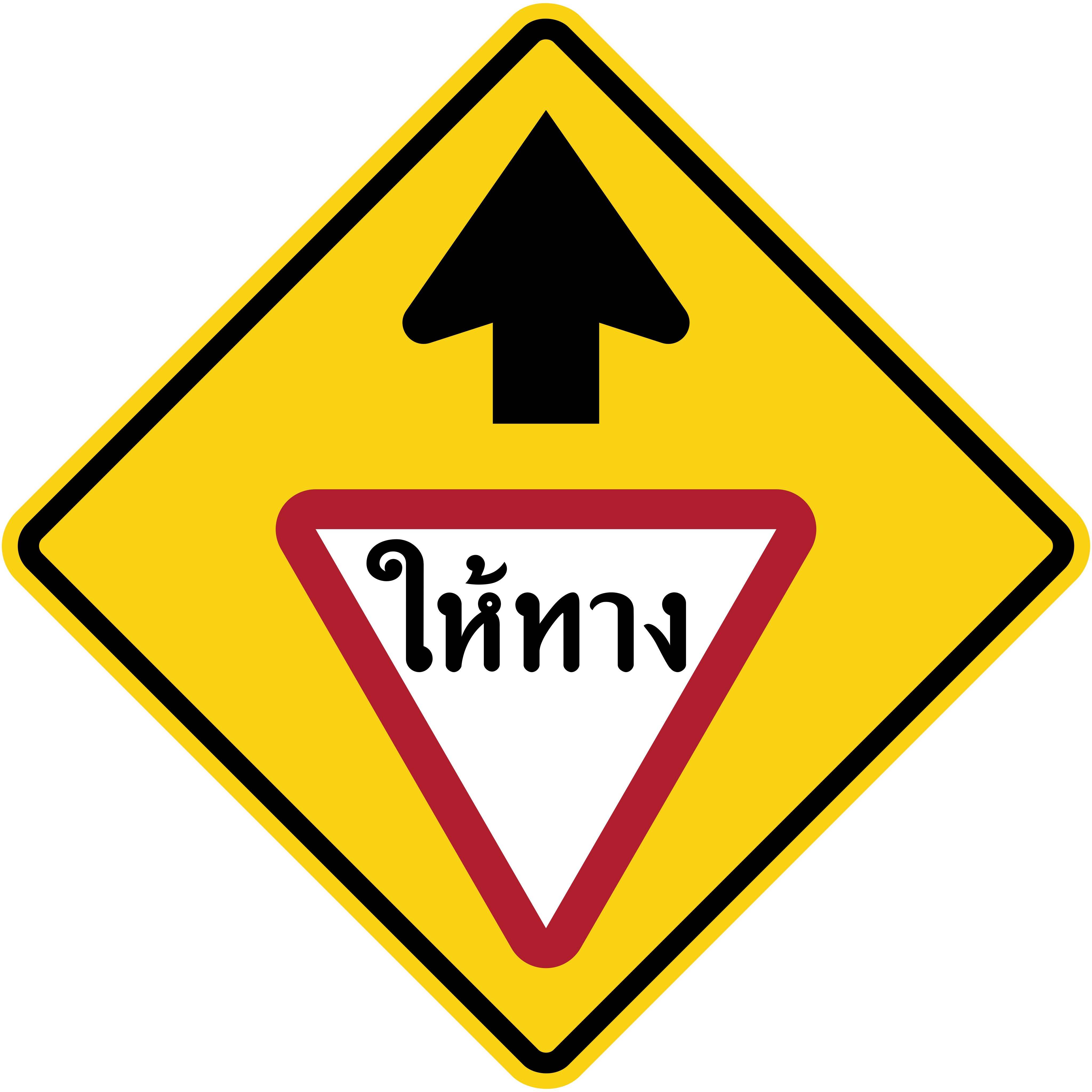
You will have to give way at the junction ahead.
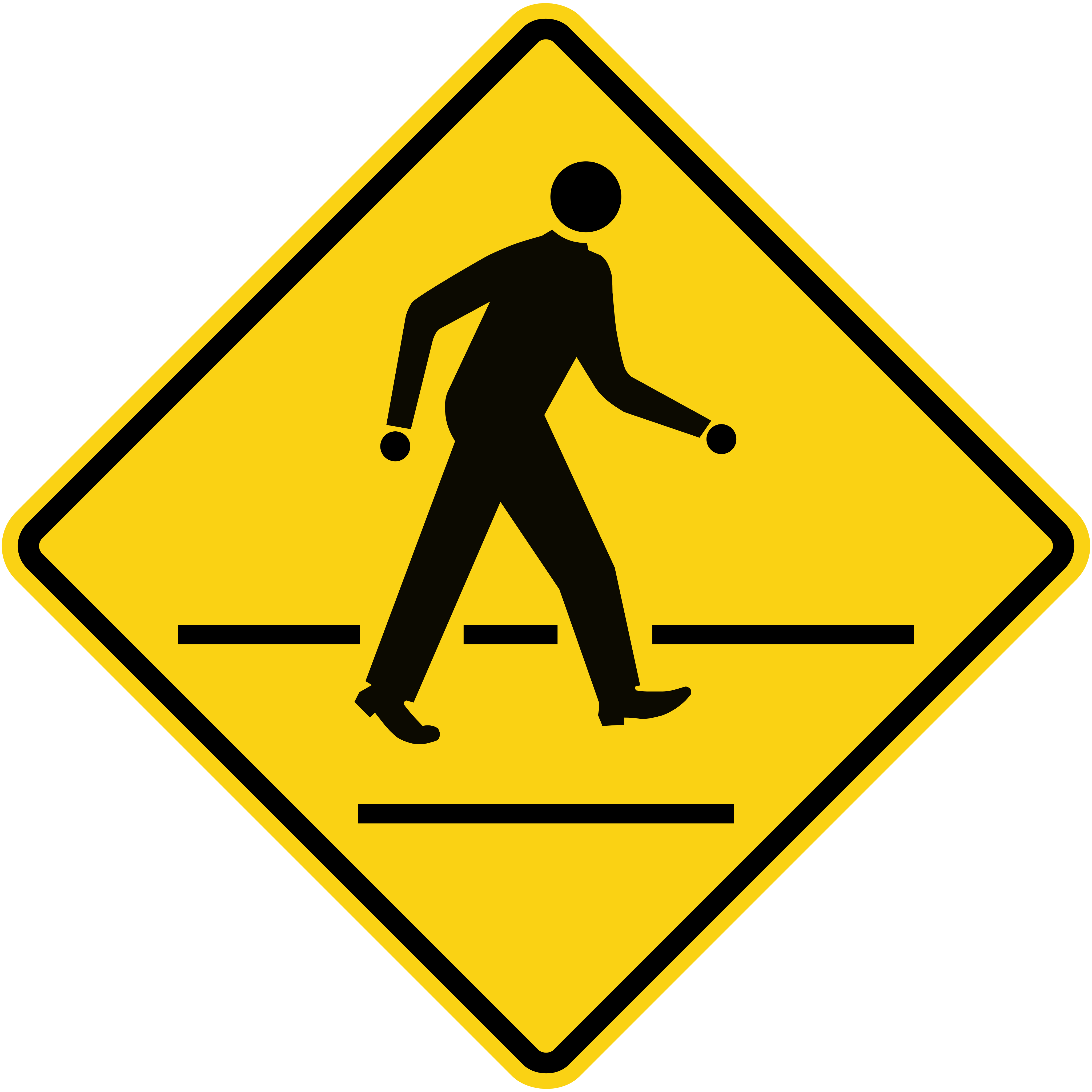
A pedestrian crossing ahead; slow down and be ready to stop.
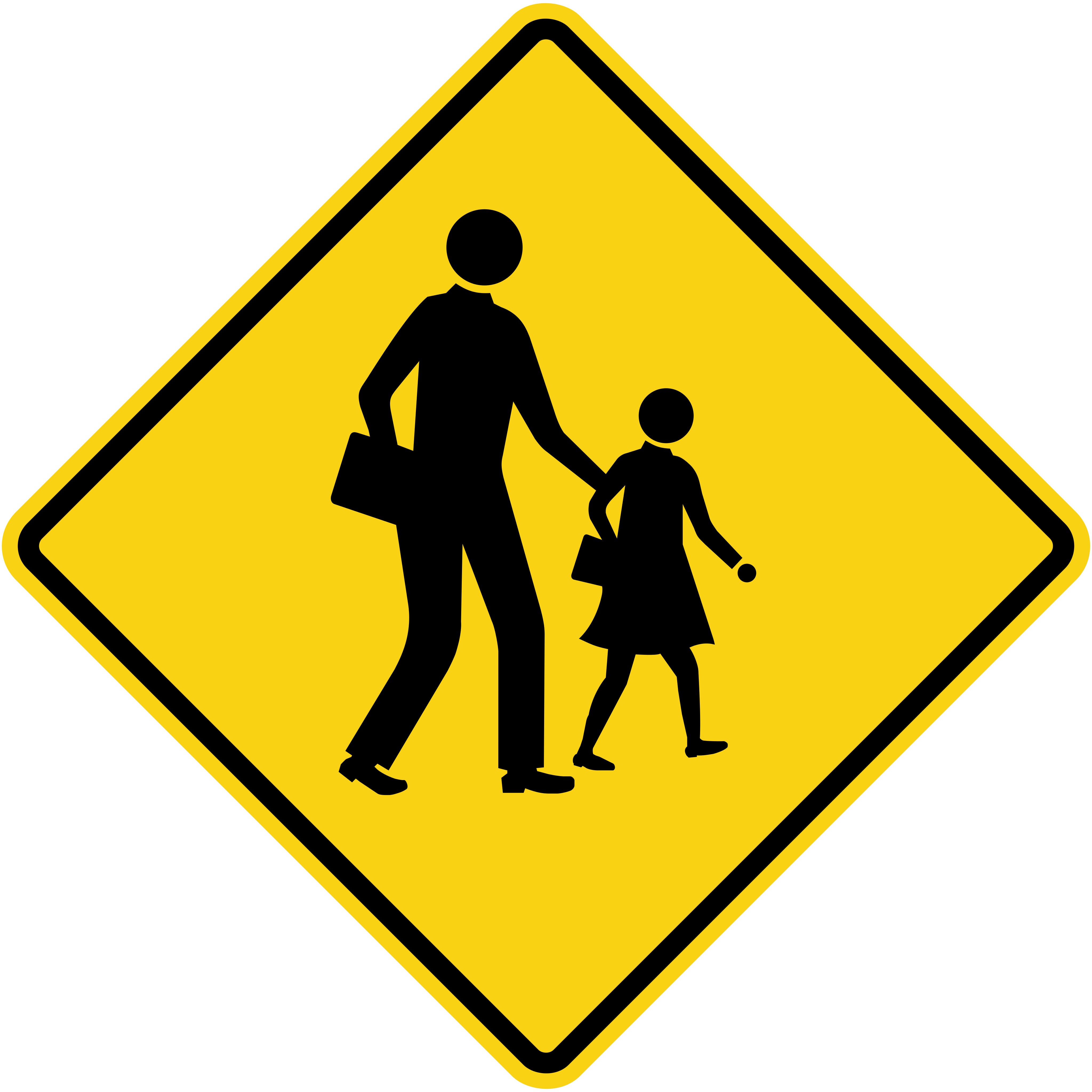
Children may cross; often near schools.
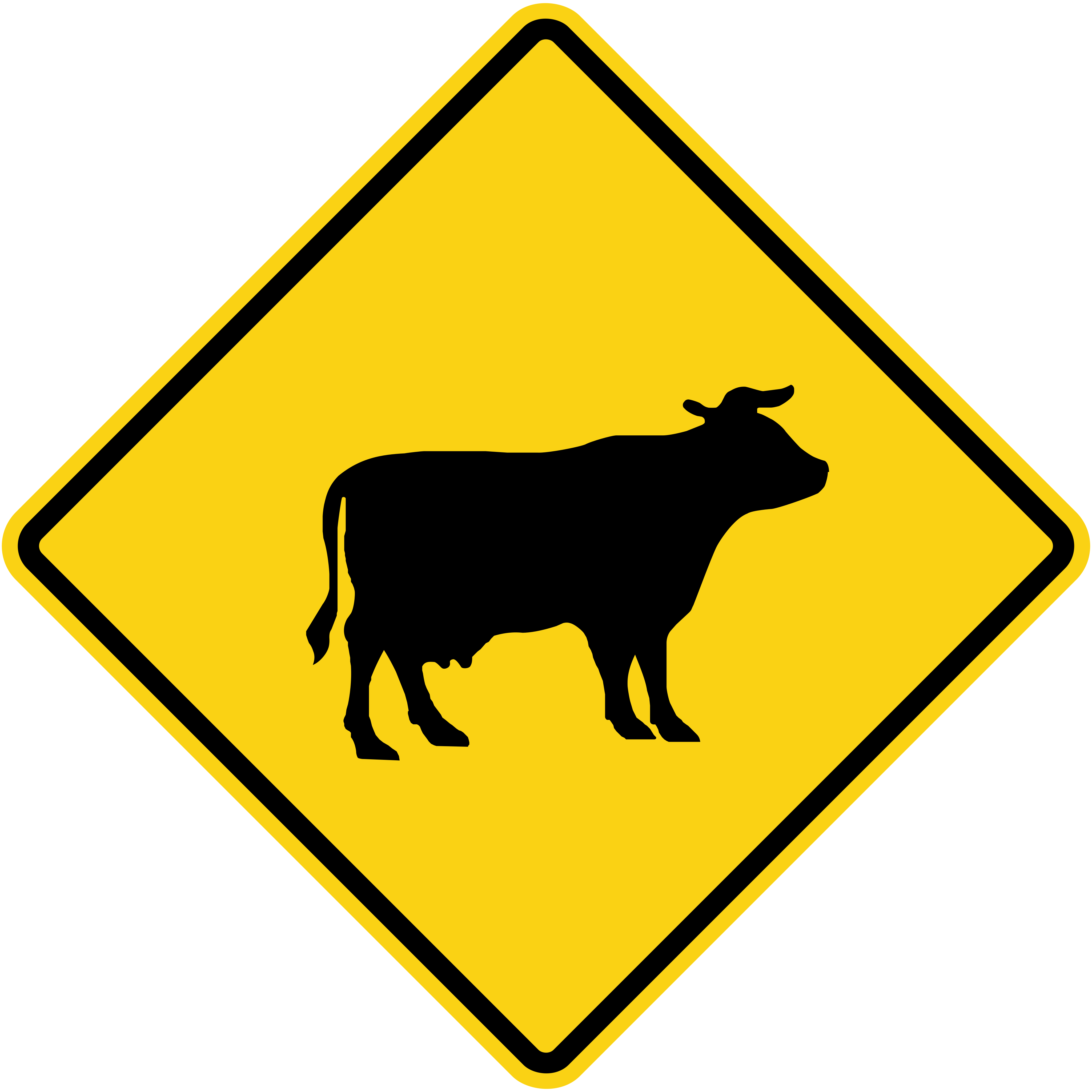
Animals may be on the road ahead.
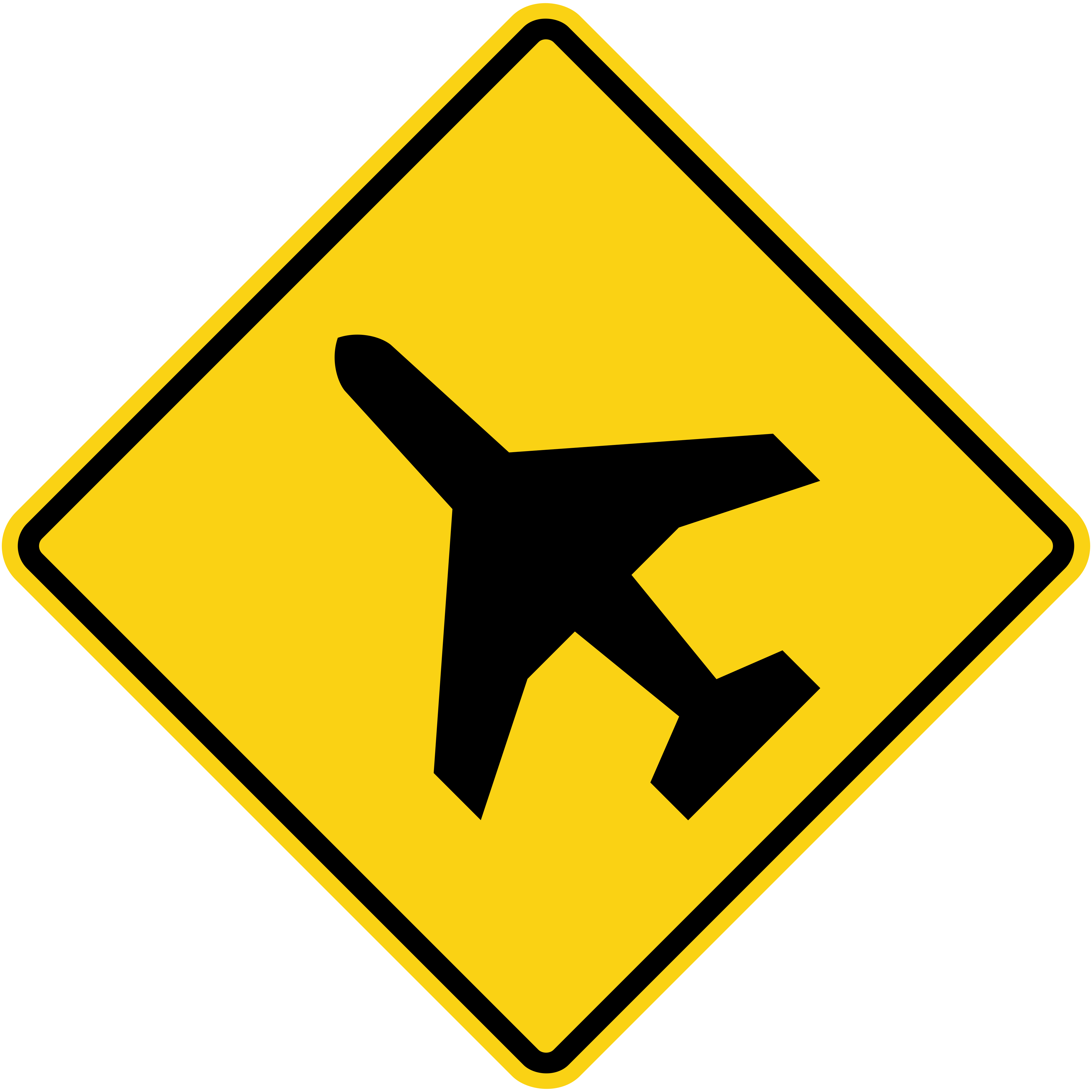
Low-flying aircraft and sudden noise ahead (near airports).
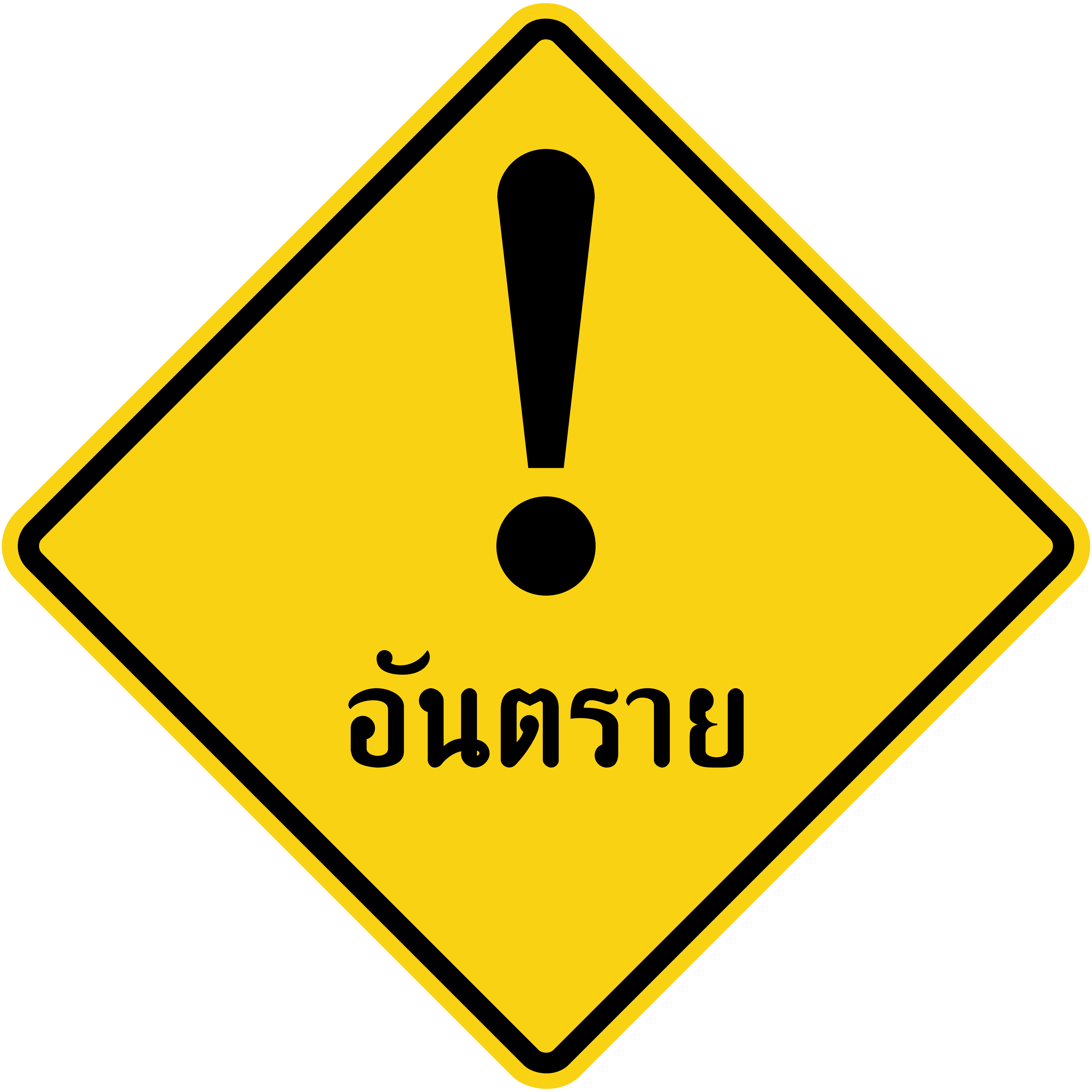
A danger not covered by another sign ahead (อันตราย = danger).
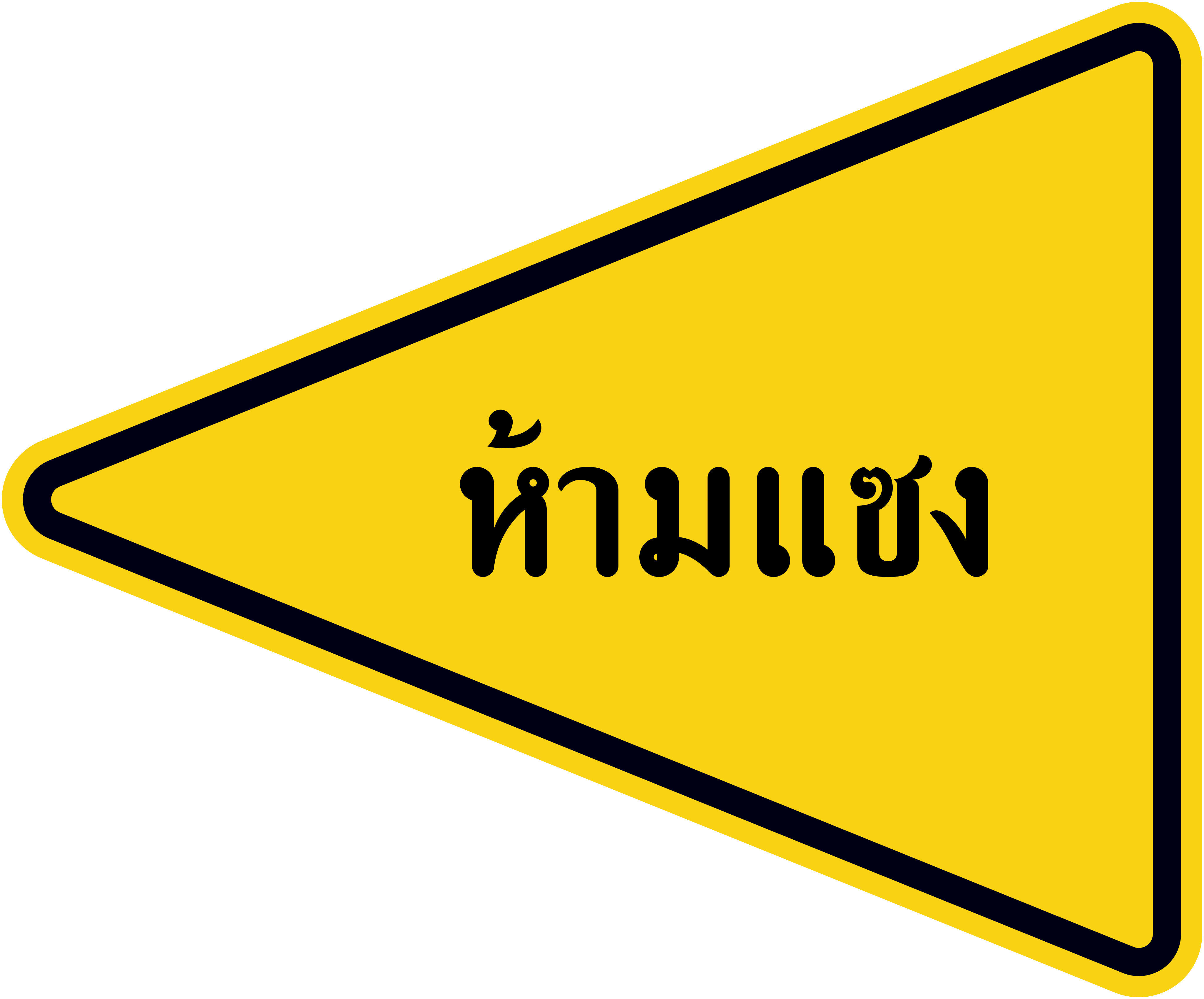
Pennant on the left side of the road: overtaking is prohibited in this zone.
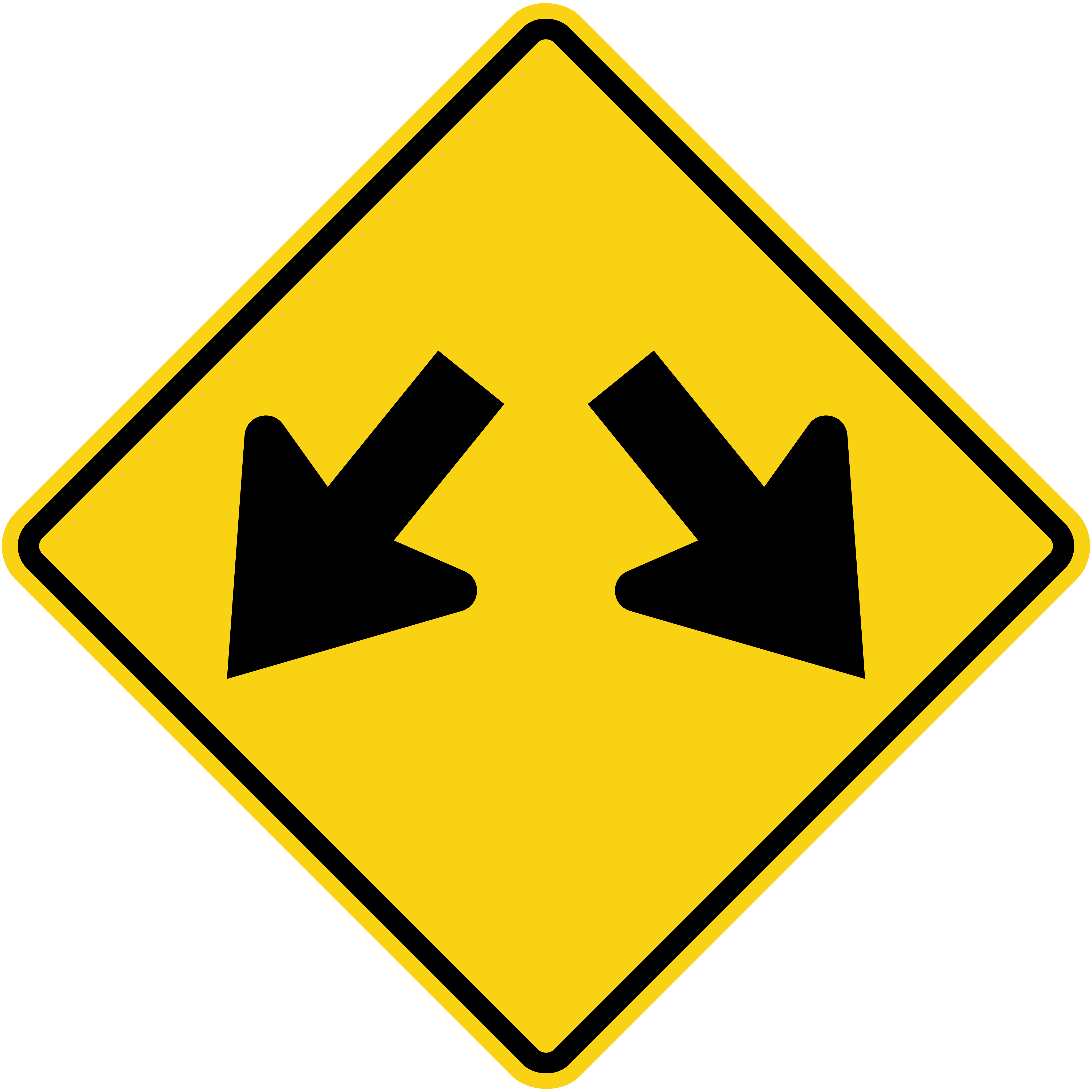
The road splits; traffic goes left or right of the divider.
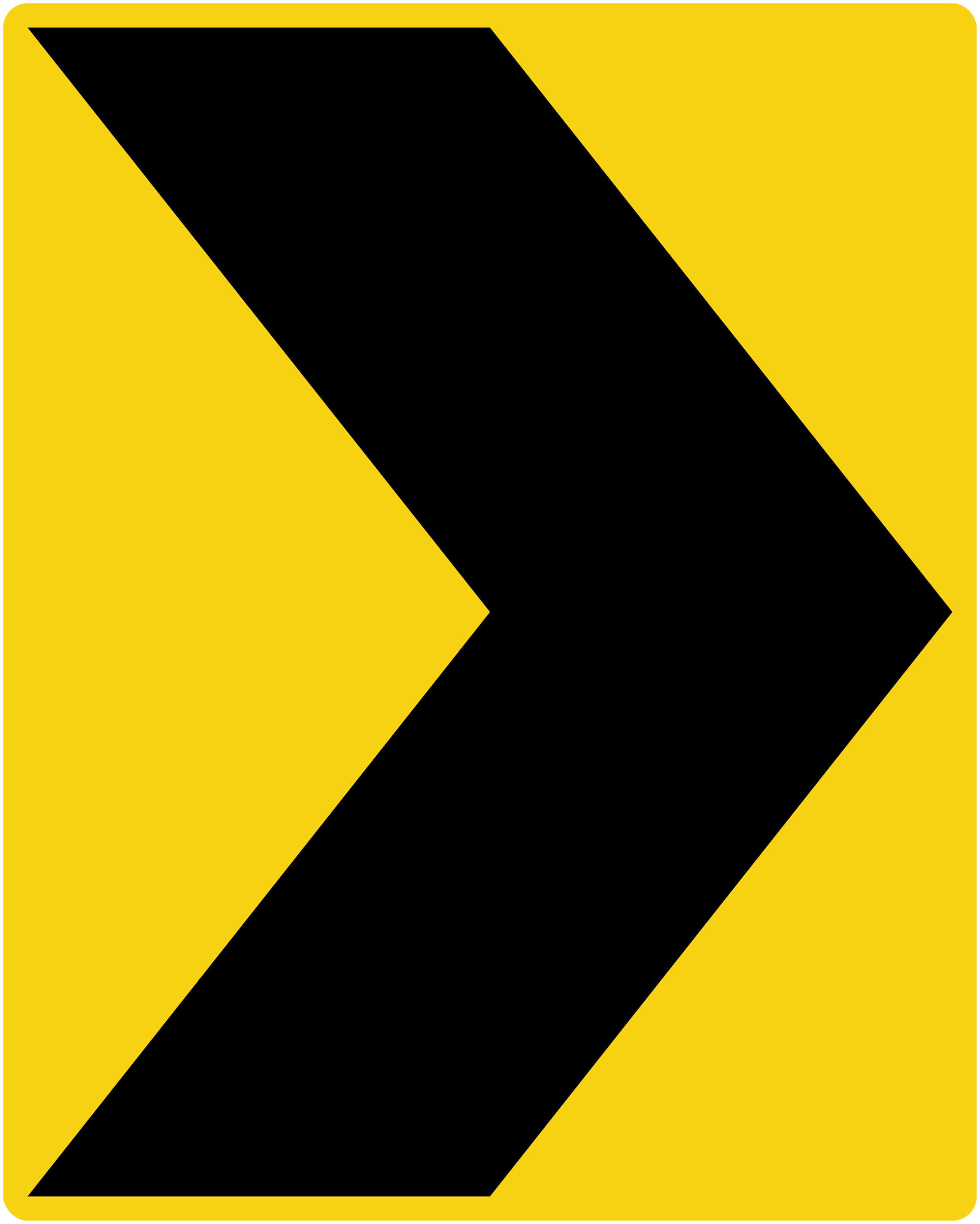
Placed on the outside of a curve: the road turns right.
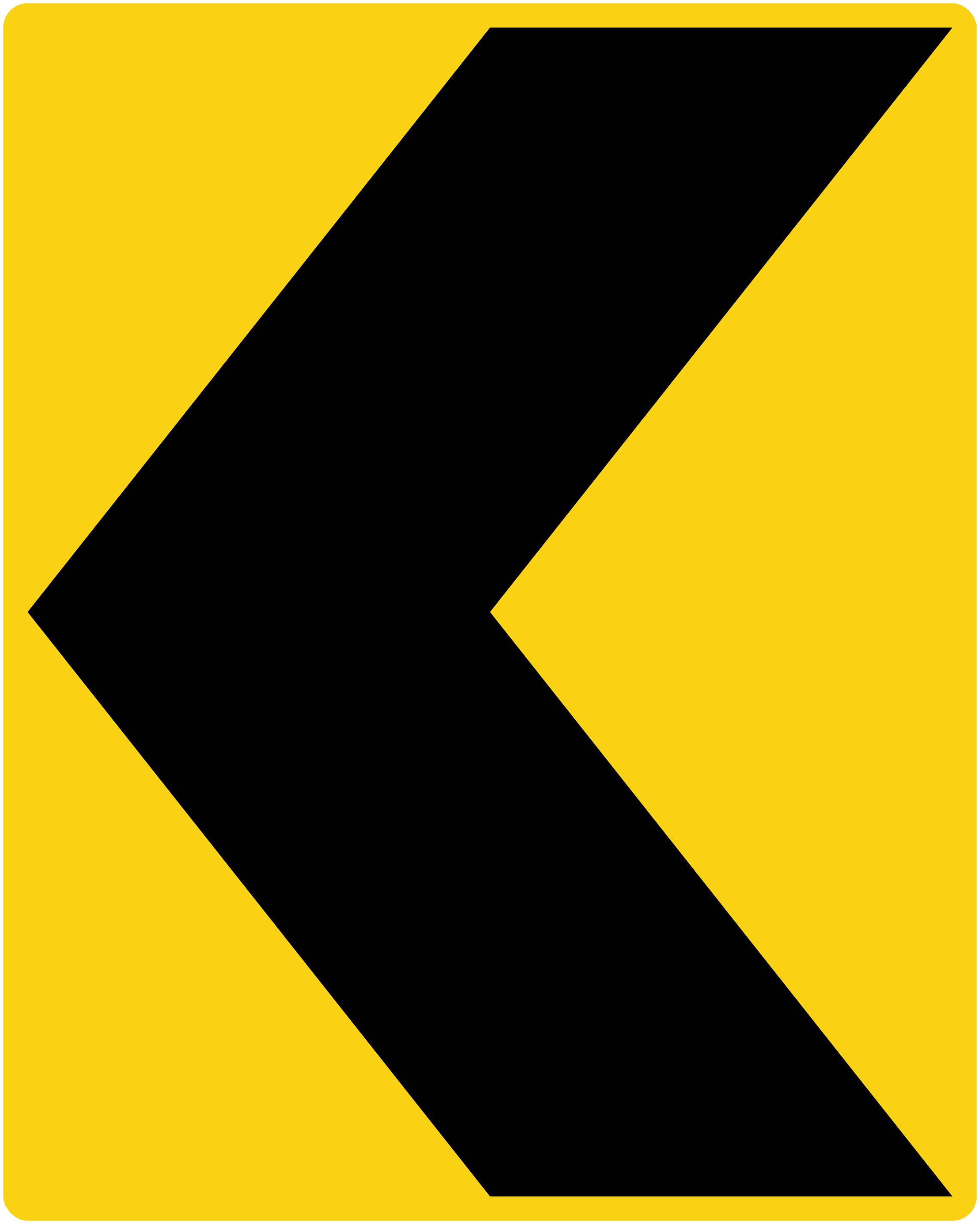
Placed on the outside of a curve: the road turns left.
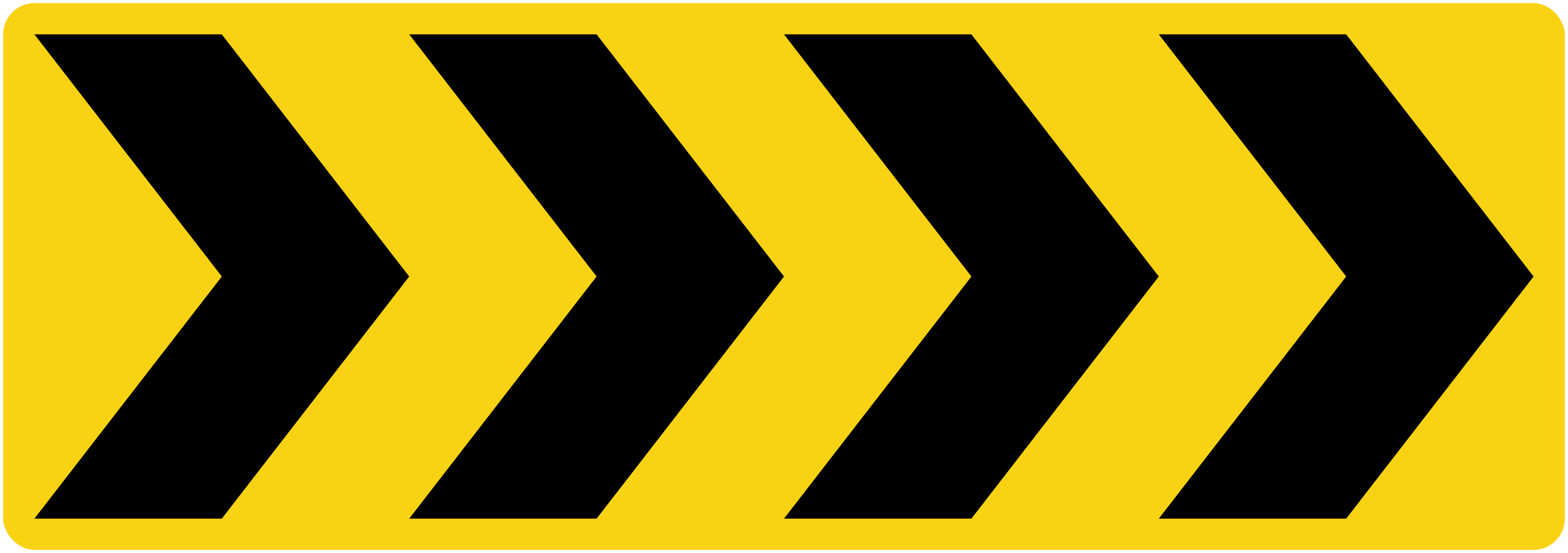
Series of chevrons showing the curve turns right.
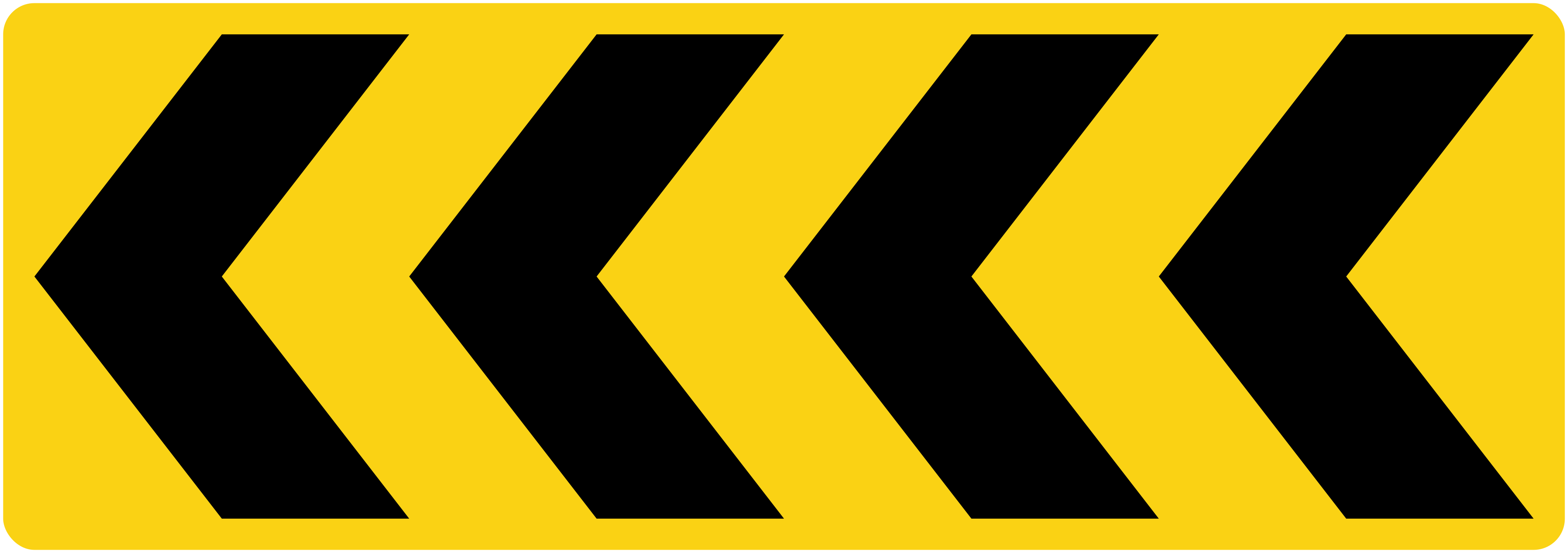
Series of chevrons showing the curve turns left.
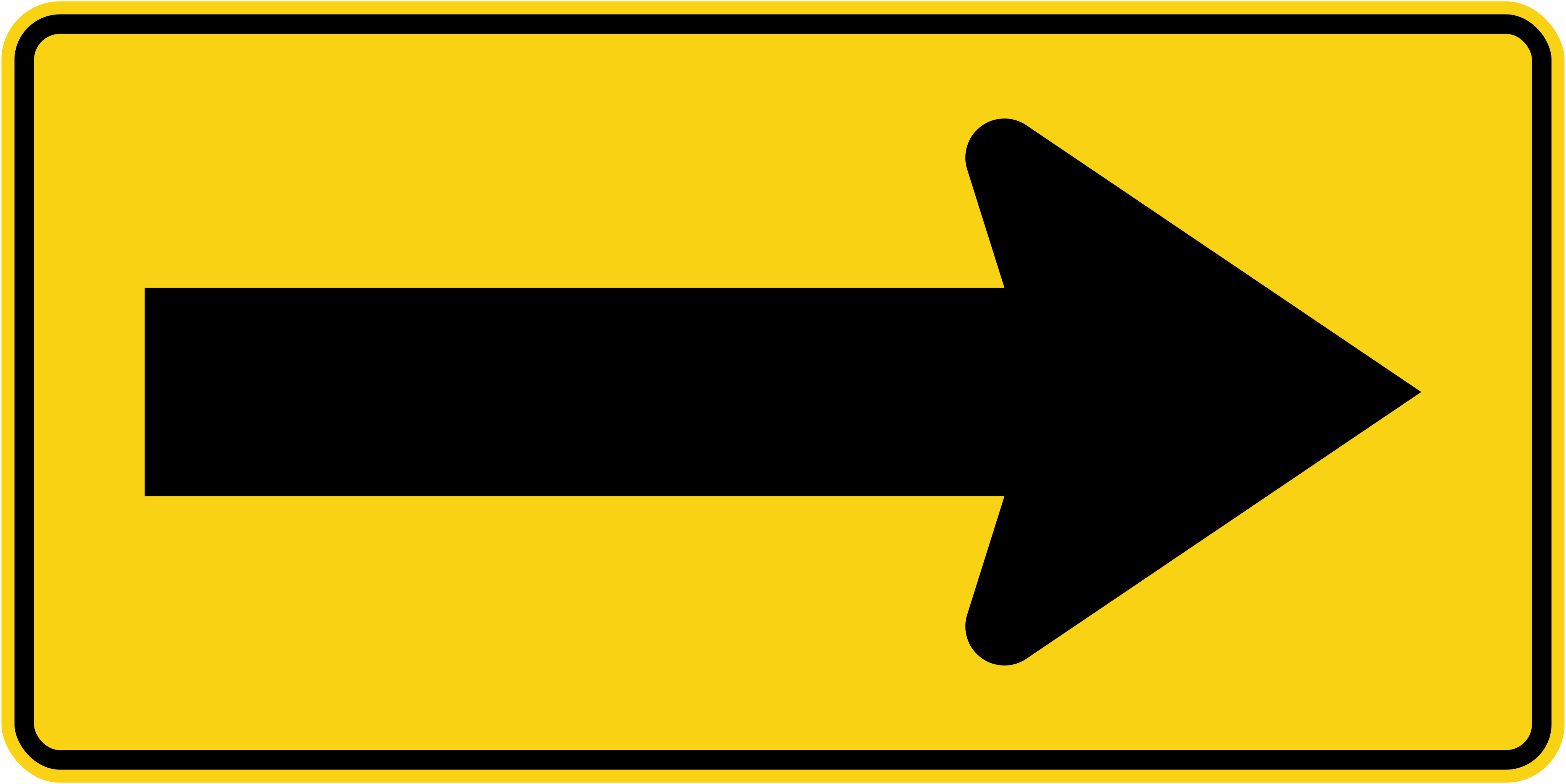
Arrow marker showing the road turns right.
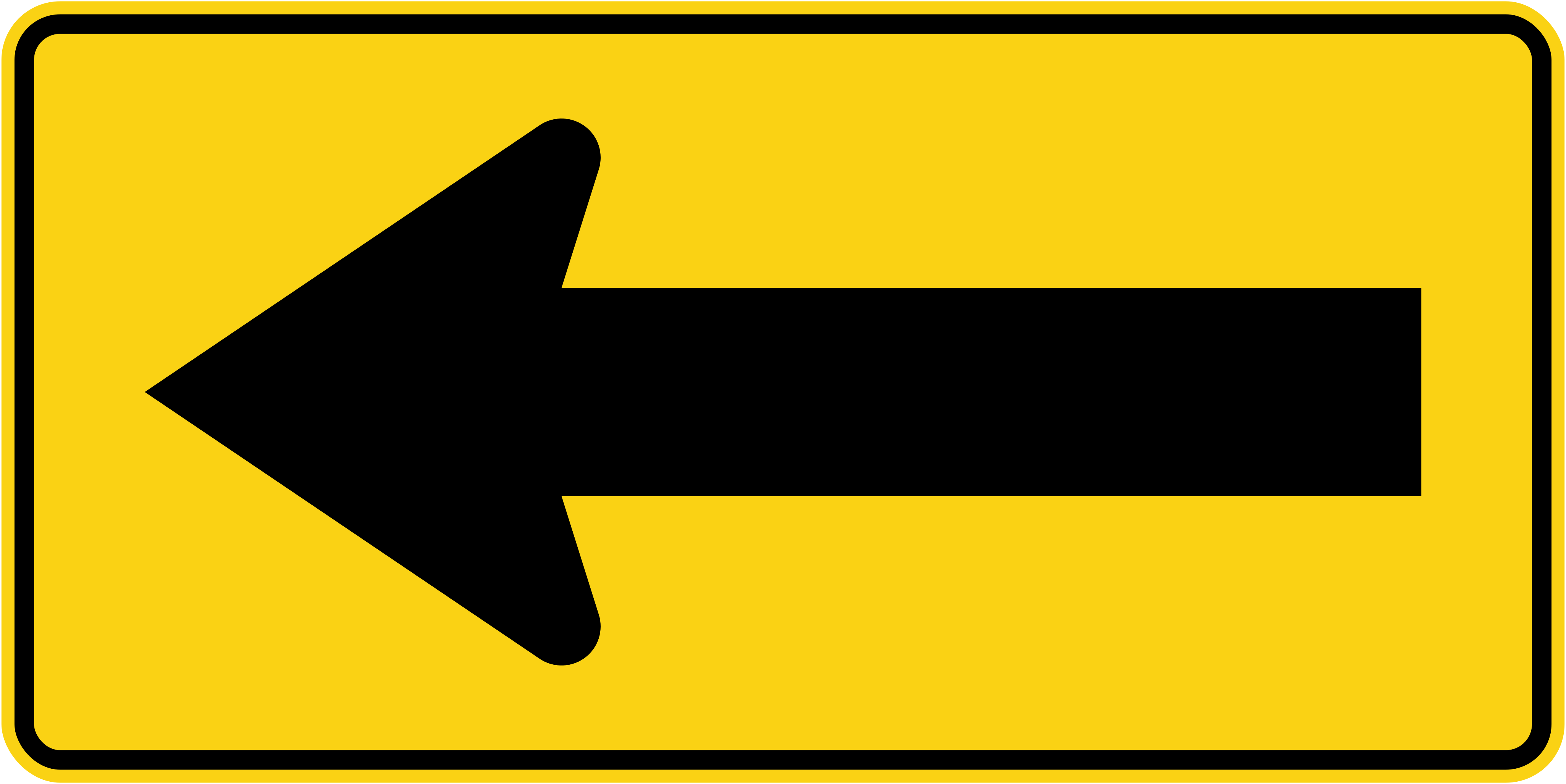
Arrow marker showing the road turns left.
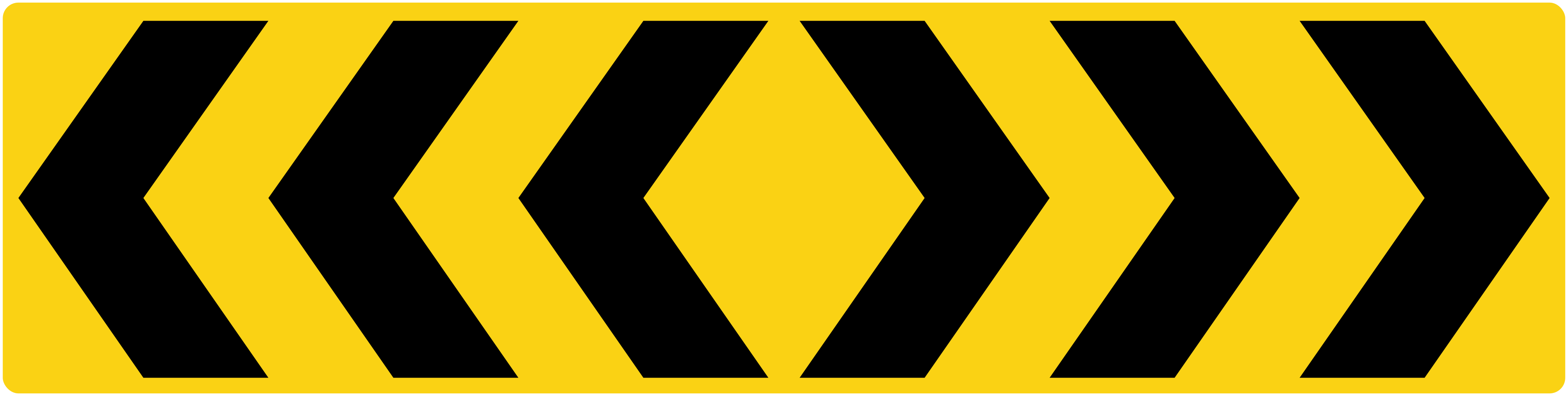
End of road: turn left or right.
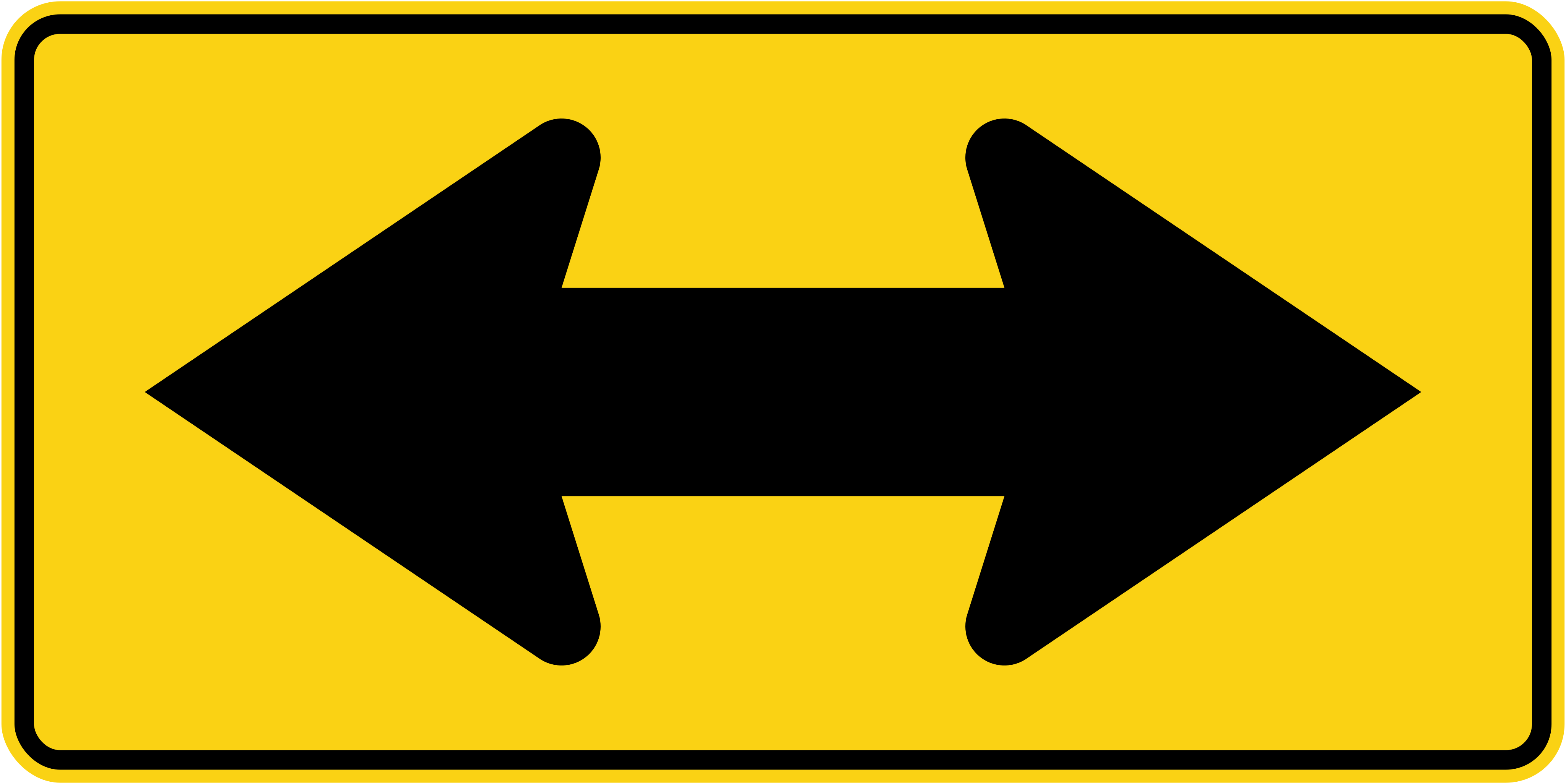
Arrow marker at a T-junction: the road continues left and right.
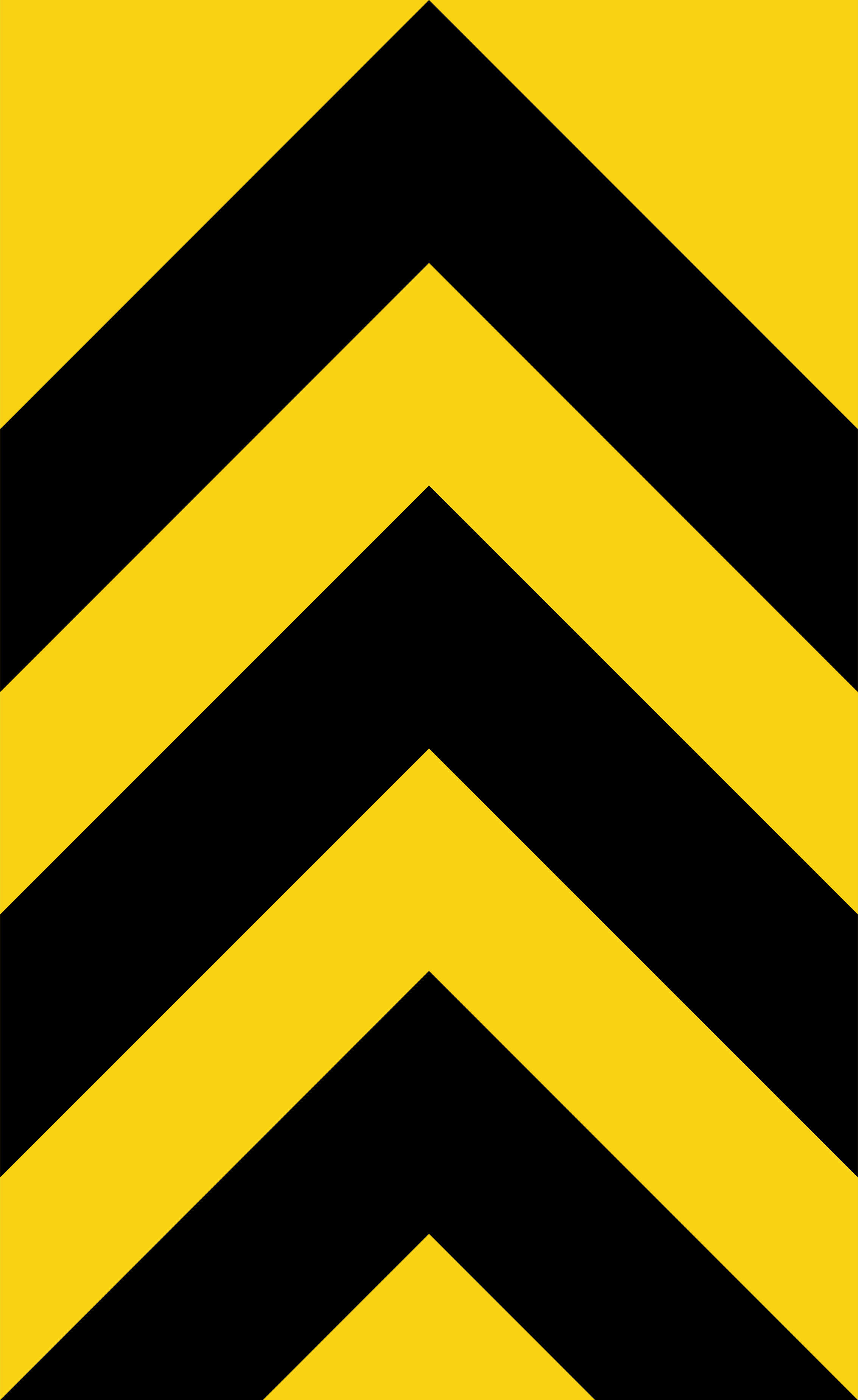
Marks an obstacle that can be passed on either side.
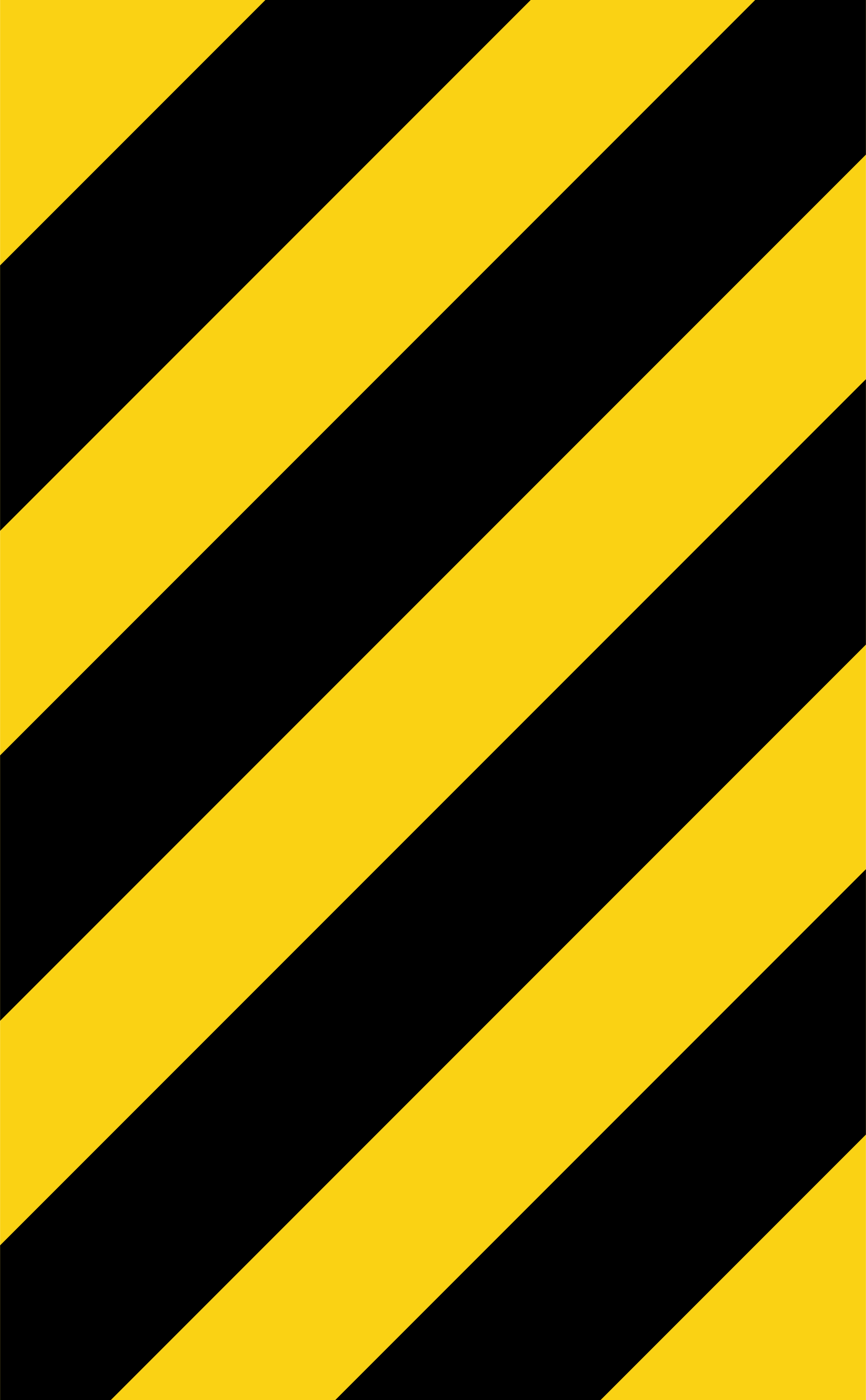
Marks an obstacle; pass it on the left (stripes slope down to the side to pass).
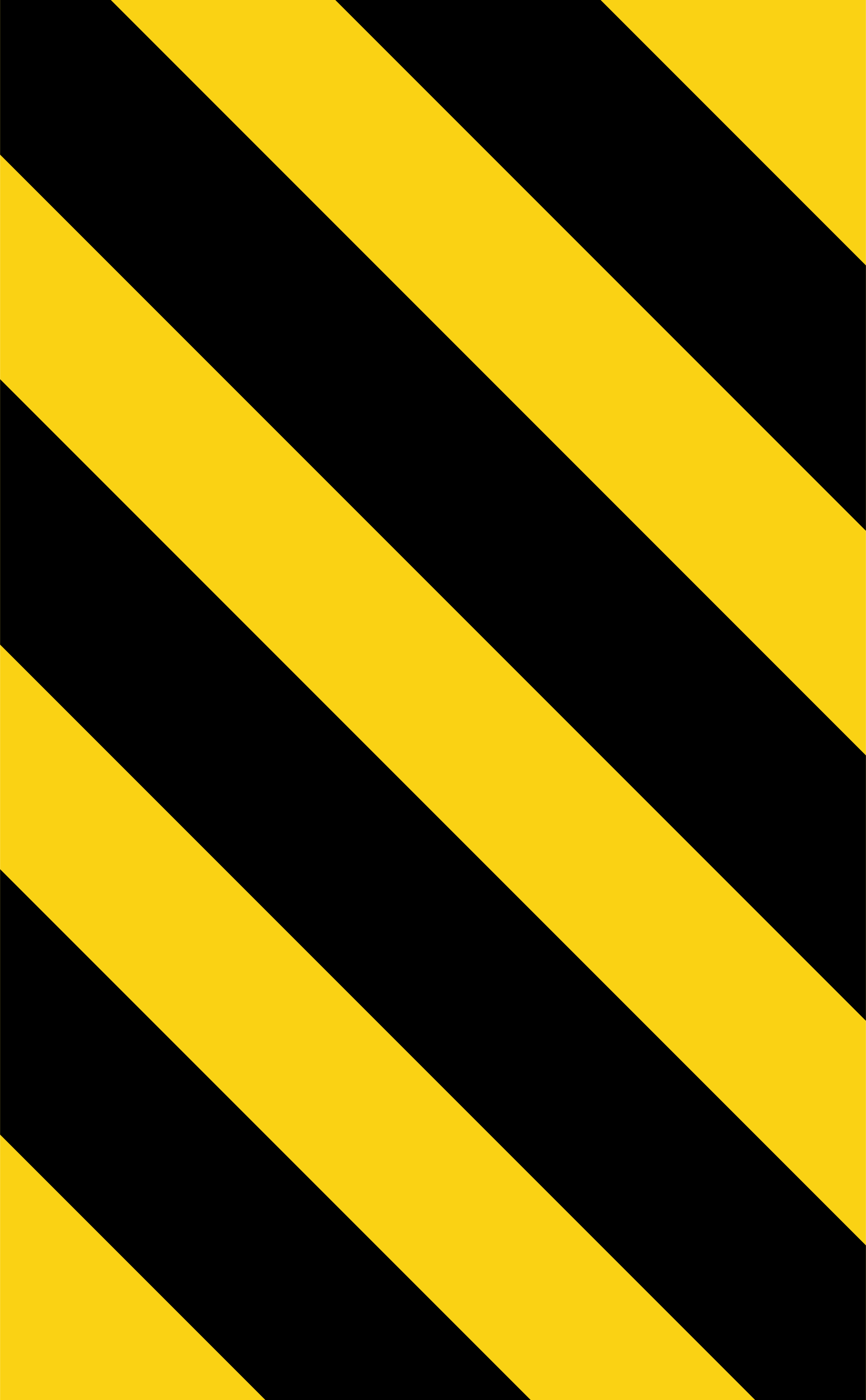
Marks an obstacle; pass it on the right (stripes slope down to the side to pass).
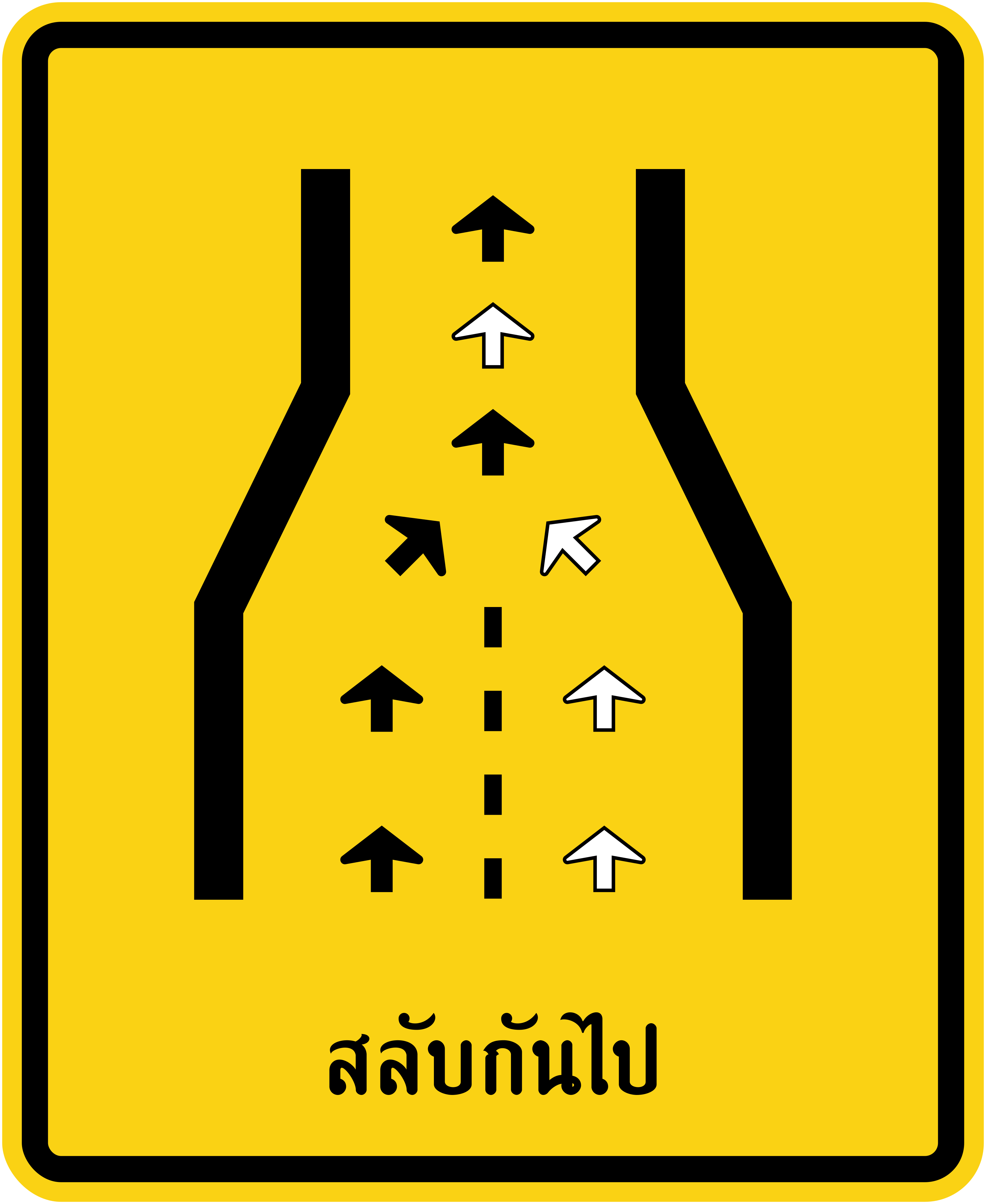
Two lanes merge ahead; vehicles take turns (สลับกันไป = alternate).
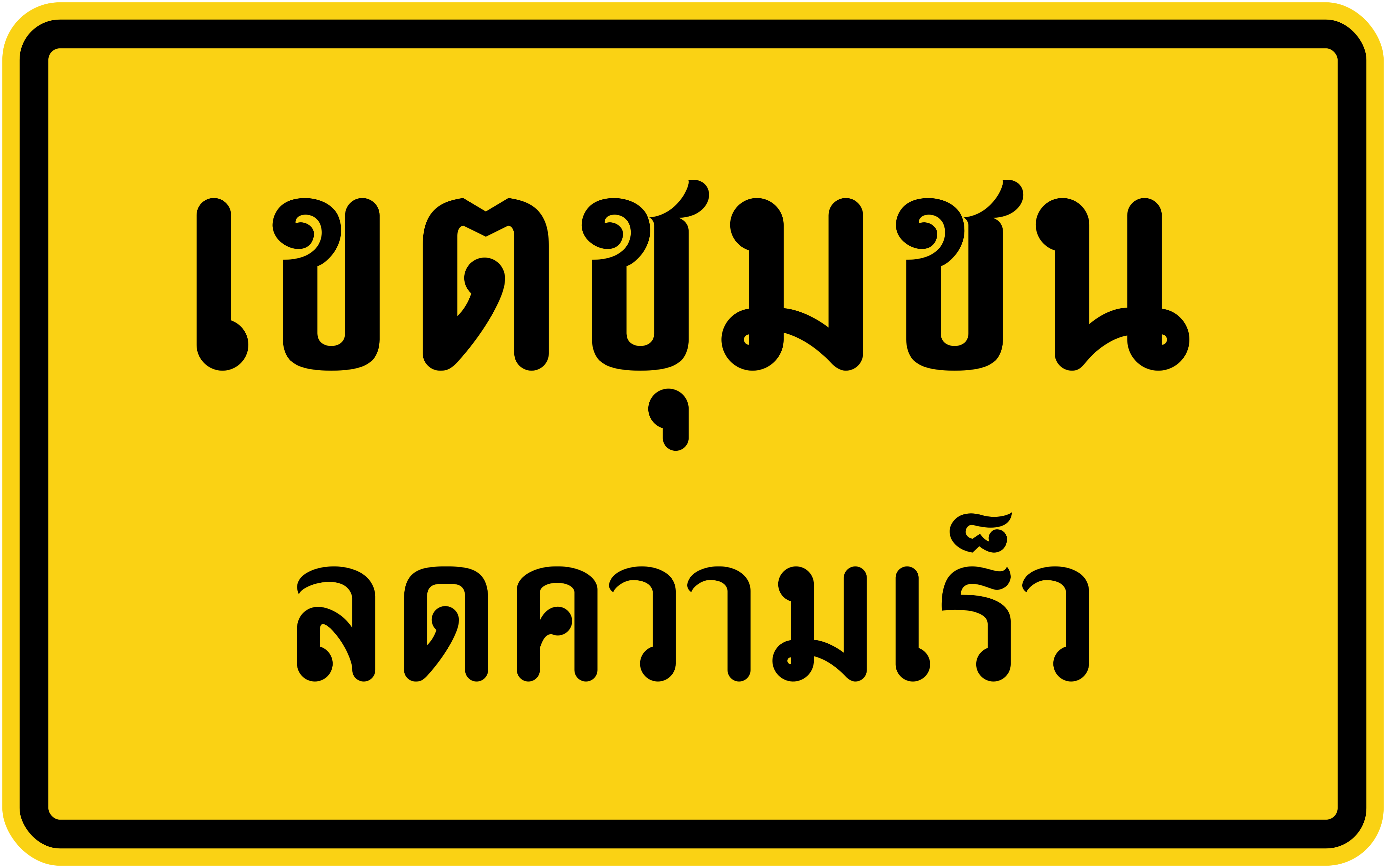
Entering a built-up community area (เขตชุมชน); reduce speed.
Road markings
The paint on the road matters as much as the signs. In these pictures you are the white car, driving on the left.
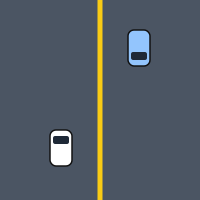
Separates traffic in opposite directions; crossing it is prohibited.
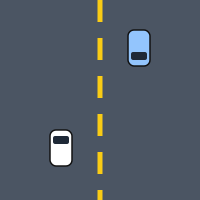
Separates traffic in opposite directions; you may cross it only when the way is clear.
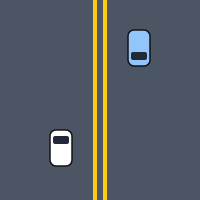
The strictest centre line; it must not be crossed.
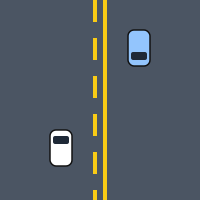
The line nearest to you decides: dashed on your side means you may cross it when safe.
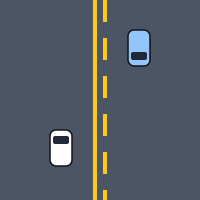
The line nearest to you decides: solid on your side means you must not cross it.
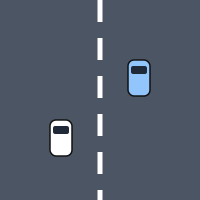
Separates lanes in the same direction; you may change lanes after checking and signalling.
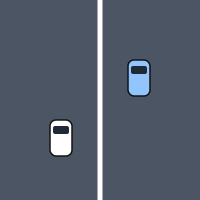
Separates lanes in the same direction, often before junctions; do not cross it.
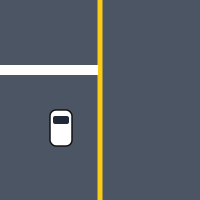
A solid white line across your lane shows where to stop.
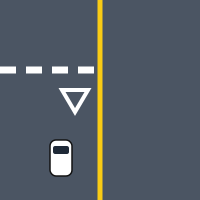
A dashed white line across your lane (often with a triangle) means give way.
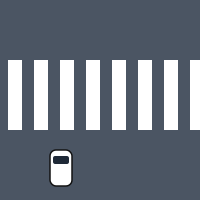
Do not overtake within 30 m or park within 3 m of a crossing.
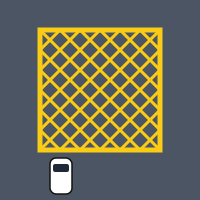
Enter only if your exit is clear, so you never stop on the yellow grid.
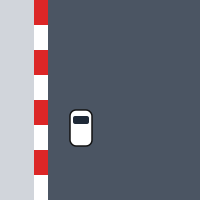
The strictest curb marking.
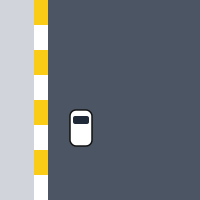
You may stop briefly, but not park.
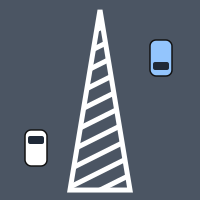
Painted islands separate traffic or guide it into lanes; keep off them.
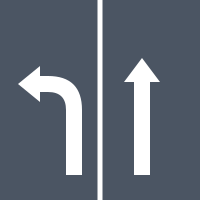
Choose your lane early according to the arrows; enter it at least 30 m before the turn.
The rule that decides most centre-line questions
When there are two different lines, the one nearest to you decides. A solid line on your side means you must not cross it, even if the line on the other side is dashed.
Learn them by testing yourself
Reading is the slow way. Our practice test asks you to name each sign, and the other way round: pick the sign that matches a meaning. You get an explanation after every answer, and the ones you miss come back until you know them.
Frequently asked questions
What does a red circle with a white bar mean in Thailand?
It is the "No entry" sign: vehicles may not enter in that direction.
What does a blue circular sign mean?
A blue circle gives a mandatory instruction, such as turn left only, keep left or a roundabout. A white number on a blue circle is a minimum speed.
Are Thai road signs in English?
Most regulatory and warning signs are in Thai, but they rely on standard symbols. Important direction signs, such as airports and tourist attractions, often add English. The Stop sign reads หยุด and the Give way sign reads ให้ทาง.
What does a yellow diamond sign mean?
It is a warning sign: a hazard is ahead, such as a curve, a slippery road or a railway crossing. Slow down and be ready.
Practise before the real test
470+ questions in English with the official Thai signs and road markings, and a mock exam for car or motorcycle. Free, no sign-up.
Related guides
 The Thai driving theory test: format, pass mark and sample questions
What the Thai driving licence theory test looks like: 50 questions, 45 to pass, English available, topics, tips and 12 sample questions with answers.
 Driving rules, speed limits and fines in Thailand
Thai driving rules for foreigners: drive on the left, speed limits by road, alcohol limits, fines, the 12-point licence system and junction priority.
 Do you need an International Driving Permit in Thailand?
Do you need an International Driving Permit to drive in Thailand? Rules for tourists and residents, the motorcycle category, fines and insurance.
Sources
- Wikipedia: Road signs in Thailand (names and codes)
- Wikimedia Commons: SVG road signs in Thailand (the images, public domain)
- Land Traffic Act B.E. 2522 (English translation)
Sign images are from Wikimedia Commons and are public domain, except the sign for no bicycles, tricycles or motorcycles (by User:มองโกเลีย๔๔, CC BY-SA 4.0). Road marking illustrations are our own.